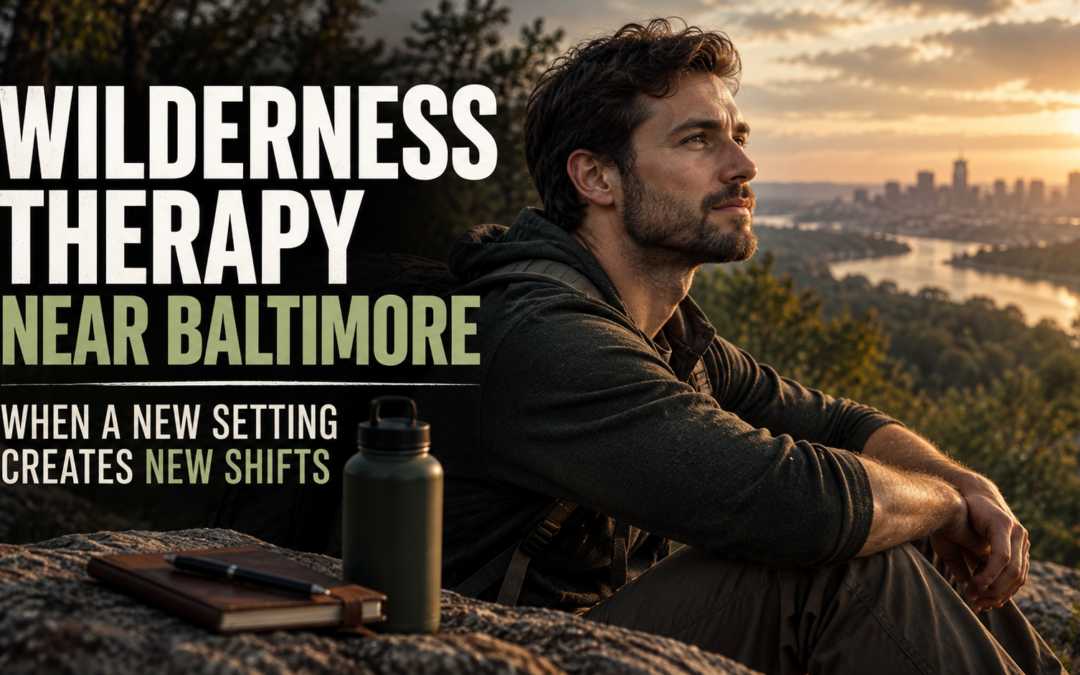
Wilderness therapy near Baltimore offers a different kind of healing space, one where the walls of a treatment room give way to open sky, quiet trails, and the steady rhythm of the natural world. If you or someone you love has felt stuck in traditional treatment settings, that change of scenery can matter more than you might expect.
Sometimes the hardest part of recovery is feeling boxed in, watched, or unsure how to open up. A different environment can gently lower those defenses.
Please know that reaching out for information is a brave and hopeful step. This article explains what this approach is, how stepping outside a clinical space creates unique shifts, who it helps, and how to take a confident next step forward. You are not alone in this.
What Is Wilderness Therapy Near Baltimore?
Wilderness therapy near Baltimore is a form of treatment that combines professional therapeutic care with time spent in nature, using outdoor experiences to support healing. It blends counseling, skill-building, and group connection with hiking, camping, and other activities in natural settings.
This is not simply a trip outdoors. Trained professionals guide the process, weaving evidence-based therapy into every part of the experience.
Nature becomes part of the treatment itself. The challenges and calm of the outdoors help people grow in ways that a traditional office setting cannot always reach.
More than being outside
Wilderness therapy pairs real clinical support with the natural world. The setting changes, but the professional care stays at the center.
You still work with counselors, explore difficult feelings, and build healthy coping skills. The difference is where and how that work unfolds.
How Does Removing the Clinical Setting Create Therapeutic Shifts?
Removing the clinical setting creates therapeutic shifts because a natural environment lowers defenses and invites people to engage more openly. When the sterile, formal feel of a treatment room disappears, many people find it easier to relax, reflect, and connect.
A clinical space can feel intimidating. The chairs, the paperwork, and the sense of being evaluated can make it hard to fully open up.
Nature softens that experience. Sitting by a trail or around a fire often feels safer than sitting across a desk, and that comfort opens the door to real progress.
Nature lowers the pressure to perform
Being outdoors reduces the pressure many people feel in a formal therapy room. Without a clinical backdrop, conversations tend to flow more naturally.
Think of the difference between a stiff interview and a walk with someone you trust. The second setting invites honesty, and wilderness therapy taps into that same ease.
Real challenges build real confidence
Outdoor activities create real challenges that build genuine confidence and self-belief. Setting up camp, hiking a trail, or working with a group offers tangible accomplishments.
Each small success carries a powerful message. When you learn you can handle a difficult climb, you start to believe you can handle difficult moments in recovery too.
Presence replaces distraction
Time in nature helps people slow down and stay present, away from the constant pull of daily life. Phones, schedules, and noise fade into the background.
That stillness makes space for reflection. Many people notice thoughts and feelings they had been too busy or too guarded to face.
Who Does Wilderness Therapy Help?
Wilderness therapy helps people who feel stuck in traditional settings or who connect more easily through action and experience than through conversation alone. It reaches a wide range of individuals and families seeking a fresh approach.
You might benefit from this kind of care if you recognize any of these patterns:
- Traditional talk therapy has felt difficult, uncomfortable, or hard to open up in.
- You feel more at ease learning and healing through hands-on experience.
- You are looking for a supportive break from the stress and triggers of daily life.
- You are managing a substance use disorder alongside a mental health condition.
- You want to build confidence, connection, and coping skills in a new way.
Recognizing yourself here is not a sign of weakness. It often means you are ready to explore an approach that fits how you naturally connect and grow.
What Should You Expect From Wilderness Therapy Near Baltimore?
You should expect a blend of professional therapy, outdoor activity, and group connection guided by trained staff. Good wilderness therapy near Baltimore begins by understanding your full story, not just your symptoms.
Most programs start with a thorough assessment. This helps the care team shape the experience around your history, your health, and your goals.
A typical experience often includes:
- Individual counseling that explores the deeper roots of what you are facing.
- Group therapy where you connect with others who understand your journey.
- Outdoor activities like hiking, camping, or teamwork exercises that build skills and confidence.
- Reflection and mindfulness that help you slow down and stay present.
- Skill-building for handling stress, cravings, and difficult emotions.
The natural setting shapes each part of the process. Even a quiet moment by a stream can become an opportunity for growth and insight.
Safety and support come first
Trained professionals guide every step to keep you safe and supported. You do not need outdoor experience to take part.
The focus stays on healing, not endurance. Activities are designed to challenge you gently, always within a caring and secure environment.
How Does Wilderness Therapy Address Co-occurring Conditions?
Wilderness therapy addresses co-occurring conditions by treating mental health and substance use together within one supportive approach. Many people living with a substance use disorder also face depression, anxiety, or trauma.
These overlapping challenges are known as co-occurring conditions. Treating them at the same time works better than treating either one alone.
The two are often woven together. Someone might use substances to quiet anxiety, and that anxiety may resurface once the substance is gone.
Why integrated care matters
Integrated care brings mental health support and substance use treatment into one coordinated plan. A single team works from the same understanding of your needs, so nothing important gets left behind.
This whole-person approach reaches the root of the struggle, not just the surface. When the deeper pain finally receives attention, lasting recovery becomes far more possible.
How nature supports this work
The calm of the outdoors can ease anxiety, lift mood, and create space for honest reflection. That gentle setting makes the deeper work of healing feel more approachable.
Nature does not replace clinical care. It strengthens it, giving your mind and body a steadier place to grow.
How Does Wilderness Therapy Fit Into the Levels of Care?
Wilderness therapy fits into the levels of care as one meaningful part of a broader treatment plan, not a replacement for it. It often works alongside other levels of support as a person moves through recovery.
A good care team helps match the right level of support to where you are. Common levels of care include:
- Medically supervised detox for a safe, stable start when substances leave the body.
- Residential or inpatient care for structured, round-the-clock support in a focused environment.
- Partial hospitalization for intensive daytime treatment with evenings spent at home.
- Intensive outpatient care for regular, structured sessions that still allow for work, school, or family life.
- Outpatient care for ongoing therapy and check-ins as daily routines rebuild.
Many people move through several of these stages as they progress. Wilderness therapy can complement this journey, adding a powerful, experience-based layer of healing.
Why the right fit matters
Matching care to your needs protects both your progress and your energy. Too little support can leave you struggling, while more than you need can feel overwhelming.
A thoughtful provider helps you find that balance. As you grow steadier, your care can shift, and it can step back up whenever you need more.
How Do You Decide If Wilderness Therapy Is Right for You?
Deciding whether this approach fits becomes clearer when you focus on how you connect, heal, and grow. You do not have to make this choice alone.
Use these questions to guide your decision:
- Have you found traditional talk therapy hard to engage in? A different setting may help you open up more freely.
- Do you learn and heal best through hands-on experience? Wilderness therapy turns action into meaningful growth.
- Do you feel weighed down by daily stress and triggers? Time in nature can offer a supportive reset.
- Are you managing a mental health condition alongside substance use? Integrated care can address both concerns at once.
- Do you want to build confidence and connection in a new way? This approach fosters both through real, shared experiences.
Answering yes to any of these does not mean something is wrong with you. It means a fitting, compassionate option is available, and you deserve it.
Common Questions Before Starting Treatment
Is wilderness therapy a replacement for traditional treatment?
No. Wilderness therapy works best as part of a broader treatment plan, alongside options like detox, residential, or outpatient care. It adds a powerful, experience-based layer to healing rather than standing on its own.
Do I need outdoor experience to take part?
No. Trained professionals guide every activity and adjust them to different abilities and comfort levels. The focus is on healing and growth, not physical performance or wilderness skills.
Can it help with both mental health and substance use?
Yes. Wilderness therapy can support integrated care that treats mental health and substance use together. Addressing both at the same time tends to support more lasting recovery than treating either one alone.
Will I still receive real therapy in the outdoors?
Yes. Professional counseling stays at the heart of the experience. You work with trained staff through individual and group sessions, simply in a natural setting rather than a clinical room.
You Do Not Have to Walk This Road Alone
Wilderness therapy near Baltimore creates the meaningful shifts that happen when the clinical setting steps aside and nature becomes part of the healing. If traditional treatment has felt confining or hard to engage in, please know that a different, gentler path is available to you.
You are not alone in this, and recovery is possible with the right support around you. A change of environment can open doors that once felt closed, helping you connect, reflect, and grow.
When you feel ready, consider reaching out to a treatment provider that offers wilderness therapy alongside other levels of care. A compassionate team can listen to your story, answer your questions, and help you build a plan that fits your needs. Take that next step whenever you are ready, because support is here for you.