
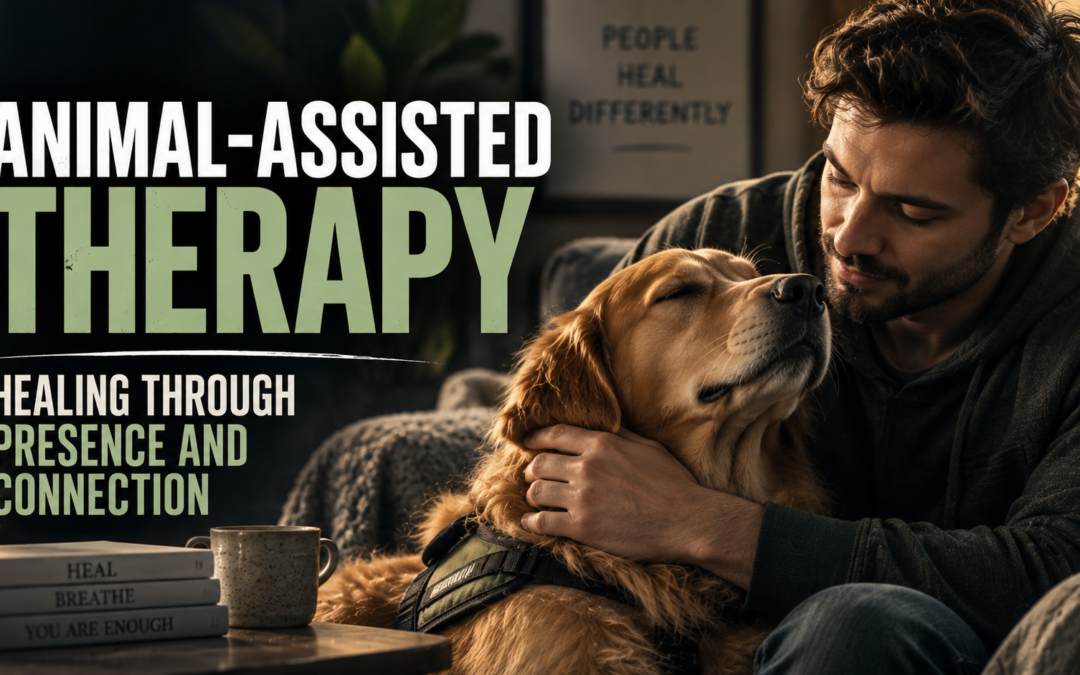
Animal-assisted therapy reaches parts of a person that words sometimes cannot, working gently on the nervous system through presence, warmth, and quiet connection. If you or someone you love has struggled to open up in traditional talk-based sessions, this approach may feel like a breath of relief.
Not every kind of healing happens through conversation. Some of it happens in the calm that settles over you when a gentle animal rests beside you and simply stays.
Please know that reaching out for information is a brave and hopeful step. This article explains what this therapy is, how it works on the body, why presence reaches what language cannot, who benefits, how it fits into treatment, and how to take a confident next step forward. You are not alone in this.
What Is Animal-Assisted Therapy?
Animal-assisted therapy is a structured, goal-directed practice that includes trained animals as part of a person’s treatment plan. It is guided by a licensed professional and built around specific therapeutic goals, not just casual time spent with a pet.
This approach can involve dogs, horses, and other carefully trained animals. Each interaction is intentional, designed to support emotional, mental, or physical healing.
The animal becomes a bridge. Its calm, nonjudgmental presence helps a person feel safe enough to engage in the deeper work of recovery.
More than spending time with animals
Animal-assisted therapy is a clinical practice, not simply a comforting visit. A trained therapist shapes each session around clear goals and tracks progress over time.
The animal supports the process, while the professional guides it. Together they create a setting where healing can unfold at a gentle, human pace.
How Does Animal-Assisted Therapy Work on the Nervous System?
Animal-assisted therapy works on the nervous system by helping the body shift out of a state of stress and into a state of calm. Gentle contact with a trusted animal can slow a racing heart, ease tension, and quiet the constant sense of alertness that trauma and anxiety often bring.
Your nervous system is always scanning for safety or danger. When it senses threat, it stays braced and tense. When it senses calm, it can finally rest.
A warm, steady animal sends powerful signals of safety. Those signals help the body relax without needing to explain, analyze, or say a single word.
From high alert to calm
Time with a calm animal can help move the body out of high alert and into a settled, grounded state. Petting a dog or standing quietly near a horse can soothe the parts of us that stay tense long after a difficult moment has passed.
Think of it like a tightly wound spring slowly releasing. The body remembers how to feel at ease, one calm breath at a time.
Why the body responds to gentle presence
The body responds to gentle presence because connection is one of our deepest needs. Feeling safe with another living being reassures the nervous system in a way that logic alone cannot reach.
This is why so many people feel calmer simply by being near an animal. That comfort is real, measurable, and deeply human.
Why Do Presence and Connection Reach What Language Cannot?
Presence and connection reach what language cannot because some experiences live deeper than words can travel. Trauma, grief, and fear often settle in the body, and the body does not always speak in sentences.
Talking through pain is valuable, and traditional therapy helps many people. Still, there are moments when words feel out of reach or too heavy to say aloud.
An animal asks nothing of you. It does not need an explanation, a story, or the right words. It simply stays, and that steady presence can open a door that language sometimes cannot.
When words feel too hard
Sometimes a person cannot yet put their pain into words, and that is completely understandable. Certain feelings are too tangled, too raw, or too deeply buried to speak.
In these moments, connection becomes its own language. A quiet presence beside you can offer comfort long before you are ready to talk.
The safety of no judgment
Animals offer connection without judgment, and that safety helps a person lower their guard. There is no fear of saying the wrong thing or being misunderstood.
This freedom can be profoundly healing. When you feel fully accepted, you can begin to soften, breathe, and slowly trust the process of recovery.
Who Benefits From Animal-Assisted Therapy?
Animal-assisted therapy benefits people facing a wide range of mental health and substance use challenges, especially those who find traditional talk therapy difficult at first. It meets you where you are, gently and without pressure.
You might benefit from this approach if you recognize any of these experiences:
- You find it hard to open up or put your feelings into words.
- You are living with anxiety, depression, or the effects of trauma.
- You feel disconnected, numb, or guarded much of the time.
- You are working through a substance use disorder and want added support.
- You respond well to comfort, calm, and gentle connection.
Recognizing yourself here is not a sign of weakness. It often means you are ready for support that reaches you in a way that feels safe.
A gentle entry into healing
This approach can be a gentle first step for people who feel nervous about treatment. The calm presence of an animal can ease the fear that often surrounds getting help.
For many, that early comfort makes the rest of recovery feel more possible. It softens the path into deeper, lasting work.
How Does Animal-Assisted Therapy Fit Into a Full Treatment Plan?
Animal-assisted therapy fits into a full treatment plan as one supportive piece of comprehensive, whole-person care. It works alongside individual therapy, group sessions, and medical support rather than replacing them.
Most programs weave this approach through several levels of care. A good team helps match the right level of support to where you are. These often include:
- Residential or inpatient care for structured, round-the-clock support in a calm, focused environment.
- Partial hospitalization for intensive daytime treatment with evenings spent at home.
- Intensive outpatient care for regular, structured sessions that still allow for work, school, or family life.
- Outpatient care for ongoing therapy and check-ins as daily routines rebuild.
Animal-assisted therapy can appear at any of these stages. It adds warmth and connection to a plan built around your specific needs and goals.
A complement, not a replacement
This approach complements proven treatments rather than standing in for them. It helps a person feel calm and connected enough to engage more fully in the rest of their care.
Think of it as one steady companion on the road to recovery. It works best beside therapy, support, and skilled clinical guidance.
How Does Animal-Assisted Therapy Support Co-occurring Conditions?
Animal-assisted therapy supports co-occurring conditions by easing stress and building connection, which helps people engage in care for both mental health and substance use. Many people living with a substance use disorder also face depression, anxiety, or trauma.
When both are present, treating them together works better than treating either one alone. This combined approach is called integrated care for co-occurring conditions.
Integrated care brings your mental health support and substance use treatment into one coordinated plan. A single team works from the same understanding of your needs, so nothing important gets left behind.
Why calm connection helps both
Calm connection helps both conditions because stress often fuels the cycle that keeps them linked. Someone might use substances to quiet anxiety, and that anxiety may return once the substance is gone.
By soothing the nervous system, animal-assisted therapy creates space for deeper healing. When the body feels safe, a person can face what lies beneath the surface with more strength and less fear.
How Do You Decide If Animal-Assisted Therapy Is Right for You?
Deciding whether this approach fits becomes clearer when you focus on the kind of support your situation truly calls for. You do not have to make this choice alone.
Use these questions to guide your decision:
- Do you find it hard to open up in traditional talk therapy? A gentle, wordless approach can help you feel safe enough to begin.
- Do you feel calmer or more grounded around animals? This comfort can become a real part of your healing.
- Are you living with anxiety, depression, or the effects of trauma? Easing your nervous system can support your broader recovery.
- Are you managing a substance use disorder too? Integrated care can address both concerns at once.
- Do you want a supportive complement to therapy and other care? This approach works well alongside proven treatments.
Answering yes to any of these does not mean something is wrong with you. It means supportive, compassionate care is available, and you deserve it.
Common Questions Before Starting Treatment
Is animal-assisted therapy a replacement for regular therapy?
No. It is a supportive complement to proven treatments like individual and group therapy, not a replacement. It helps you feel calm and connected so you can engage more fully in the rest of your care.
Do I need to have a pet or love animals to benefit?
No. You do not need to own a pet or consider yourself an animal person to benefit. A trained therapist and animal meet you gently, and many people are surprised by how comforting the experience feels.
What kinds of animals are involved?
This varies by program, but dogs and horses are common. Each animal is carefully trained, and every session is guided by a licensed professional with clear therapeutic goals.
Can this approach help with substance use recovery?
Yes. By easing stress and building connection, it can help you stay engaged in treatment for a substance use disorder. It works especially well within integrated care that treats co-occurring conditions together.
You Do Not Have to Navigate This Alone
Animal-assisted therapy offers a gentle, powerful path to healing, reaching the nervous system through presence and connection in ways that words alone cannot always access. If talking through your pain has felt too hard, please know that comfort and connection can open the door when language feels out of reach.
You are not alone in this, and recovery is possible with the right support around you. A calm presence beside you can be the beginning of steadier, more hopeful days.
When you feel ready, consider reaching out to a treatment provider that offers animal-assisted therapy alongside comprehensive care. A compassionate team can listen to your story, answer your questions, and help you build a plan that fits your needs. Take that next step whenever you are ready, because support is here for you.