A psychiatric evaluation is one of the most important early steps in mental health and addiction care, yet many people mistake it for a simple checkbox before the real work begins. If you or someone you love is preparing for treatment, that assumption is easy to make. The paperwork, the questions, the intake process can all feel like formalities to get through.
The truth is very different. This step shapes nearly every decision that follows, from diagnosis to therapy to medication.
Please know that reaching out for information is a courageous step. This article explains what this process really is, why it matters so much, how it guides treatment, and how to take a confident next step forward.
What Is a Psychiatric Evaluation?
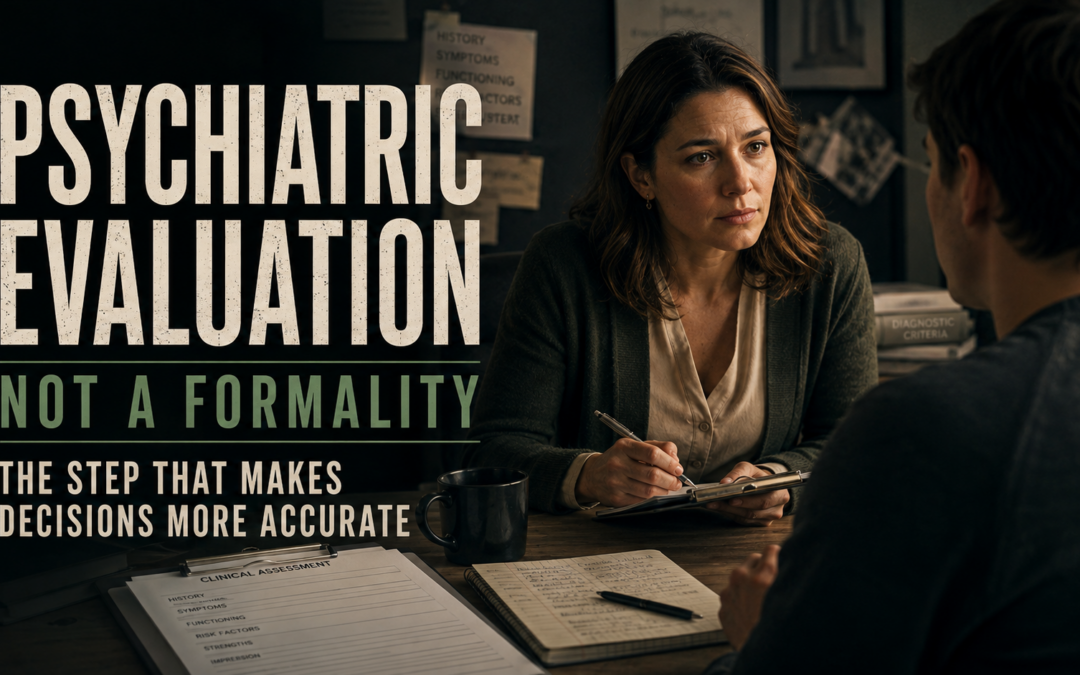
A psychiatric evaluation is a thorough assessment that helps a clinician understand your mental health, your history, and your current needs. It gathers the full picture of what you are experiencing so your care can be built around the real you.
This process is not a test you can pass or fail. It is a caring conversation guided by a trained professional who wants to understand your story.
During the evaluation, a clinician may ask about your moods, your thoughts, your sleep, your relationships, and any substance use. They may also review your medical history and any past treatment.
What happens during the process
The process usually blends conversation with careful listening. A clinician asks open questions, then follows where your answers lead.
You are always in control of your own pace. There is no pressure to share more than you feel ready to, and every detail helps shape better care.
Why Is a Psychiatric Evaluation a Clinical Necessity, Not a Formality?
A psychiatric evaluation is a clinical necessity because every treatment decision depends on understanding what is truly happening beneath the surface. Without it, care becomes guesswork rather than a plan built on real understanding.
Think of it like a builder studying the ground before laying a foundation. Skip that step, and everything built on top becomes unstable.
The same is true in mental health and addiction care. An accurate evaluation gives your team the solid ground they need to help you well.
Why symptoms can be misleading
Symptoms often overlap across very different conditions, which makes careful assessment essential. Anxiety, depression, trauma, and substance use can all share similar signs.
A skilled clinician looks past the surface to understand the deeper cause. This clarity helps prevent the wrong diagnosis, which can send treatment in the wrong direction.
The cost of skipping it
Skipping a thorough evaluation often leads to care that never quite fits. People may cycle through treatments that miss the real issue, feeling unheard along the way.
A proper evaluation protects you from that frustration. It helps ensure the care you receive matches the needs you actually have.
How Does a Psychiatric Evaluation Shape Treatment Decisions?
A psychiatric evaluation shapes treatment decisions by giving your care team the information they need to choose the right approach for you. Every recommendation flows from what the assessment reveals.
The findings guide several key choices, including:
- Diagnosis, which names what you are facing so it can be treated accurately.
- Therapy type, matching approaches like cognitive behavioral therapy to your specific needs.
- Medication decisions, helping a prescriber know whether medication may help and which options fit.
- Level of care, pointing toward the right amount of support for your situation.
- Safety planning, addressing any urgent concerns with the care they deserve.
Each of these decisions works better when it rests on accurate information. That is exactly what a thorough evaluation provides.
Care built around the person
A good evaluation ensures your care is personalized, not pulled from a one-size-fits-all template. Your history, your strengths, and your goals all shape the plan.
This whole-person approach helps treatment feel steady rather than scattered. When every piece connects, recovery becomes far more possible.
What Role Does a Psychiatric Evaluation Play in Co-occurring Disorder Care?
A psychiatric evaluation plays a central role in co-occurring disorder care because it uncovers how a substance use disorder and a mental health condition connect. Many people live with both at the same time, and the two often feed each other.
Someone might use alcohol to quiet anxiety, then feel that anxiety deepen once it wears off. An evaluation helps reveal this pattern clearly.
Understanding that connection changes everything about the plan. It allows a team to treat both conditions together rather than one at a time.
Why integrated care depends on it
When both conditions are present, treating them together works better than treating either one alone. This coordinated approach is called integrated care for co-occurring conditions.
A thorough evaluation makes that integration possible. It gives one team a shared understanding of your needs, so nothing important gets left behind.
Without this step, one condition can quietly go unnoticed. Treating only half the picture often leaves the door open for a return to old struggles.
What Levels of Care Does a Psychiatric Evaluation Inform?
A psychiatric evaluation informs which level of care will best match your symptoms, your safety, and your daily responsibilities. The right fit depends on where you are right now, and care can grow or ease as your needs change.
Common levels of care include:
- Residential or inpatient care for structured, round-the-clock support during more difficult stretches.
- Partial hospitalization for intensive daytime treatment with evenings spent at home.
- Intensive outpatient care for regular, structured sessions that still allow for work and family life.
- Outpatient care for ongoing therapy, medication support, and steady check-ins.
The evaluation helps point toward the level that offers the right amount of support. As you progress, your care can shift to something lighter, and it can step back up whenever you need more.
A starting point, not a label
The level of care an evaluation suggests is a starting point, not a permanent label. Your plan is meant to move with you as you heal.
This flexibility offers real reassurance. You are never locked into one path, and your care adapts as your life and needs evolve.
How Do You Decide When to Seek a Psychiatric Evaluation?
You should consider seeking a psychiatric evaluation when your mental health affects your daily life, or when substance use and difficult emotions seem tangled together. You never have to reach a breaking point to deserve this kind of clarity.
Use these questions to guide your decision:
- Have your symptoms lasted for weeks or grown stronger over time? Persistent struggles deserve a professional’s careful attention.
- Are your moods, thoughts, or worries affecting work, sleep, or relationships? Ongoing disruption is a clear reason to reach out.
- Do you use substances to cope with painful feelings? An evaluation can reveal how these concerns connect.
- Has past treatment helped for a while but not fully lasted? A fresh, thorough assessment may uncover what was missed.
- Do you have any thoughts of self-harm? Please treat this as urgent and reach out right away.
Answering yes to any of these does not mean something is wrong with you. It means clarity and care are available, and you are worthy of both.
If you are ever having thoughts of harming yourself, help is available immediately. You can call or text the 988 Suicide and Crisis Lifeline in the United States at any time.
Common Questions Before Starting Treatment
Is a psychiatric evaluation just a formality before treatment?
No. It is a foundational step that shapes your diagnosis, therapy, medication, and level of care. Far from a formality, it is what makes every clinical decision that follows more accurate and personalized.
Will I have to talk about everything all at once?
No. You move at your own pace, sharing what you feel ready to share. A caring clinician guides the conversation gently, and every detail helps build care that truly fits your needs.
Can an evaluation help if I am struggling with both substance use and mental health?
Yes. A thorough evaluation is especially valuable for co-occurring conditions, because it reveals how the two connect. This understanding allows a team to treat both together within one coordinated plan.
What if I have been misdiagnosed before?
Being misdiagnosed is more common than many people realize, and it is not the end of your story. A new, careful evaluation can identify what is truly happening and open the door to care that finally fits.
Does an evaluation mean I will need medication?
Not necessarily. An evaluation helps a prescriber understand whether medication may help, but it does not guarantee it. Any decision is made with you, based on your needs and your input.
You Do Not Have to Navigate This Alone
A psychiatric evaluation is far more than a step to check off before treatment begins. It is the careful, compassionate process that helps your entire care team understand you and make every decision more accurate.
You are not alone in this, and recovery is possible with the right support around you. Starting with a clear understanding of your needs gives your healing a steady and hopeful foundation.
When you feel ready, consider reaching out to a treatment provider who offers thorough, caring assessments as the first step. A compassionate team can listen to your story, answer your questions, and help you build a plan that fits your life. Take that next step whenever you are ready, because support is here for you.