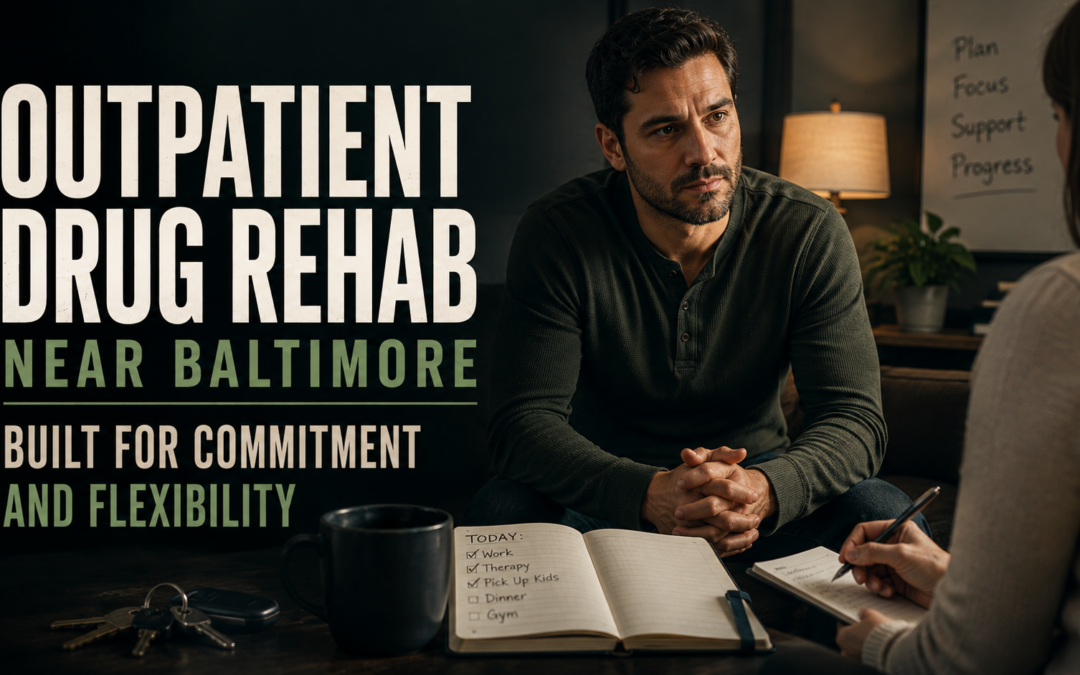
Outpatient drug rehab near Baltimore gives people a way to pursue real recovery without stepping away from the jobs, families, and responsibilities that anchor their daily lives. If you have wanted help but felt like you simply could not press pause on everything, please know that you are not alone, and that this path was created with your exact situation in mind.
Choosing treatment is a big decision, and it often comes wrapped in worry. You may wonder whether outpatient care offers enough support, or whether flexibility means settling for less.
Those questions are fair, and they deserve honest answers. Reaching out for information is a brave and hopeful first step, no matter where you are in the process.
This article explains what outpatient care involves, who it serves best, what to expect, how it compares to other levels of support, and how to decide if it fits your life. Our goal is to leave you feeling informed, supported, and hopeful about the road ahead.
What Is Outpatient Drug Rehab Near Baltimore?
Outpatient drug rehab near Baltimore is a level of care where you receive structured therapy and support while continuing to live at home. It offers regular treatment sessions without requiring you to stay overnight at a facility.
You attend scheduled appointments during the week, then return home afterward. That means you can keep up with work, school, family, and the daily commitments that matter to you.
A caring team guides your treatment throughout. You receive counseling, education, and practical support designed to help you understand your substance use and build healthier ways to cope.
The core parts of a program
Outpatient care brings several types of support into one coordinated plan. These usually include individual counseling, group therapy, and education about recovery.
Each part serves a purpose. Individual sessions explore personal roots, group work builds connection, and education helps you understand what your mind and body are going through.
Who Is Outpatient Drug Rehab Built For?
Outpatient drug rehab is built for people who are committed to recovery and need the flexibility to keep living their daily lives. It fits a wider range of situations than many people expect.
You might benefit from this level of care if you recognize any of these patterns:
- You have a job or career you cannot step away from for weeks at a time.
- You are caring for children, a partner, or aging parents who depend on you.
- You have completed detox or a higher level of care and want continued support.
- Your home environment feels safe and free from major triggers.
- You want structured, professional support that works around your schedule.
Recognizing yourself here is not a sign of weakness. It often means you are ready for care that respects both your recovery and the life you have built.
Commitment and flexibility go together
Flexibility does not mean lighter commitment. This path asks you to show up consistently, do meaningful emotional work, and apply what you learn in real time.
For many people, that steady effort is its own kind of strength. Choosing to face daily life while staying dedicated to recovery takes real courage.
What Should You Expect From Outpatient Drug Rehab?
You should expect a personalized plan that combines therapy, skill-building, and steady support shaped around your specific needs. Good care begins by understanding your full story, not just your substance use.
Most programs start with a thorough assessment. This helps your care team build a plan that reflects your history, your health, and your goals.
A typical experience might include:
- Individual counseling that explores the deeper roots of substance use.
- Group therapy where you connect with others who understand your journey.
- Education sessions that teach practical tools for handling cravings and stress.
- Relapse prevention planning that prepares you for real-world challenges.
- Progress check-ins that keep your plan responsive as you grow.
Recovery is not a straight line, and your plan should flex with you. A caring team adjusts your support as your needs change over time.
Practicing recovery in real life
One quiet strength of outpatient care is the chance to apply what you learn right away. You might work through a challenge in a session, then face a similar moment at home that same day.
Bringing those experiences back to your team builds real, lasting change. Progress grows through this steady rhythm of learning and living.
How Does Outpatient Care Compare to Other Levels of Treatment?
Outpatient care offers the most flexibility of any treatment level while still providing structured, professional support. Understanding the differences helps you choose the fit that truly matches your needs.
Here is a simple comparison of common levels of care:
- Residential or inpatient care provides full-time living and round-the-clock support.
- Partial hospitalization offers intensive daytime treatment, often five days a week, with evenings at home.
- Intensive outpatient care provides several structured sessions each week while you live at home.
- Standard outpatient care offers lighter, less frequent sessions as you rebuild daily routines.
Each level serves a purpose, and many people move through several as they progress. Outpatient care often works as a strong step-down option, helping you protect and deepen the gains you have already made.
Different does not mean less
A lighter schedule does not mean lighter results. The right level of care is the one that matches your situation, not the one that looks most intensive from the outside.
Think of it like physical therapy after an injury. The most helpful plan is the one suited to where you are in healing, not simply the most demanding one available.
How Are Co-occurring Mental Health Conditions Treated?
Co-occurring mental health conditions are treated alongside substance use within the same coordinated plan, because addressing both together works better than treating either one alone. Many people living with a substance use disorder also face depression, anxiety, or trauma.
This combined approach is called integrated care for co-occurring conditions. It brings your mental health support and substance use treatment into one team, so nothing important gets left behind.
Why treating both matters
Treating both matters because these struggles are often woven tightly together. Someone might use substances to quiet anxiety, and that anxiety may resurface once the substance is gone.
When care addresses only one side, the untreated side can pull a person back. Integrated care closes that gap and treats the whole person, not just one part of the picture.
How Do You Decide If Outpatient Drug Rehab Is Right for You?
Deciding whether outpatient care fits becomes clearer when you focus on the support your situation truly calls for. You do not have to make this choice alone.
Use these questions to guide your decision:
- Do you have a safe, stable place to live during treatment? A supportive home environment helps this level of care succeed.
- Do you need to keep working, studying, or caring for family? The flexible schedule can make treatment possible without pausing your life.
- Have you completed detox or a higher level of care already? Outpatient care can be a strong next step to protect your progress.
- Do you feel ready to stay committed while facing daily life? That readiness is a sign of real strength.
- Are you managing a mental health condition too? Integrated care can address both concerns at once.
Answering yes to any of these does not mean something is wrong with you. It means suitable support is available, and you deserve it.
Common Questions Before Starting Treatment
Is outpatient drug rehab effective for a serious substance use disorder?
Yes, especially for people with a stable home and a strong commitment to recovery. Effectiveness depends on matching the level of care to your needs, not on how intensive it looks. Your care team will help you find the right fit.
Can I keep working or going to school during treatment?
Yes. Outpatient care is designed to fit around daily responsibilities, with sessions scheduled to work with your life. Many people continue working, studying, or caring for their families while they receive support.
Does needing flexibility mean I am not taking recovery seriously?
Not at all. Outpatient care asks for consistent effort, honesty, and courage while you face real life. Choosing it often reflects deep commitment, not compromise.
What if I need more support later?
Your plan can change as you do. Care can step up to a higher level or ease down to lighter support, always matching where you are in your recovery.
You Do Not Have to Walk This Road Alone
Outpatient drug rehab near Baltimore is built for people who are ready to commit to recovery and need the flexibility to keep their daily lives intact. If a full schedule has kept you from seeking help, please know that this path was created to meet you exactly where you are.
You are not alone in this, and recovery is possible with the right support around you. Choosing care that fits your life can give your progress a steady, lasting foundation.
When you feel ready, consider reaching out to a treatment provider that offers outpatient care alongside other levels of support. A compassionate team can listen to your story, answer your questions, and help you build a plan that fits your needs. Take that next step whenever you are ready, because support is here for you.