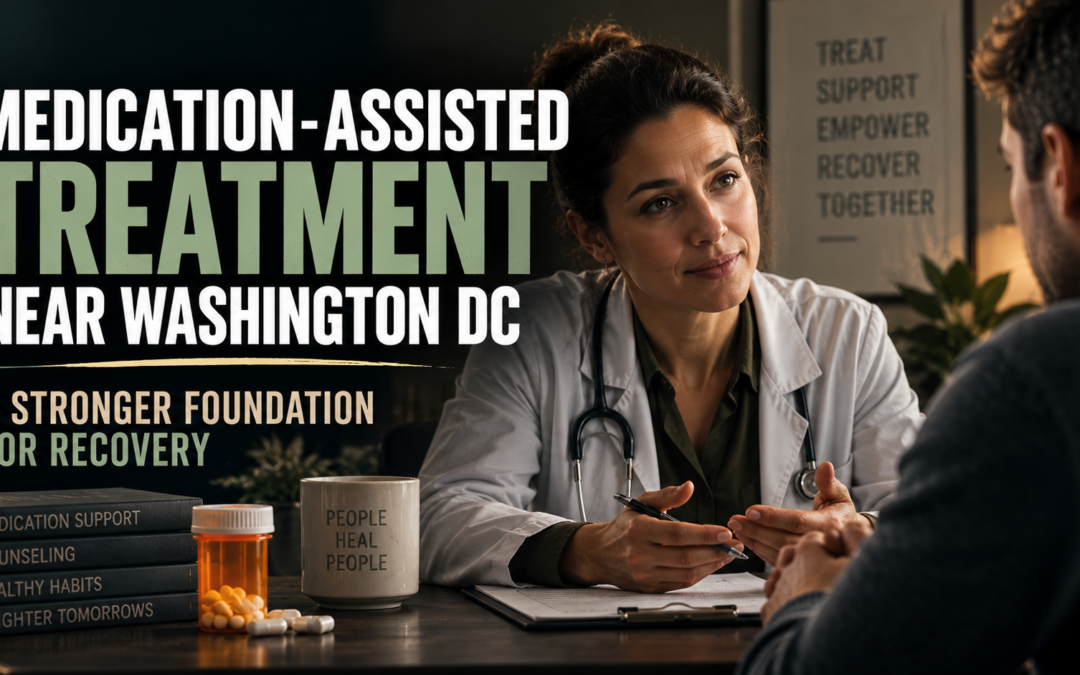
Medication-assisted treatment near Washington DC gives recovery a steady medical foundation, one that helps every other part of healing work better. If you or someone you love has tried to stop using opioids or alcohol and felt physically pulled back despite a real desire to quit, that struggle is not a lack of willpower. It is the body reacting to change.
Early recovery can feel like trying to focus while your body sounds every alarm it has. Cravings, withdrawal, and physical distress can overwhelm even the strongest resolve.
Please know that reaching out for information is a brave and hopeful step. When the body finds steadiness, therapy, connection, and daily change finally have room to take hold. This article explains what this care involves, how it supports the rest of recovery, who it helps, and how to take a confident next step forward.
What Is Medication-Assisted Treatment Near Washington DC?
Medication-assisted treatment near Washington DC is an evidence-based approach that combines FDA-approved medications with counseling and behavioral therapy to treat substance use disorders. It is often shortened to MAT, and it supports the whole person, not just the physical symptoms.
The medications used help manage cravings and withdrawal, especially for opioid and alcohol use disorders. They work quietly in the background so you can focus on the deeper work of healing.
This is not trading one substance for another. It is a carefully monitored medical treatment, guided by professionals, that steadies the body while therapy addresses the reasons behind substance use.
More than medication alone
Medication-assisted treatment always pairs medication with counseling and support. The medication steadies the body, and the therapy helps rebuild your life.
This combination is what makes the approach so effective. One part eases the physical struggle, while the other helps you understand and change the patterns beneath it.
Why Is Medication-Assisted Treatment Near Washington DC a Medical Foundation for Recovery?
Medication-assisted treatment near Washington DC acts as a medical foundation because it stabilizes the body first, which allows every other part of recovery to work. When cravings and withdrawal quiet down, a person can actually engage in therapy, build skills, and rebuild relationships.
Think of it like laying a solid foundation before building a house. Without steady ground, everything built on top of it stays shaky.
Recovery asks a great deal of a person. It is far easier to do that work when the body is no longer in constant distress.
Removing the physiological barrier
The physiological barrier is the body’s intense physical drive to return to the substance it has grown dependent on. This drive is real and powerful, often stronger than determination alone can withstand.
MAT eases that barrier by reducing cravings and withdrawal symptoms. Picture removing a loud, blaring noise from a room. Suddenly you can hear yourself think, plan, and connect.
Giving therapy room to work
With the physical struggle eased, therapy finally has space to reach the roots of substance use. A person can focus on their sessions instead of battling relentless cravings.
This is why MAT strengthens the rest of care. It does not replace therapy, support groups, or personal growth. It makes all of them more possible.
Mini recap: MAT steadies the body so the deeper work of recovery has a real chance to hold.
Who Can Benefit From Medication-Assisted Treatment?
Medication-assisted treatment can benefit people living with opioid or alcohol use disorders, especially those who have found early recovery physically overwhelming. It helps a wide range of individuals, not only those with the most severe struggles.
You might benefit from this approach if you recognize any of these patterns:
- You have tried to stop using opioids or alcohol but were pulled back by cravings or withdrawal.
- Physical symptoms have made previous recovery attempts feel impossible to sustain.
- You want a medically supported, evidence-based path toward healing.
- You are managing a substance use disorder alongside a mental health condition.
- You are ready to engage in therapy but need relief from the physical struggle first.
Recognizing yourself here is not a source of shame. It often means you are ready for support that meets both your body and your mind where they are.
How Does Medication-Assisted Treatment Pair With Therapy?
Medication-assisted treatment pairs with therapy by handling the physical side of recovery so therapy can handle the emotional and behavioral side. The two work together, each strengthening what the other cannot reach alone.
Medication eases cravings and withdrawal. Therapy helps you understand the reasons behind substance use and build healthier ways to cope.
Neither piece works as well on its own. Together, they treat the whole person rather than a single symptom.
The role of counseling
Counseling helps you explore what the substance was helping you manage, whether stress, pain, or something deeper. This is where lasting change begins to take shape.
Individual sessions explore personal roots, while group work builds connection with others who understand. Both become far easier to engage in once the body feels steady.
Building skills that last
Therapy teaches practical tools for handling cravings, stress, and difficult emotions. These skills stay with you long after treatment ends.
MAT gives you the clarity to actually learn and practice them. When the noise of withdrawal fades, new habits have room to grow.
What Levels of Care Support Medication-Assisted Treatment?
Several levels of care support medication-assisted treatment, and medication can continue across many of them as your needs change. A good care team helps match the right level of support to where you are right now.
Common levels of care include:
- Medically supervised detox for a safe, stable start when substances leave the body.
- Residential or inpatient care for structured, round-the-clock support in a focused environment.
- Partial hospitalization for intensive daytime treatment with evenings spent at home.
- Intensive outpatient care for regular, structured sessions that still allow for work, school, or family life.
- Outpatient care for ongoing therapy, medication management, and steady check-ins.
Many people move through several of these stages as they progress. Medication support can remain steady through each one, keeping cravings in check while your life grows stronger around you.
Why the step-down approach helps
A gradual step-down protects the progress you work hard to build. Moving from intensive support toward greater independence at a steady pace feels far more manageable than a sudden change.
Picture learning to swim by moving into deeper water as your confidence grows. The continuum of care works the same way, and medication offers steady footing throughout.
How Are Co-occurring Mental Health Conditions Treated?
Co-occurring mental health conditions are treated alongside substance use within the same coordinated plan, because addressing both together works better than treating either one alone. Many people living with a substance use disorder also face depression, anxiety, or trauma.
This combined approach is called integrated care for co-occurring conditions. It brings your mental health support and substance use treatment into one team, so nothing important gets left behind.
Why treating both matters
Treating both matters because these struggles are often woven tightly together. Someone might use substances to quiet anxiety, and that anxiety may resurface once the substance is gone.
When care addresses only one side, the untreated side can pull a person back. Integrated care closes that gap and treats the whole person, not just one part of the picture.
With the physical barrier eased by medication, this deeper work becomes far more possible. A stable body creates space to face and heal what lies underneath.
How Do You Decide If Medication-Assisted Treatment Is Right for You?
Deciding whether this approach fits becomes clearer when you focus on the support your situation truly calls for. You do not have to make this choice alone.
Use these questions to guide your decision:
- Have cravings or withdrawal pulled you back despite wanting to quit? Medication support can ease that physical struggle.
- Are you living with an opioid or alcohol use disorder? This approach is especially effective for these conditions.
- Do you want an evidence-based path that pairs medication with therapy? MAT is considered a gold standard for many people.
- Are you managing a mental health condition too? Integrated care can address both concerns at once.
- Do you feel ready to engage in recovery with the right support? Easing the physical barrier can help you fully participate.
Answering yes to any of these does not mean something is wrong with you. It means suitable, compassionate care is available, and you deserve it.
Common Questions Before Starting Treatment
Is medication-assisted treatment just replacing one drug with another?
No. MAT uses carefully monitored, FDA-approved medications to ease cravings and withdrawal so you can engage in therapy and rebuild your life. It is a medical treatment guided by professionals, not a substitution of one substance for another.
How long does medication-assisted treatment last?
The length varies based on your needs, your progress, and your overall health. Some people use medication support for months, others for longer, and your care team will guide you through a timeline built around lasting recovery.
Can I work or care for my family during treatment?
Yes. Many people receive medication-assisted treatment through outpatient or intensive outpatient care, which fits around daily responsibilities. Your care team can help you find a level of support that works for your life.
What if I have tried recovery before and it did not last?
Earlier attempts without medical support may have left the physical barrier untreated. MAT addresses that barrier directly, and it is never too late to try a more supported approach.
You Do Not Have to Walk This Road Alone
Medication-assisted treatment near Washington DC provides the medical foundation that gives every other part of recovery a stronger chance to succeed. When the body finds steadiness, therapy, connection, and daily change all become more possible.
You are not alone in this, and recovery is possible with the right support around you. A stable foundation can turn a difficult beginning into a lasting path forward.
When you feel ready, consider reaching out to a treatment provider that offers medication-assisted treatment alongside counseling and continued care. A compassionate team can listen to your story, answer your questions, and help you build a plan that fits your needs. Take that next step whenever you are ready, because support is here for you.