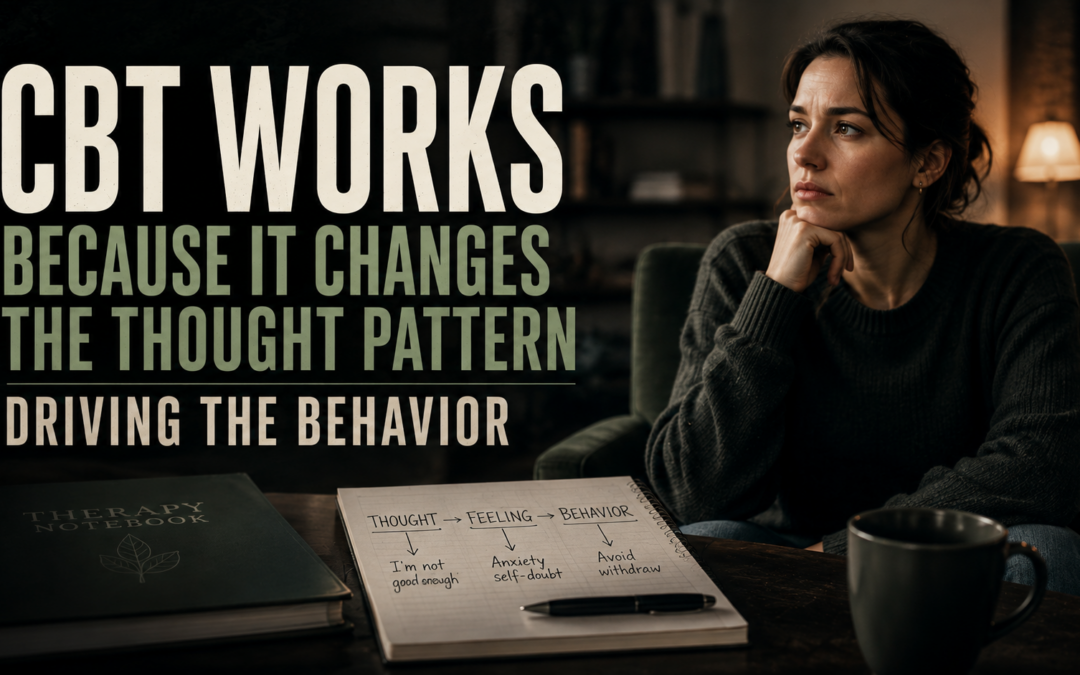
CBT, or cognitive behavioral therapy, works because it targets the thought pattern driving a behavior rather than stopping at the behavior itself. If you or someone you love has ever tried to change a habit through sheer effort, only to slip right back into it, this idea may feel like a relief. The problem was never a lack of willpower. It was the thought running quietly underneath.
Many people enter treatment expecting to be told to simply stop. What they find instead is something far more hopeful and far more practical.
Please know that reaching out for information is a brave step. This article explains what this kind of therapy is, how it reshapes thinking, who it helps, how it fits into treatment, and how to take a confident next step forward.
What Is CBT and How Does It Work?
CBT is a practical, evidence-based form of talk therapy that helps people identify and change the thoughts shaping their feelings and actions. It rests on a simple but powerful idea: your thoughts, emotions, and behaviors are all connected.
When one part of that chain shifts, the others tend to follow. Change a recurring thought, and the feeling attached to it softens, which changes what you do next.
Treatment meets you where you are. A caring therapist helps you notice the patterns you may never have questioned, then guides you toward healthier ones.
The thought behind the behavior
Every behavior tends to have a thought behind it, even when that thought moves too fast to notice. Someone might feel a wave of shame, think “I’ve already ruined everything,” and reach for a substance to numb it.
The behavior looks like the problem. The thought is the real engine. CBT helps you slow that moment down enough to see it clearly and respond differently.
Why Does Changing the Thought Pattern Matter More Than Changing the Behavior?
Changing the thought pattern matters more because a behavior addressed on its own tends to return the moment stress reappears. Willpower can hold a habit back for a while, but it rarely reaches the belief keeping that habit alive.
Think of a weed in a garden. Cutting off what shows above the surface feels productive, yet the root stays in the ground and the weed grows back. CBT works at the root.
When you change the thought driving a behavior, you remove the fuel that keeps it running. The change holds because it addresses the source, not just the symptom.
Why “just stop” rarely works
Telling a person to “just stop” ignores the thought pattern making the behavior feel necessary in the moment. That advice often leaves people feeling like failures when the behavior returns.
CBT takes a kinder, more effective path. It treats the returning behavior as information, a clue pointing back to a belief worth examining and reshaping.
Building skills that last
CBT gives you concrete skills you can use long after therapy ends. You learn to catch a distorted thought, question it, and replace it with something more accurate and helpful.
These tools stay with you. That is part of why this approach supports lasting change rather than temporary control.
So far, you’ve seen that CBT targets the belief underneath a behavior, which is what makes its results stick.
Who Does CBT Help?
CBT helps a wide range of people facing both mental health conditions and substance use, because unhelpful thought patterns show up across so many struggles. It is one of the most widely studied and trusted approaches in modern care.
You might benefit from this kind of therapy if you recognize any of these experiences:
- You feel caught in cycles of anxiety, worry, or racing thoughts.
- Low mood or hopelessness keeps pulling your thinking in a negative direction.
- You use substances to quiet difficult emotions or memories.
- Old beliefs about yourself keep shaping choices you want to change.
- You want practical tools, not just a space to talk.
Recognizing yourself here is not a sign of weakness. It often means you are ready for support built around real, usable change.
Help for many conditions
CBT supports people living with depression, anxiety, post-traumatic stress, and substance use disorders, among others. Its flexible framework adapts to each person’s specific patterns and goals.
This adaptability is part of its strength. The same core skills can ease very different struggles, because so many of them share distorted thinking at their core.
How Is CBT Different From Other Approaches?
CBT is different because it is structured, goal-focused, and centered on the present rather than dwelling mainly on the past. It looks at how your thoughts affect you today and what you can do about them now.
Some approaches focus largely on exploring history. That work has real value, and it can sit alongside this method beautifully.
Where CBT stands apart is its practical, forward-looking design. It pairs understanding with action, giving you both insight and specific steps to take.
Practical and collaborative
CBT is a collaborative process, meaning you and your therapist work as a team toward clear goals. You often practice new skills between sessions, applying them to real moments in your daily life.
This hands-on quality helps change feel tangible. Instead of waiting for progress to arrive, you actively build it, one small shift at a time.
What Role Does CBT Play in Addiction and Mental Health Treatment?
CBT plays a central role in addiction and mental health treatment because it addresses the thinking that fuels both. In substance use recovery, it helps people recognize the triggers and beliefs that lead toward use, then build healthier responses.
Many people first turned to substances to manage painful thoughts or feelings. When those thought patterns go unexamined, the pull toward using tends to remain strong.
This therapy gently interrupts that cycle. By reshaping the beliefs beneath the behavior, it eases the distress that made substances feel necessary.
When conditions overlap
CBT is especially valuable when a substance use disorder and a mental health condition appear together, known as co-occurring conditions. The same thought patterns often feed both struggles at once.
Treating them together works better than treating either one alone. Integrated care brings your mental health support and substance use treatment into one coordinated plan, so nothing important gets left behind.
Relapse prevention that works
CBT is a cornerstone of relapse prevention because it prepares you for hard moments before they arrive. You learn to spot early warning signs and respond with skills rather than old habits.
That preparation offers real reassurance. Instead of facing a craving or a low moment empty-handed, you carry tools you know how to use.
What Levels of Care Use CBT?
CBT is used across every level of addiction and mental health care, from the most intensive support to ongoing outpatient sessions. The setting may change, but the core work of reshaping thought patterns stays consistent.
Common levels of care include:
- Residential or inpatient care for structured, round-the-clock support during more difficult stretches.
- Partial hospitalization for intensive daytime treatment with evenings spent at home.
- Intensive outpatient care for regular, structured sessions that still allow for work and family life.
- Outpatient care for ongoing therapy and check-ins that fit around a busy schedule.
A good care team helps match the level of support to where you are right now. As you grow steadier, your care can shift to something lighter, and it can step back up whenever you need more.
Individual and group settings
CBT works well in both one-on-one and group formats, and many programs use both. Individual sessions dig into your personal patterns, while group work lets you learn from shared experiences.
Each setting offers something different. Together they help new skills take root and feel real in everyday life.
How Do You Decide If CBT Is Right for You?
Deciding whether this approach fits becomes clearer when you focus on the kind of change you are hoping to make. You do not have to make this choice alone.
Use these questions to guide your decision:
- Do you feel stuck in patterns you cannot seem to break? This therapy is designed to reach the beliefs beneath those patterns.
- Do you want practical tools, not only a place to talk? Its structured, skill-based approach may be a strong fit.
- Are you managing anxiety, depression, or trauma? These conditions often respond well to this method.
- Do you use substances to cope with difficult thoughts? Care that treats both together can address the full picture.
- Do you prefer working toward clear, present-focused goals? This approach centers on what you can change now.
Answering yes to any of these does not mean something is wrong with you. It means helpful, proven support is available, and you are worthy of it.
Common Questions Before Starting Treatment
How long does CBT usually take?
The length varies based on your needs and goals. Many people notice progress within a few months of consistent sessions, and your care team will help set a timeline that fits your situation.
Do I have to relive my past in detail?
Not necessarily. This approach focuses mainly on your present thoughts and how they affect you now, though your history can inform the work. You always move at a pace that feels safe.
Can it help with both substance use and a mental health condition?
Yes. This therapy addresses the thought patterns that fuel both, which makes it a strong fit for co-occurring conditions. Treating them together tends to support more lasting recovery.
What if I have tried therapy before and it did not help?
A different approach or a better fit with your therapist can change everything. This structured, skill-based method offers practical tools that earlier talk therapy may not have provided.
You Do Not Have to Navigate This Alone
CBT works because it reaches the thought pattern driving a behavior, not just the behavior on the surface, which is what makes its results hold over time. If you have felt stuck despite your best efforts, please know that the struggle was never about willpower, and real change is within reach.
You are not alone in this, and recovery is possible with the right support around you. Learning to reshape the thoughts beneath your struggles can open a steadier, more hopeful path forward.
When you feel ready, consider reaching out to a treatment provider who offers evidence-based care like this. A compassionate team can listen to your story, answer your questions, and help you build a plan that fits your life. Take that next step whenever you are ready, because support is here for you.