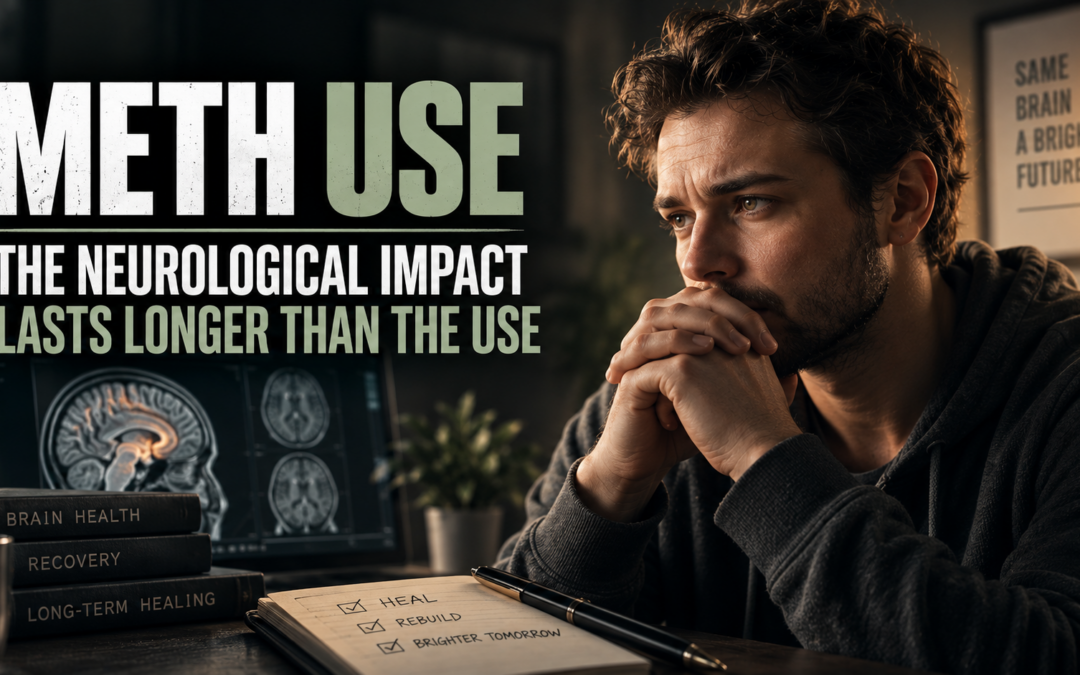
Meth use changes the brain in ways that can linger long after a person stops, sometimes for months or even years. If you are worried about a loved one or looking back on your own experience, that reality can feel frightening. You may wonder whether the mind can truly heal.
Please know that what you are feeling makes sense. Watching someone struggle, or noticing changes in yourself, can stir up fear, grief, and a deep longing for things to feel normal again.
Reaching out for information is a brave and hopeful step. The brain is more resilient than many people realize, and healing is possible with time, care, and the right support. You are not alone in this.
What Does Meth Use Do to the Brain?
Meth use affects the brain by flooding it with dopamine, the chemical tied to pleasure, motivation, and reward. This surge is far stronger than anything the brain produces naturally, and over time it reshapes how the brain works.
Dopamine helps you feel joy, focus, and drive. When meth pushes dopamine to extreme levels again and again, the brain begins to change how it responds.
To protect itself, the brain reduces its own dopamine production and function. This is part of why daily life can start to feel flat, difficult, or joyless without the substance.
How the brain adapts over time
The brain adapts by dialing down its natural reward system after repeated overstimulation. Everyday pleasures like food, connection, or rest may no longer feel satisfying.
Think of it like turning up music so loud that quieter sounds become impossible to hear. Over time, the brain struggles to register normal moments of joy on its own.
How Do Neurological Changes From Meth Use Develop?
Neurological changes from meth use develop gradually as the brain adjusts to repeated exposure. These changes affect the systems that manage mood, memory, focus, and decision-making.
Meth impacts several regions of the brain at once. It strains the areas responsible for judgment, impulse control, and emotional balance.
Over time, these effects build on one another. What begins as a temporary shift can settle into deeper patterns that persist even during periods without use.
Changes to thinking and memory
Meth use can affect memory, attention, and the ability to think clearly. A person may struggle to concentrate, recall details, or make everyday decisions.
These difficulties are not a matter of willpower. They reflect real changes in how the brain processes information.
Changes to mood and emotion
The brain’s emotional systems also feel the strain. Anxiety, irritability, and low mood can become more common, both during use and afterward.
These emotional shifts are part of the brain’s response to lost balance. With time and support, they often begin to ease.
Why Do These Changes Outlast the Period of Active Use?
These changes outlast active use because the brain needs time to repair the systems that were altered. Stopping removes the substance, but the brain does not reset instantly.
Healing happens at a biological pace. The dopamine system, in particular, can take months to begin recovering and longer to feel closer to normal.
This is why someone may stop using yet still feel foggy, low, or unmotivated for a while. Their brain is still rebuilding, quietly and steadily, beneath the surface.
The slow work of brain repair
Brain repair is gradual, much like a body healing after a serious injury. You would not expect a broken bone to feel normal the next day, and the brain works the same way.
For some people, cognitive and emotional symptoms improve within months. For others, deeper healing continues over one to two years or more.
Why this timeline matters for recovery
Understanding this timeline can bring real comfort and patience. When early recovery feels hard, it helps to know the struggle often reflects healing, not failure.
This is also why lasting recovery needs ongoing support. The brain keeps mending long after the last use, and steady care protects that fragile progress.
What Does Neurological Recovery Look Like?
Neurological recovery looks like a gradual return of clearer thinking, steadier mood, and renewed motivation as the brain heals. Progress is rarely a straight line, but it is real.
Many people notice small improvements first. Sleep may steady, focus may sharpen, and moments of genuine joy may slowly return.
Recovery is highly personal. The pace depends on factors like how long and how often a person used, along with overall health and the support around them.
Signs the brain is healing
- Improved sleep and more consistent energy over time.
- Better focus, memory, and clearer everyday thinking.
- More stable moods with fewer intense highs and lows.
- A slow return of interest in people, activities, and simple pleasures.
- Growing ability to handle stress without feeling overwhelmed.
These signs may come and go at first. That is normal, and it does not erase the progress being made.
How support speeds healing
Healthy routines, good nutrition, rest, and professional care all support the brain’s recovery. Therapy helps rebuild coping skills while the brain rebuilds itself.
You do not have to force this healing alone. The right environment gives your brain the steady conditions it needs to mend.
How Are Meth Use and Mental Health Connected?
Meth use and mental health are closely connected because many people use substances to cope with difficult feelings, and meth can also deepen those feelings over time. Depression, anxiety, and other conditions often appear alongside substance use.
These are known as co-occurring conditions. The two challenges tend to feed each other, creating a cycle that is hard to break alone.
Someone might use meth to escape low mood, only to feel more anxious or depressed as the effects fade. When the underlying condition goes untreated, the pull toward using can return.
Why integrated care matters
Integrated care treats substance use and mental health together within one coordinated plan. A single team works from the same understanding of your needs, so nothing important gets left behind.
This whole-person approach reaches the root of the struggle, not just the surface. When both conditions receive attention at once, lasting recovery becomes far more possible.
What Levels of Care Support Recovery From Meth Use?
Several levels of care support recovery from meth use, and the right fit depends on your needs, your safety, and your daily life. Care can grow more intensive during harder stretches and ease back as stability returns.
A good treatment team helps match the level of support to where you are right now. Common levels of care include:
- Medically supervised detox for a safe, monitored start as the body adjusts and early symptoms are managed with comfort and care.
- Residential or inpatient care for structured, round-the-clock support in a calm, focused environment.
- Partial hospitalization for intensive daytime treatment with evenings spent at home.
- Intensive outpatient care for regular, structured sessions that still allow for work, school, or family life.
- Outpatient care for ongoing therapy and check-ins as daily routines rebuild.
Many people move through several of these stages over time. This step-down approach eases you toward greater independence at a manageable pace.
Why care continues after detox
Detox helps the body stabilize, but it does not address the reasons behind use or the healing the brain still needs. The deeper work continues in the stages that follow.
Therapy, support, and healthy new routines protect the progress detox begins. Because neurological healing takes time, ongoing care is especially important for lasting recovery.
How Do You Decide When to Seek Help?
You should consider seeking help when meth use affects your health, relationships, responsibilities, or peace of mind. You never have to reach a crisis point to deserve support.
Use these questions to guide your next step:
- Have you or a loved one tried to stop but returned to use? This often signals that more than willpower is needed.
- Are you noticing changes in memory, focus, or mood? These may reflect neurological effects worth addressing with care.
- Is meth being used to cope with stress, anxiety, or low mood? A provider who treats co-occurring conditions can help with both.
- Has use affected work, relationships, or daily life? Ongoing disruption is a clear reason to reach out.
- Do you feel worried, overwhelmed, or unsure how to help? Support is available for you and your loved one alike.
Answering yes to any of these does not mean anyone has failed. It means caring support is available, and it is within reach.
If you or a loved one is ever in immediate danger or having thoughts of self-harm, please seek help right away. You can call or text the 988 Suicide and Crisis Lifeline in the United States at any time.
Common Questions Before Starting Treatment
Can the brain really heal after meth use?
Yes. The brain has a strong capacity to heal, and many people experience clearer thinking, steadier moods, and renewed motivation over time. Recovery is gradual, but improvement is genuinely possible with support.
How long does it take to feel normal again?
The timeline varies from person to person. Some people notice improvements within months, while deeper healing can continue over one to two years. Your care team can help you understand what to expect.
Why do I still feel foggy or low after stopping?
These feelings often reflect the brain still repairing itself, not a sign of failure. As the dopamine system recovers, mood and focus tend to improve with time and steady care.
Can treatment address my mental health too?
Yes. Integrated care treats substance use and conditions like depression or anxiety together within one coordinated plan. Addressing both at the same time tends to support more lasting recovery.
You Do Not Have to Navigate This Alone
Meth use can leave neurological changes that outlast active use by months or years, but those changes do not have to define the future. With time, patience, and compassionate care, the brain can heal and life can feel steady again.
You are not alone in this, and recovery is possible with the right support around you. Understanding how healing works is a hopeful and empowering first step.
When you feel ready, consider reaching out to a treatment provider who understands substance use and any related challenges you or your loved one may be facing. A compassionate team can listen to your story, answer your questions, and help you build a plan that fits your needs. Take that next step whenever you are ready, because support is here for you.