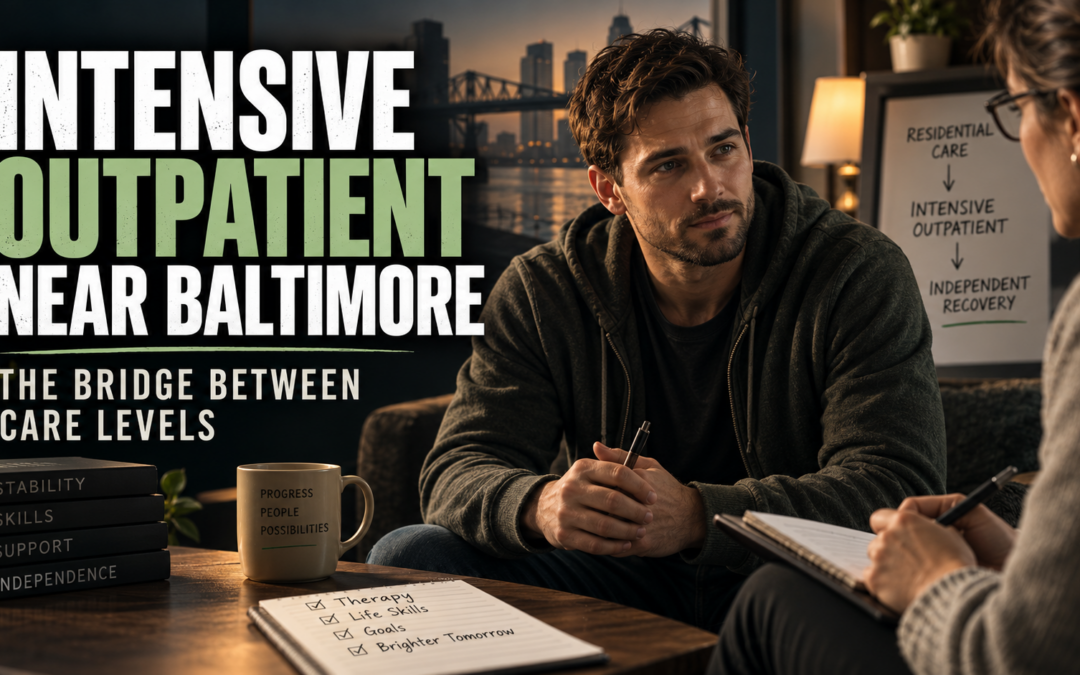
Intensive outpatient drug rehab near Baltimore offers a steady middle ground for people who need real clinical support but are ready to start living recovery in the everyday world. If you or someone you love has finished residential care, or does not need round-the-clock supervision, that in-between space can feel uncertain.
You may be wondering whether stepping down from full-time care is safe, or how treatment could possibly fit around work and family. Those questions are completely understandable.
Please know that reaching out for information is a brave and hopeful step. This article explains what this level of care involves, how it bridges residential treatment and independent living, who it helps, and how to take a confident next step forward. You are not alone in this.
What Is Intensive Outpatient Drug Rehab Near Baltimore?
Intensive outpatient drug rehab near Baltimore is a level of care that provides structured therapy several days a week while you continue to live at home. It sits between residential treatment and standard outpatient care, offering meaningful support without requiring overnight stays.
Most programs meet three to five days each week, with sessions lasting around three hours per day. This schedule gives you focused clinical care while leaving room for work, school, or family life.
Think of it as a steady bridge between two worlds. You receive the therapy and accountability of a treatment program, and you practice recovery in your real environment at the same time.
The core parts of a program
Intensive outpatient care combines several types of therapy into one coordinated plan. These usually include individual counseling, group sessions, and education about substance use and recovery.
Each part plays a role. Individual sessions explore personal roots, group work builds connection, and education helps you understand what your body and mind are going through.
How Does Intensive Outpatient Drug Rehab Near Baltimore Bridge Residential Care and Independent Recovery?
Intensive outpatient drug rehab near Baltimore bridges residential care and independent recovery by keeping clinical support in place while you gradually return to daily life. It softens the transition so you do not drop from full-time care straight into managing everything alone.
That sudden drop is where many people stumble. When intensive support ends abruptly, old stressors and triggers can rush back before new skills feel solid.
This level of care holds structure, therapy, and accountability steady during that vulnerable stretch. It lets you strengthen your footing before taking on full independence.
Practicing recovery in real time
You practice recovery in real time, which helps new skills take root faster and last longer. When a craving hits at home or a stressful moment arises at work, you can bring that experience back to your next session.
Your counselor and group help you process what happened and adjust your approach. This ongoing loop of learning and doing builds confidence that carries into lasting change.
Protecting the progress you have made
A gradual step-down protects the gains you worked hard to build in residential care. Picture removing a cast the moment a bone begins to heal. The healing is real, but it is not finished, and too much too soon can set things back.
This level of care gives recovery the time it needs to grow stronger. It turns a fragile transition into a supported, workable process.
Who Is Intensive Outpatient Drug Rehab For?
Intensive outpatient drug rehab is for people who need structured support but have a safe, stable home environment to return to each day. It works well for those who cannot step away from responsibilities for a residential stay.
You might be a good fit for this level of care if you recognize any of these patterns:
- You have completed detox or residential treatment and want continued support as you return to daily life.
- Your substance use is serious, but your home feels safe and supportive.
- You need to keep working, attending school, or caring for loved ones during treatment.
- You want more support than standard outpatient care provides.
- You are managing a substance use disorder alongside a mental health condition.
Recognizing yourself here is not a sign of weakness. It often means you are ready for support that fits both your recovery and your real life.
What Should You Expect From an Intensive Outpatient Program?
You should expect a personalized plan that combines therapy, skill-building, and steady accountability shaped around your specific needs. Good care starts by understanding your full story, not just your substance use.
Most programs begin with a thorough assessment. This helps your care team build a plan that reflects your history, your health, and your goals.
A typical week might include:
- Group therapy where you connect with others who understand your journey.
- Individual counseling that explores the deeper roots of substance use.
- Skill-building sessions that teach practical tools for handling cravings and stress.
- Education about substance use, relapse prevention, and healthy routines.
- Progress check-ins that keep your plan responsive as you grow.
Recovery is not a straight line, and your plan should flex with you. A caring team adjusts your support as your needs change over time.
How Does It Compare to Other Levels of Care?
Intensive outpatient care offers more support than standard outpatient care and more flexibility than residential treatment, placing it right in the middle of the continuum. Understanding these differences helps you choose the fit that matches your needs.
Here is a simple comparison of common levels of care:
- Residential or inpatient care provides full-time living and round-the-clock support.
- Partial hospitalization offers intensive daytime treatment, often five days a week, with evenings at home.
- Intensive outpatient care provides several structured sessions each week while you live at home.
- Standard outpatient care offers lighter, less frequent check-ins as you rebuild daily routines.
Each level serves a purpose, and many people move through several as they progress. This step-down approach eases you toward independence at a pace that feels manageable.
Why the right fit matters
Choosing the right level of care protects your progress and your energy. Too little support can leave you struggling, while too much can feel like more than your situation calls for.
A good provider helps you find that balance. As you grow steadier, your care can shift, and it can step back up whenever you need more support.
How Are Co-occurring Mental Health Conditions Treated?
Co-occurring mental health conditions are treated alongside substance use within the same coordinated plan, because addressing both together works better than treating either one alone. Many people living with a substance use disorder also face depression, anxiety, or trauma.
This combined approach is called integrated care for co-occurring conditions. It brings your mental health support and substance use treatment into one team, so nothing important gets left behind.
Why treating both matters
Treating both matters because these struggles are often woven tightly together. Someone might use substances to quiet anxiety, and that anxiety may resurface when the substance is gone.
When care addresses only one side, the untreated side can pull a person back. Integrated care closes that gap and treats the whole person, not just one part of the picture.
How Do You Decide If Intensive Outpatient Drug Rehab Is Right for You?
Deciding whether this level of care fits becomes clearer when you focus on the support your situation truly calls for. You do not have to make this choice alone.
Use these questions to guide your decision:
- Do you have a safe, stable place to live during treatment? A supportive home environment helps this level of care succeed.
- Are you stepping down from residential care or detox? This can be a strong next step to protect your early progress.
- Do you need to keep working, studying, or caring for family? The flexible schedule can make treatment possible without pausing your life.
- Do you want more structure than standard outpatient care offers? Several sessions a week provide steady accountability.
- Are you managing a mental health condition too? Integrated care can address both concerns at once.
Answering yes to any of these does not mean something is wrong with you. It means suitable support is available, and you deserve it.
Common Questions Before Starting Treatment
How long does intensive outpatient drug rehab last?
The length varies based on your needs, your progress, and your overall health. Many programs run for several weeks to a few months, and your care team will help you find a timeline that supports lasting recovery.
Can I keep working or going to school during treatment?
Yes. This level of care is designed to fit around daily responsibilities, with sessions scheduled during the day or evening. Many people continue working or studying while they receive support.
Do I have to complete residential care first?
Not always. Some people step down into this level of care after residential treatment, while others start here directly. Your care team will assess your situation and recommend the right starting point.
What if I need more or less support later?
Your plan can change as you do. Care can step up to a higher level or ease down to lighter support, always matching where you are in your recovery.
You Do Not Have to Walk This Road Alone
Intensive outpatient drug rehab near Baltimore offers a real, supported path between residential care and independent recovery, giving you clinical structure while you rebuild the life you are working to protect. If stepping down from full-time care has felt uncertain, please know that this bridge was built for exactly that moment.
You are not alone in this, and recovery is possible with the right support around you. Combining structured care with real-world practice gives your progress a strong and steady foundation.
When you feel ready, consider reaching out to a treatment provider that offers intensive outpatient care alongside other levels of support. A compassionate team can listen to your story, answer your questions, and help you build a plan that fits your life. Take that next step whenever you are ready, because support is here for you.