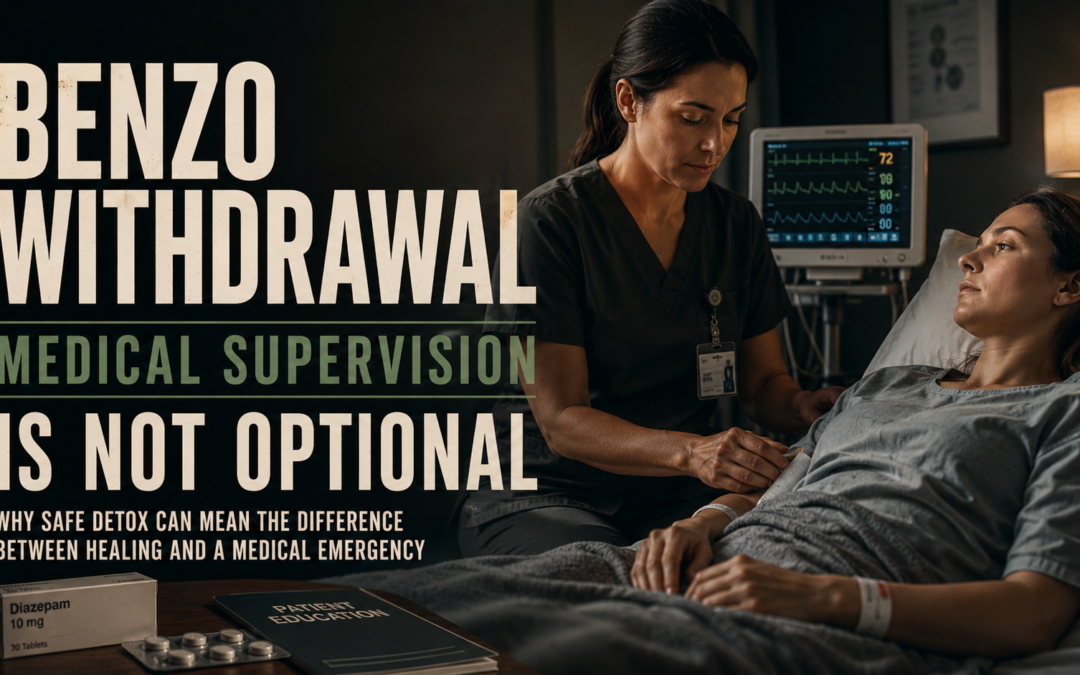
Benzo withdrawal is one of the few detox situations where stopping on your own can be genuinely dangerous, not just uncomfortable. If you or someone you love has been taking benzodiazepines and is thinking about stopping, that fear you feel is worth listening to.
Benzodiazepines, often called benzos, are prescribed for anxiety, sleep, and seizures. When the body grows dependent on them, quitting suddenly can trigger serious reactions.
Please know that reaching out for information is a brave and hopeful step. You are not weak for finding this hard, and you are not alone.
This article explains what this kind of withdrawal involves, why medical supervision matters so much, what to expect in supervised detox, and how it fits into a fuller path toward recovery. Our goal is to leave you feeling informed, supported, and ready for a safe next step.
What Is Benzo Withdrawal?
Benzo withdrawal is what happens when a person who depends on benzodiazepines reduces or stops using them, and the body reacts as it adjusts. These reactions can range from unsettling to medically serious.
Benzodiazepines calm the nervous system. Over time, the body adapts to their steady presence and comes to rely on them to feel balanced.
When the substance is removed, that balance is thrown off. The nervous system, no longer quieted, can swing into a state of overactivity that produces a wide range of symptoms.
Why dependence happens
Dependence can develop even when a person takes benzos exactly as prescribed. This is a physical response, not a sign of misuse or weak character.
Understanding this helps ease shame. If your body has grown dependent, that reflects how these medications work, not a personal failing.
Why Is Medical Supervision Not Optional for Benzo Withdrawal?
Medical supervision is not optional for benzo withdrawal because stopping suddenly can cause seizures and other reactions that put a person’s safety at real risk. Unlike some substances, benzos can produce withdrawal that becomes a medical emergency.
This is why professionals almost never recommend quitting benzos cold turkey. The body needs a careful, gradual approach to adjust safely.
A supervised setting keeps you protected. Staff monitor your symptoms, respond quickly to warning signs, and help your body step down at a pace it can handle.
The risk of seizures
Seizures are among the most serious risks of stopping benzos abruptly. They can happen without warning, which makes unsupervised withdrawal especially unsafe.
Medical care lowers this risk through a slow, structured taper. Reducing the dose gradually gives the nervous system time to recalibrate instead of reacting all at once.
Overlapping and confusing symptoms
Benzo withdrawal can produce symptoms that are hard to tell apart from other conditions. Severe anxiety, panic, and confusion can look like a mental health crisis rather than withdrawal.
A trained team knows how to read these signals. That expertise helps them respond correctly, so you get the right care at the right moment instead of being left to guess.
What Symptoms Should You Expect During Benzo Withdrawal?
Benzo withdrawal can bring a wide range of physical and emotional symptoms, and their timing and intensity vary from person to person. Knowing what may come can help you feel more prepared and less afraid.
Symptoms depend on the specific medication, how long it was used, the dose, and a person’s overall health. Common experiences include:
- Heightened anxiety, restlessness, or panic that can feel overwhelming.
- Trouble sleeping or broken, restless sleep.
- Irritability and difficulty concentrating.
- Muscle tension, aches, or tremors.
- Nausea, sweating, or headaches.
- Increased sensitivity to light, sound, or touch.
- Seizures, which are a serious risk that requires immediate medical care.
These symptoms are your body adjusting, not a sign of weakness. With medical support, they can be monitored and eased.
Why the timeline can be unpredictable
The timeline for benzo withdrawal is often longer and less predictable than people expect. Some symptoms appear early, while others can surface days later or linger for weeks.
This uneven course is one more reason professional care matters. A team can adjust your plan as symptoms shift, keeping you steady throughout the process.
What Should You Expect From Medically Supervised Detox?
You should expect a safe, closely monitored process that begins with a thorough assessment and continues with steady, compassionate care. Good detox starts by understanding your full story, not just the medication you are stopping.
Most programs begin with an evaluation. This helps the care team understand your history, your health, and your dosage, so they can shape a taper around your specific needs.
From there, a typical supervised detox includes:
- A gradual taper that reduces the dose slowly and safely over time.
- Medical monitoring to watch for warning signs and keep you stable.
- Symptom relief through appropriate care that eases discomfort.
- Emotional support from staff who understand what you are going through.
- A calm environment designed to help you rest and stabilize.
The length of detox varies. Because benzos often require a slow taper, this process can take longer than detox from some other substances.
Why comfort matters, not just safety
Comfort matters because a person who feels supported is more likely to complete detox and continue into recovery. Withdrawal is exhausting, and gentle care makes it more bearable.
Feeling safe also eases the fear that surrounds this step. That sense of security can make all the difference in those early, vulnerable days.
How Does Detox Fit Into a Full Treatment Plan?
Detox fits into a full treatment plan as the stabilizing first step, not the finish line of recovery. Clearing your body of benzos creates a foundation, and the deeper healing work begins afterward.
Detox addresses physical dependence. On its own, it does not resolve the reasons a person began relying on benzos in the first place.
Lasting recovery usually continues through several levels of care. A good treatment team helps match the right support to each stage. These often include:
- Medically supervised detox for a safe, stable start.
- Residential or inpatient care for structured, round-the-clock support.
- Partial hospitalization for intensive daytime treatment with evenings at home.
- Intensive outpatient care for regular support that fits work, school, or family life.
- Outpatient care for ongoing therapy and check-ins as daily routines rebuild.
Many people move through several of these stages. Each one eases toward greater independence at a pace that feels manageable.
Why detox alone is rarely enough
Detox alone is rarely enough because it clears the body without building the skills a person needs to stay well. Therapy and support come next, and they help protect the progress detox begins.
Think of detox as laying a foundation. The foundation is essential, and everything meaningful gets built on top of it, piece by piece.
How Do Co-occurring Mental Health Conditions Affect Benzo Withdrawal?
Co-occurring mental health conditions can make benzo withdrawal more complicated, because many people first took benzodiazepines to manage anxiety, panic, or sleep. When the medication leaves, those underlying struggles can surface again.
This is a deeply human situation, not a setback. It simply means the original concern still needs care.
A whole-person approach matters here. Ignoring mental health during withdrawal can leave a person without support at a fragile moment.
Why integrated care makes a difference
Integrated care brings mental health support and substance use treatment into one coordinated plan. A single team works from the same understanding of your needs, so nothing important gets left behind.
This approach, sometimes called treatment for co-occurring conditions, addresses the roots of the struggle rather than only the surface. When the underlying anxiety or trauma receives real attention, recovery has a far stronger chance of lasting.
How Do You Decide When to Seek Help?
You should seek medical help when you depend on benzodiazepines and stopping feels unsafe or overwhelming to face alone. You never have to reach a crisis point to deserve professional care.
Use these questions to guide your decision:
- Have you been taking benzos regularly and want to stop? A supervised taper is the safest way to begin.
- Have you tried to stop before and felt severe symptoms? Difficult past attempts signal that medical support could help.
- Do you have a history of seizures or other health concerns? These raise the need for close professional monitoring.
- Are anxiety, panic, or sleep struggles part of your experience? Integrated care can address both concerns together.
- Do you feel afraid to stop on your own? That fear is valid, and a caring team can help you feel safe.
Answering yes to any of these does not mean something is wrong with you. It means safe, supportive care is available, and you deserve it.
Common Questions Before Starting Treatment
Is it really dangerous to stop taking benzos on my own?
It can be. Stopping benzodiazepines suddenly can cause seizures and other serious reactions, which is why medical supervision is strongly recommended. A supervised taper helps keep you safe throughout the process.
How long does benzo withdrawal take?
The length varies based on the medication, the dose, how long it was used, and your overall health. Benzo tapering often takes longer than detox from some other substances, and your care team will guide you through a timeline built around your needs.
Will the symptoms be manageable?
Yes, with medical support. A care team can ease discomfort, monitor your safety, and adjust your plan as symptoms change, making the process far more bearable than facing it alone.
What happens after detox is complete?
Detox is the first step, and most people continue into therapy and ongoing support. This next phase addresses the reasons behind benzo use and helps build a steadier foundation for lasting recovery.
You Do Not Have to Face This Alone
Benzo withdrawal is one of the few detox scenarios where medical supervision is truly not optional, because your safety deserves that level of care. If the thought of stopping feels frightening, please know that a safe, gentle path forward exists.
You are not alone in this, and recovery is possible with the right support around you. Medically supervised detox offers a secure starting point, and the care that follows helps you build a healthier future one step at a time.
When you feel ready, reach out to a treatment provider that offers medically supervised detox alongside continued care. A compassionate team can listen to your story, answer your questions, and help you build a plan that fits your needs. Take that next step whenever you are ready, because support is here for you.