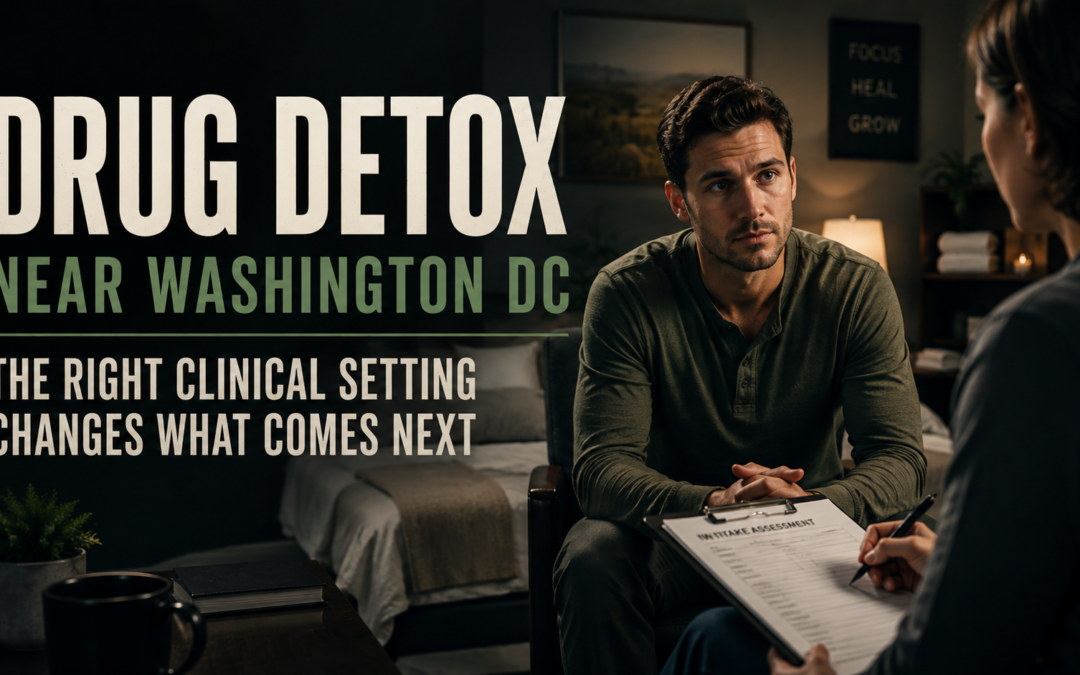
Drug detox near Washington DC is often the first step people picture when they finally decide to seek help for a substance use disorder, and choosing where that step happens matters more than most people realize. If you or someone you love is preparing for detox, that decision can feel heavy and confusing.
You may be wondering whether detox is enough on its own, or how to tell one program from another. Those questions are completely understandable.
Please know that reaching out for information is a brave and hopeful step. This article explains what detox involves, why the clinical setting shapes everything that follows, what to expect, and how to take a confident next step forward. You are not alone in this.
What Does Drug Detox Near Washington DC Involve?
Drug detox near Washington DC involves the medically supervised process of safely clearing substances from the body while managing withdrawal symptoms. It gives your body a stable, supported way to adjust to life without the substance it has come to depend on.
When a person uses drugs or alcohol regularly, the body adapts to their presence. Removing them suddenly can cause withdrawal, which ranges from uncomfortable to genuinely dangerous depending on the substance.
Medical detox helps you move through this stage safely. A caring team monitors your symptoms, eases your discomfort, and keeps you steady during a vulnerable time.
Why supervision matters
Supervision matters because some withdrawal symptoms can become serious without medical support. Alcohol and certain sedatives, for example, can cause reactions that need close monitoring.
A supervised setting gives you both safety and comfort. Instead of facing withdrawal alone, you have people beside you who know exactly how to help.
Why Does the Right Clinical Setting Change What Comes Next?
The right clinical setting changes what comes next because detox is not just about getting through withdrawal, it is about setting up the recovery that follows. A strong setting treats detox as the first chapter of care, not a standalone event.
Where you detox shapes what happens the moment withdrawal ends. In a thoughtful clinical setting, your team is already thinking ahead, connecting you to the next stage before you finish this one.
That continuity protects your progress. Instead of walking out the door with nowhere to turn, you step into a plan that is ready and waiting.
A setting that plans beyond withdrawal
A quality clinical setting builds a bridge from detox into ongoing treatment. It looks at the reasons behind substance use, not just the physical dependence.
Think of detox like clearing debris after a storm. Clearing the debris is essential, but rebuilding is what actually restores the home. The right setting starts planning that rebuild from day one.
Why a disconnected detox falls short
A detox that stands alone often leaves people vulnerable the moment it ends. Clearing the body without a next step can leave the underlying causes untouched.
This gap is where many people struggle. Choosing a setting that connects detox to continued care helps close it, giving recovery a far stronger chance to hold.
What Should You Expect During Drug Detox Near Washington DC?
You should expect a supportive, medically monitored process that begins with a thorough assessment and continues with steady care. Good drug detox near Washington DC starts by understanding your full story, not just your substance use.
Most programs begin with an evaluation. This helps the care team understand your history, your health, and the substances involved, so they can shape detox around your specific needs.
From there, a typical detox experience includes:
- Medical monitoring to keep you safe and comfortable as symptoms arise.
- Symptom relief through appropriate care that eases discomfort.
- Emotional support from staff who understand what you are going through.
- A calm environment designed to help you rest and stabilize.
- Early planning for the treatment that follows detox.
The length of detox varies from person to person. It often takes several days to about a week, depending on the substance, your history, and your overall health.
Comfort matters, not just safety
Comfort matters because a person who feels supported is more likely to complete detox and continue into recovery. Withdrawal is exhausting, and compassionate care makes it more bearable.
Feeling safe also eases the fear that so often surrounds this step. That sense of security can make all the difference in those early, vulnerable days.
How Does Detox Fit Into the Full Continuum of Care?
Detox fits into the full continuum of care as the stabilizing first step that makes everything else possible, not the finish line of recovery. Clearing the body creates a foundation, and the deeper healing work begins afterward.
Detox addresses physical dependence. On its own, it does not resolve the reasons a person began using in the first place.
Lasting recovery usually continues through several levels of care. A good treatment team helps match the right support to each stage. These often include:
- Medically supervised detox for a safe, stable start.
- Residential or inpatient care for structured, round-the-clock support in a focused environment.
- Partial hospitalization for intensive daytime treatment with evenings spent at home.
- Intensive outpatient care for regular, structured sessions that still allow for work, school, or family life.
- Outpatient care for ongoing therapy and check-ins as daily routines rebuild.
Many people move through several of these stages. Each one eases toward greater independence at a manageable pace.
Why the step-down approach protects progress
A gradual step-down protects the gains you work so hard to build. Moving from full support to no support all at once can feel overwhelming and unsteady.
Picture learning to swim. You do not leap into the deep end the moment you leave the shallow water. You move deeper as your confidence grows, and the continuum of care works the same way.
How Are Co-occurring Mental Health Conditions Addressed During Detox?
Co-occurring mental health conditions are addressed by treating substance use and mental health together, because many people living with a substance use disorder also face depression, anxiety, or trauma. Treating both together works better than treating either one alone.
Many people first used substances to quiet anxiety, ease depression, or numb painful memories. When those substances leave the body, the underlying struggles can surface again.
This is why a whole-person approach matters so much. Ignoring mental health during detox can leave a person without support at a fragile moment.
Why integrated care makes a difference
Integrated care brings mental health support and substance use treatment into one coordinated plan. A single team works from the same understanding of your needs, so nothing important gets left behind.
This approach, sometimes called treatment for co-occurring conditions, addresses the roots of substance use rather than only the surface. When the underlying pain receives real attention, recovery has a far greater chance of lasting.
How Do You Decide Where to Begin Detox?
Deciding where to begin becomes clearer when you focus on the setting and support your situation truly calls for. You do not have to make this choice alone.
Use these questions to guide your decision:
- Does the program offer medical supervision throughout detox? Safe, monitored care matters, especially with alcohol, opioids, or sedatives.
- Does detox connect directly to continued treatment? A setting that plans beyond withdrawal helps protect your progress.
- Does the program treat mental health alongside substance use? Integrated care addresses the whole picture, not just one part.
- Will the team build a plan around your specific needs? Personalized care reflects a thoughtful, results-focused approach.
- Do you feel safe and supported by the people you spoke with? Trust how a program feels when you reach out.
Answering these questions honestly can help you find care that fits. Trust the responses that feel specific, caring, and centered on your needs.
Common Questions Before Starting Treatment
Is detox enough to overcome a substance use disorder?
Detox alone is rarely enough for lasting recovery. It safely clears the substance from your body, but the therapy and support that follow are what help you address the deeper causes and build a healthier life.
How long does drug detox take?
The length varies depending on the substance, your history, and your overall health. Many people complete detox within several days to about a week, and your care team will guide you through what to expect.
Will withdrawal be painful?
Withdrawal can be uncomfortable, but medical detox is designed to keep you as safe and comfortable as possible. A caring team monitors your symptoms and provides support to ease your experience.
What happens right after detox ends?
Detox is the first step, and most people continue into a higher level of care like residential, partial hospitalization, or intensive outpatient treatment. The right setting arranges this transition in advance, so support continues without a gap.
Can my family be involved?
Yes. Many programs include family in the healing process through therapy and education. Support from loved ones can strengthen recovery and help everyone move forward together.
You Do Not Have to Walk This Road Alone
Choosing the right drug detox near Washington DC is about far more than getting through withdrawal. It is about starting in a clinical setting that treats detox as the beginning of a connected plan, one that carries you steadily into the care that follows.
You are not alone in this, and recovery is possible with the right support around you. A thoughtful setting clears the way and prepares you for the healing work ahead, giving your progress a foundation strong enough to hold.
When you feel ready, consider reaching out to a treatment provider that offers medically supervised detox alongside continued care. A compassionate team can listen to your story, answer your questions, and help you build a plan that fits your needs. Take that next step whenever you are ready, because support is here for you.