
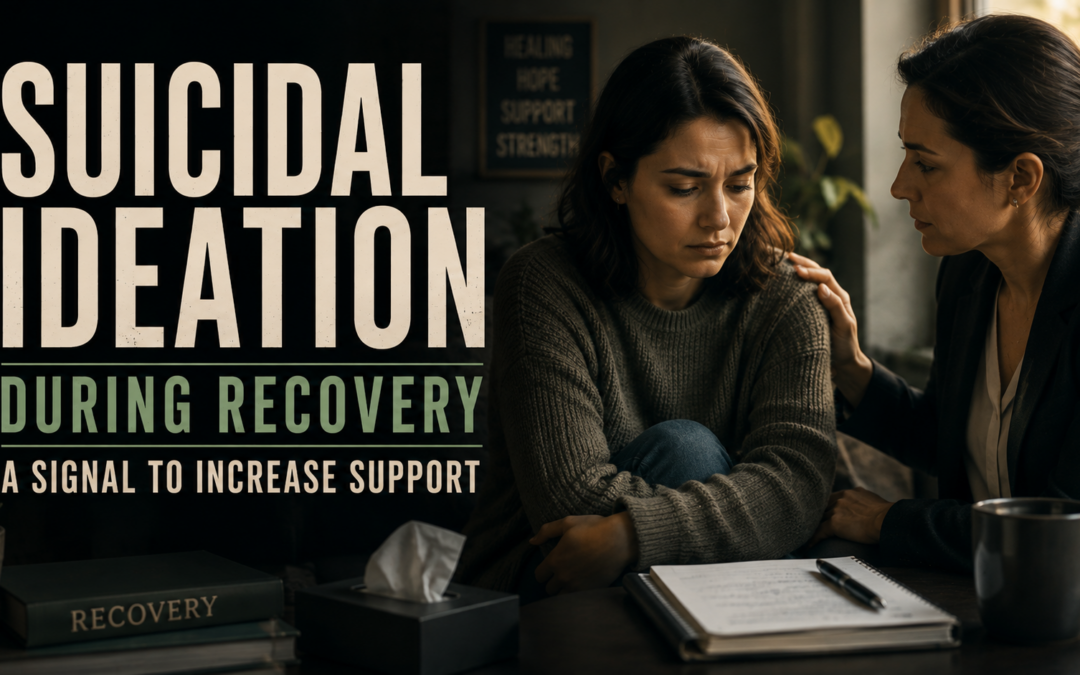
Suicidal ideation during recovery is a serious signal that a person needs more support, not less, even though it can feel frightening for everyone involved. If you or someone you love has faced these thoughts while working toward healing, please know that they do not mean recovery has failed. They mean the road has grown harder, and more care is needed right now.
Recovery is not a straight line. It can bring difficult stretches where old pain resurfaces and hope feels thin.
Please know that reaching out for information is a brave and caring step. This article explains what these thoughts mean during recovery, why they call for more support, how they connect to addiction and mental health, what care can help, and how to take a confident next step.
What Does Suicidal Ideation During Recovery Mean?
Suicidal ideation during recovery means having thoughts about ending one’s life while working toward healing from addiction, a mental health condition, or both. These thoughts range from passing wishes to not be here to more active, detailed thinking, and every point on that spectrum deserves compassion and attention.
Recovery asks a great deal of a person. As substances leave the body and numbed emotions return, difficult feelings can surface all at once.
This is not a sign of weakness or failure. It reflects how hard the healing process can be, and it signals that a person needs steadier support during a vulnerable time.
These thoughts are more common than people expect
Thoughts of suicide during recovery are more common than many people realize, and having them does not make anyone broken. They are a signal of deep pain, not a character flaw.
Understanding this helps remove the shame that so often keeps people silent. When we treat these thoughts as a health concern, reaching out becomes far less frightening.
Why Is Suicidal Ideation During Recovery a Signal to Increase Support?
Suicidal ideation during recovery is a signal to increase support because these thoughts show that a person’s pain has outpaced the care they currently have. The right response is to add more help, not to step away from treatment out of fear.
Many people instinctively want to pull back when these thoughts appear. A person might fear judgment, and a loved one might feel unsure how to help.
Pulling back at this moment is exactly the wrong direction. When distress rises, connection and care are what steady the ground, not distance.
Why leaving treatment makes things harder
Leaving treatment during a vulnerable stretch removes the very support a person needs most. The structure, guidance, and connection of care are protective, especially when pain runs high.
Think of it like a storm at sea. You do not abandon the boat when the waves grow tall. You hold on tighter and call for help.
Why more support changes the outcome
Adding support gives a person the resources to move through the hardest moments safely. A care team can adjust the treatment plan, increase check-ins, and address what is fueling the pain.
This is why honesty matters so much here. Sharing these thoughts with a provider opens the door to more help, not less, and that extra care can make all the difference.
Summary: These thoughts point to a need for more care, and staying connected to treatment is one of the most protective choices a person can make.
How Are Suicidal Ideation and Addiction Connected?
Suicidal ideation and addiction are closely connected because substance use affects mood, judgment, and the internal barriers that help hold difficult thoughts in check. During recovery, as the brain and body adjust, this connection can feel especially raw.
Many people first used substances to numb emotional pain. When that coping tool is set aside, the underlying pain can surface with force.
This does not mean recovery was a mistake. It means the deeper wounds are finally coming into view, and they deserve gentle, focused care.
When mental health conditions overlap
Suicidal thoughts often appear alongside conditions like depression, anxiety, bipolar disorder, or post-traumatic stress. When a substance use disorder joins the picture, each condition can make the others harder to manage.
These overlapping struggles are known as co-occurring conditions. Treating them together, rather than one at a time, tends to offer more stable and lasting relief.
Why integrated care matters
Integrated care matters because addressing addiction and mental health at the same time works better than treating either one alone. A coordinated team can see the full picture rather than isolated pieces of it.
This approach means your care adapts to everything you are carrying. Nothing important gets left out, and no part of your story goes unheard.
What Are the Warning Signs to Watch For?
The warning signs of suicidal ideation during recovery include changes in mood, behavior, and language that signal deep emotional pain. Noticing them early can open the door to help before a crisis deepens.
Watch for these signs in yourself or someone you love:
- Talking about wanting to die, feeling hopeless, or being a burden to others.
- Withdrawing from treatment, support groups, friends, or family.
- Expressing that recovery feels pointless or too hard to continue.
- A return to substance use or a strong pull toward it.
- Giving away meaningful possessions or saying goodbye in unusual ways.
- Changes in sleep, appetite, or energy that persist over time.
- A sudden sense of calm after a period of deep distress.
These signs are not always obvious, and they do not always follow a predictable pattern. Trust your instincts if something feels wrong, and reach out rather than wait.
If you or someone you love is in immediate danger, please seek help right away. You can call or text the 988 Suicide and Crisis Lifeline in the United States at any time, day or night.
What Levels of Care Respond to Suicidal Ideation During Recovery?
Several levels of care respond to suicidal ideation during recovery, and the right fit depends on a person’s safety, symptoms, and current needs. When these thoughts appear, care can step up to provide more structure and support.
Common levels of care include:
- Residential or inpatient care for structured, round-the-clock support during the most vulnerable stretches.
- Partial hospitalization for intensive daytime treatment with evenings spent at home.
- Intensive outpatient care for regular, structured sessions that still allow for work and family life.
- Outpatient care for ongoing therapy, medication support, and steady check-ins.
A good care team helps match the level of support to where a person is right now. When distress rises, care can step up, and it can ease back as stability returns.
How treatment plans adjust
Treatment plans are meant to flex, especially when new challenges appear. A team can add sessions, adjust medication, or increase safety planning in response to these thoughts.
This responsiveness is a strength of good care. Instead of a fixed script, your plan grows and shifts alongside your needs.
The role of safety planning
Safety planning is a practical, compassionate tool that prepares a person for difficult moments before they arrive. It names personal warning signs, coping steps, and exactly who to contact for help.
Having that plan in place removes panic from a crisis. Instead of scrambling, a person can follow steps they already know and trust.
How Do You Decide When to Seek Help?
You should seek help as soon as suicidal ideation appears during recovery, because early support can ease pain and protect safety long before a crisis develops. You never have to wait until things feel unbearable to deserve care.
Use these questions to guide your decision:
- Are you or a loved one having thoughts of death or self-harm? Any such thought is a clear reason to reach out to a provider or a crisis line.
- Have these thoughts grown stronger or more frequent during recovery? Deepening thoughts call for prompt, caring attention.
- Is the pull toward substances returning alongside these thoughts? A team that treats co-occurring conditions can address both together.
- Do the thoughts include a plan or intent? This signals an urgent need for immediate help.
- Do you feel alone with what you are carrying? Reaching out breaks the isolation that so often makes pain feel heavier.
Answering yes to any of these does not mean something is wrong with you. It means support is available, and taking that step is an act of courage.
If you are ever in crisis, help is available right now. You can call or text the 988 Suicide and Crisis Lifeline in the United States at any time.
Common Questions During Recovery
Does having these thoughts mean my recovery has failed?
No. Suicidal thoughts during recovery reflect deep pain surfacing as you heal, not a failure. They signal that you need more support right now, and reaching out is a sign of strength.
Should I stop treatment if these thoughts appear?
No. Staying connected to treatment is one of the most protective choices you can make. Sharing these thoughts with your care team allows them to add support and adjust your plan to keep you safe.
How do I talk to my care team about this?
Speak honestly, even if it feels frightening. Your team is there to help, not to judge, and telling them opens the door to more care. You can simply say you have been having thoughts of not wanting to be here.
How do I support a loved one going through this?
Listen without judgment, ask directly how they are feeling, and encourage them to stay in treatment. Let them know they are not alone, and reach out to their care team or 988 if you are worried about their safety.
You Are Not Alone in This
Suicidal ideation during recovery is a signal to lean into support, not to step away from the care that can help you heal. If these thoughts have surfaced for you or someone you love, please know that what you are experiencing is real, it is understandable, and it deserves compassionate attention.
You are not alone in this, and recovery remains possible with the right support around you. The bravest step is often the simplest one, telling someone what you are carrying and letting them help.
When you feel ready, reach out to a treatment provider who understands both recovery and the pain that can surface along the way. A caring team can listen to your story, answer your questions, and help you find steadier ground. If you or someone you love is in crisis, call or text the 988 Suicide and Crisis Lifeline anytime, because support is here for you.