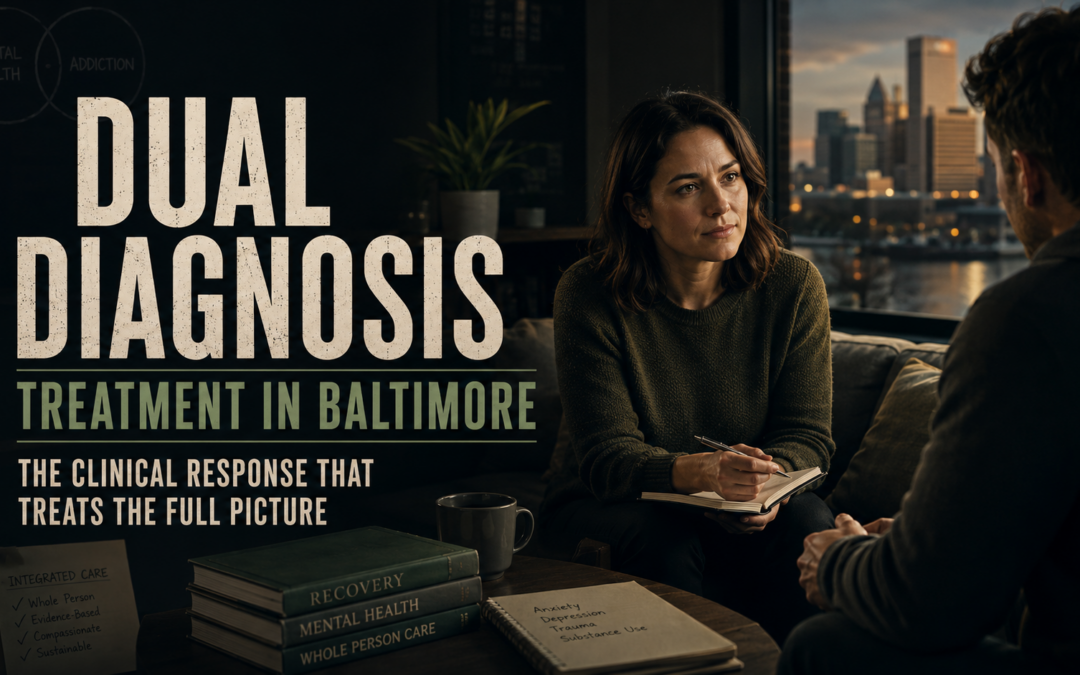
Dual diagnosis treatment in Baltimore offers a more complete path forward for people living with both a substance use disorder and a mental health condition at the same time. If you or someone you love has cycled through treatment before, only to feel like something important kept getting missed, this approach may be the piece that was left out.
Addiction rarely travels alone. For many people, it grows alongside depression, anxiety, or the lasting effects of trauma, and each struggle feeds the other.
Please know that reaching out for information is a courageous step. This article explains what this kind of care involves, why treating both conditions together matters so much, how people in Baltimore benefit, and how to take a confident next step forward.
What Is Dual Diagnosis Treatment in Baltimore?
Dual diagnosis treatment in Baltimore is a coordinated approach that addresses a substance use disorder and a mental health condition at the same time, within one connected plan. It is sometimes called co-occurring disorder treatment, and it is built for people carrying both challenges together.
The two conditions often overlap in ways that are hard to untangle. Someone might drink to quiet anxiety, then feel that anxiety deepen once the alcohol wears off.
Treatment meets you where you are. A caring team learns your full story, then shapes care around your history, your symptoms, and your goals.
Care that treats the whole person
Good dual diagnosis care looks beyond a single symptom to the full picture of your life. It considers your mental health, your substance use, your relationships, and your daily routines together.
This whole-person approach helps recovery feel steady rather than scattered. When every piece works together, lasting change becomes far more possible.
Why Does Treating Addiction and Mental Health Together Matter So Much?
Treating addiction and mental health together matters because these conditions are so tightly connected that addressing only one often leaves the door open for the other to pull a person back. When treatment separates them, progress in one area can quietly unravel because of the other.
Imagine trying to bail water from a boat without patching the leak. You may work hard and still feel like you are sinking, because the real source of the problem goes untouched.
Dual diagnosis treatment patches the leak. It addresses the substance use and the mental health condition side by side, so neither one gets left behind.
Why treating one at a time falls short
Treating one condition and then the other, in sequence, often leaves people stuck in a frustrating cycle. Someone might complete addiction treatment, feel steady for a while, then struggle again when an untreated mental health condition resurfaces.
The reverse happens too. A person might work on their depression while an active substance use disorder quietly undermines every bit of progress they make.
What integrated care looks like
Integrated care means one team builds a single plan that treats your mental health and your substance use together. Your therapist, your prescriber, and your support staff all work from the same understanding of your needs.
That coordination prevents the mixed messages people often receive when providers work in isolation. It also means your care can adjust as you do, without asking you to start over.
Summary: Because addiction and mental health conditions feed each other, treating them together gives recovery a far stronger foundation.
How Do Baltimore Residents Benefit From Dual Diagnosis Treatment?
Baltimore residents benefit from dual diagnosis treatment because it meets the real, layered challenges that life in a demanding city can bring. Chronic stress, exposure to hardship, and the weight of daily pressures can shape both mental health and substance use over time.
For many people here, these struggles build gradually. What starts as a way to cope with stress or painful memories can slowly grow into something heavier.
Dual diagnosis treatment in Baltimore responds to that full reality. Instead of treating one piece in isolation, it addresses the connected challenges a person is truly living with.
Care shaped around real life
Local care can flex around the responsibilities that matter to you, from work to family to school. This flexibility removes a common barrier that keeps people from reaching out.
You do not have to choose between your daily life and your healing. With the right plan, meaningful support can fit into the world you already live in.
What Co-occurring Conditions Does Dual Diagnosis Treatment Address?
Dual diagnosis treatment addresses a wide range of mental health conditions that commonly appear alongside a substance use disorder. Depression, anxiety, and post-traumatic stress are among the most frequent, and each one connects to substance use in its own way.
Understanding these connections can help you feel less alone in your experience. Common co-occurring conditions include:
- Depression, where substances may offer brief relief from low mood before deepening it over time.
- Anxiety, where alcohol or other substances quiet worry for a moment, then leave it stronger.
- Post-traumatic stress, where substances numb painful memories or calm a restless nervous system.
- Bipolar disorder, where substances may seem to steady intense mood shifts but often worsen them.
These patterns are deeply human responses to real pain. They are not signs of weakness, and they are exactly what integrated care is designed to treat.
Why the connection runs so deep
The connection runs deep because substances often become a way to manage difficult feelings. When the underlying condition stays untreated, the pull toward that coping tool remains strong.
Dual diagnosis treatment gently interrupts this cycle. By caring for the mental health condition, it eases the very distress that fueled the substance use in the first place.
What Levels of Care Are Available for Dual Diagnosis Treatment in Baltimore?
Several levels of care are available for dual diagnosis treatment in Baltimore, and the right fit depends on your symptoms, your safety, and your daily responsibilities. Care can grow more intensive or ease back as your needs change.
Common levels of care include:
- Residential or inpatient care for structured, round-the-clock support during more difficult stretches.
- Partial hospitalization for intensive daytime treatment with evenings spent at home.
- Intensive outpatient care for regular, structured sessions that still allow for work and family life.
- Outpatient care for ongoing therapy, medication support, and steady check-ins.
A good care team helps match the level of support to where you are right now. As you grow steadier, your care can shift to something lighter, and it can step back up whenever you need more.
Therapy at the heart of treatment
Therapy sits at the center of dual diagnosis care and takes several helpful forms. You might work one on one with a counselor, join group sessions, or include your family in the process.
Each type of therapy offers something different. Individual sessions explore personal roots, group work builds connection, and family involvement helps repair important relationships.
How medication support fits in
Medication support may be part of your plan when it can help stabilize a mental health condition. A prescriber coordinates it with the rest of your care, so nothing happens in isolation.
This coordination is one of the quiet strengths of integrated treatment. Your whole team works together, which helps every part of your care support the others.
How Do You Decide If Dual Diagnosis Treatment Is Right for You?
Deciding whether this kind of care fits becomes clearer when you focus on the full range of what you are facing, not just one piece of it. You do not have to make this choice alone.
Use these questions to guide your decision:
- Do you use substances to manage anxiety, sadness, sleep, or difficult memories? This pattern often points to a co-occurring condition worth treating.
- Do your mood or mental health struggles worsen when you try to cut back? This connection suggests both concerns need attention.
- Has past treatment helped for a while but not fully lasted? Earlier care may have addressed only one side of the picture.
- Have you been diagnosed with a mental health condition alongside substance use? Integrated care is designed for exactly this situation.
- Do you feel like something keeps getting missed in your care? Treating both together may be the piece that was left out.
Answering yes to any of these does not mean something is wrong with you. It means fuller support is available, and you are worthy of it.
Common Questions Before Starting Treatment
Can both conditions really be treated at the same time?
Yes. Integrated programs are built specifically to treat a substance use disorder and a mental health condition together. This coordinated approach tends to support more lasting recovery than treating each concern separately.
What if I have tried treatment before and it did not last?
Earlier treatment that focused on only one condition may have left the other unaddressed. Dual diagnosis treatment aims to close that gap, which is often why previous attempts did not fully hold.
Will I need medication?
Sometimes, and sometimes not. If medication can help manage a mental health condition, a prescriber will discuss it with you and coordinate it with your therapy, always with your input.
Can I get care without stepping away from work or family?
Yes. Outpatient and intensive outpatient programs are designed to fit around daily responsibilities. Many people receive meaningful support while continuing to meet their commitments.
You Do Not Have to Navigate This Alone
Dual diagnosis treatment in Baltimore honors the full truth of what you are living with, caring for both a substance use disorder and a mental health condition side by side rather than one at a time. If you have felt stuck in a cycle where progress kept slipping away, this integrated approach may be the missing piece.
You are not alone in this, and recovery is possible with the right support around you. Treating the whole picture, not just one part of it, gives your healing a steady and lasting foundation.
When you feel ready, consider reaching out to a treatment provider that offers coordinated care for co-occurring conditions. A compassionate team can listen to your story, answer your questions, and help you build a plan that fits your life. Take that next step whenever you are ready, because support is here for you.