
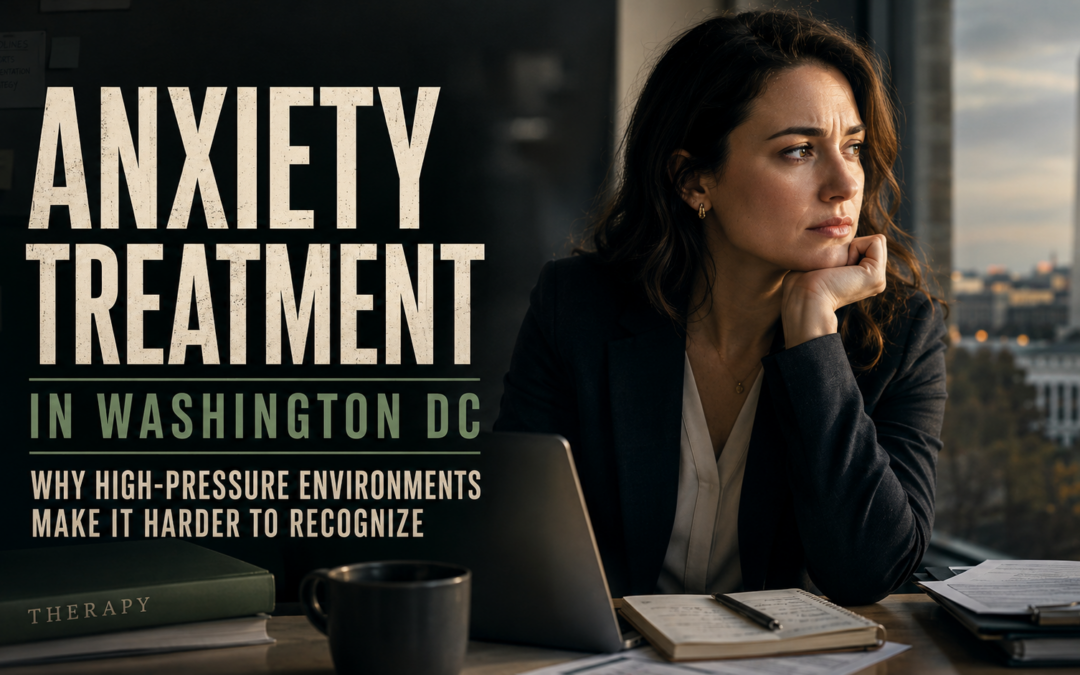
Anxiety treatment in Washington DC serves a population that often carries stress so constant it starts to feel normal. If you live and work in this city, you know the pace. The long hours, the high stakes, the sense that everyone around you is performing at full capacity. In that kind of environment, the signs of an anxiety disorder can hide in plain sight.
Many people in the DC area assume their racing thoughts, sleepless nights, and tight chest are simply the price of ambition. That belief can delay the support they deserve.
This article explains why high-pressure settings make anxiety so hard to recognize, what treatment actually involves, the levels of care available, and how to take a confident next step. You are not alone in this, and help is closer than you might think.
What Is Anxiety Treatment in Washington DC?
Anxiety treatment in Washington DC is professional, evidence-based care that helps people understand, manage, and recover from anxiety disorders. It combines therapy, medical support when needed, and practical tools you can use in daily life.
Anxiety is more than everyday worry. It is a recognized health condition that affects how you think, feel, sleep, and function. When it goes untreated, it can grow heavier over time.
Treatment meets you where you are. A caring team looks at your full story, then builds a plan shaped around your needs, your goals, and the realities of your life in the city.
Anxiety is treatable, not a personal failing
Anxiety responds well to care, and struggling with it says nothing about your strength or character. It reflects a health condition, not a weakness.
Understanding this can lift a heavy burden. When you see anxiety as something treatable, reaching out feels far less frightening.
Why Do High-Pressure Environments Make Anxiety Harder to Recognize?
High-pressure environments make anxiety harder to recognize because they normalize the very symptoms that signal a problem. In a city built on ambition, exhaustion and constant tension can feel like standard operating procedure.
Washington DC runs on deadlines, high expectations, and long workdays. Careers in government, law, policy, and advocacy often reward people who push through stress without pausing.
That culture can quietly disguise a real condition. When everyone around you seems stretched thin, your own struggle can start to feel unremarkable.
When symptoms look like ambition
Anxiety symptoms often resemble the traits high-pressure workplaces celebrate. Racing thoughts can pass for sharp focus, and restlessness can look like drive.
This overlap is where recognition breaks down. A person may see their symptoms as proof of dedication rather than a sign that something needs attention.
The comparison trap in a driven city
In a city full of high achievers, comparison can bury anxiety even deeper. You might measure your stress against a colleague who seems to handle even more, then decide your own struggle does not count.
That comparison keeps many people silent. The truth is that appearances rarely reveal what someone carries inside, and your experience matters regardless of how others seem to cope.
Summary: The DC culture of relentless drive can make anxiety feel normal, which delays the care that could help.
What Are the Signs of Anxiety Worth Paying Attention To?
The signs of anxiety worth paying attention to include persistent worry, physical tension, and changes in sleep or focus that last for weeks. When these patterns interfere with daily life, they deserve care.
Watch for these common signs in yourself or someone you love:
- Ongoing worry or dread that feels hard to control.
- A racing heart, tight chest, or shallow breathing during ordinary moments.
- Trouble falling asleep, staying asleep, or quieting a busy mind at night.
- Irritability, restlessness, or a constant sense of being on edge.
- Difficulty concentrating or feeling your thoughts race ahead of you.
- Avoiding situations that once felt manageable.
- Physical symptoms like headaches, stomach trouble, or muscle tension.
None of these signs point to a flaw in you. They are signals that your mind and body are asking for support.
When to trust your instincts
Trust your instincts if something feels off, even when your symptoms look like ordinary stress. You do not have to wait until things feel unbearable to seek help.
If worry has started shaping your choices or stealing your rest, that is reason enough to reach out. Early support often makes recovery smoother.
How Are Anxiety and Substance Use Connected?
Anxiety and substance use are closely connected because many people use alcohol or other substances to quiet their worry. In a high-pressure city, an after-work drink to unwind can gradually become a way to cope.
This response is deeply human. When anxiety makes evenings restless and mornings anxious, anything that softens the edge can feel like relief.
The relief rarely lasts. Over time, substances tend to deepen anxiety and add a new layer of struggle on top of the original one.
Why treating both together matters
When anxiety and substance use appear together, treating them at the same time works better than treating either one alone. These are known as co-occurring conditions.
Integrated care brings your mental health support and substance use treatment into one coordinated plan. A single team works from the same understanding of your needs, so nothing important gets left behind.
This whole-person approach addresses the root of the struggle, not just the surface. When the underlying anxiety finally receives attention, lasting recovery becomes far more possible.
What Levels of Care Are Available for Anxiety Treatment in Washington DC?
Several levels of care are available for anxiety treatment in Washington DC, and the right fit depends on your symptoms, your safety, and your daily responsibilities. Care can grow more intensive or ease back as your needs change.
Common levels of care include:
- Residential or inpatient care for structured, round-the-clock support during more difficult stretches.
- Partial hospitalization for intensive daytime treatment with evenings spent at home.
- Intensive outpatient care for regular, structured sessions that still allow for work and family life.
- Outpatient care for ongoing therapy and check-ins that fit around a demanding schedule.
A good care team helps match the level of support to where you are right now. As you grow steadier, your care can shift to something lighter, and it can step back up whenever you need more.
Therapy at the heart of treatment
Therapy sits at the center of anxiety care and takes several helpful forms. You might work one on one with a counselor, join group sessions, or learn practical skills for managing worry.
Approaches like cognitive behavioral therapy help you understand the thought patterns driving your anxiety. Over time, you build tools that calm the mind and steady daily life.
Flexible options for busy professionals
Flexible care matters in a city where stepping away from work feels impossible. Outpatient and intensive outpatient programs offer real support without asking you to pause your life entirely.
This balance removes a major barrier to getting help. You can receive meaningful treatment while continuing to meet the responsibilities that matter to you.
How Do You Decide When to Seek Anxiety Treatment?
You should consider seeking treatment when anxiety affects your work, relationships, sleep, or peace of mind, or when worry feels harder to manage than it should. You never have to reach a breaking point to deserve support.
Use these questions to guide your decision:
- Has worry lasted for weeks or grown stronger over time? Persistent anxiety responds well to professional care.
- Is anxiety affecting your sleep, focus, or health? Ongoing disruption is a clear reason to reach out.
- Are you using alcohol or other substances to cope? A provider who treats co-occurring conditions can address both together.
- Have you pulled back from people or activities you value? Avoidance often signals that support could help.
- Does your stress feel heavier than the demands around you explain? Trust that feeling, even in a high-pressure city.
Answering yes to any of these does not mean something is wrong with you. It means care is available, and you are worthy of it.
Common Questions Before Starting Treatment
Is anxiety really a medical condition, or am I just stressed?
Anxiety disorders are recognized health conditions that go beyond everyday stress. If worry persists for weeks and affects your daily life, it is worth talking with a professional, regardless of how demanding your schedule feels.
Can I get treatment without stepping away from my career?
Yes. Outpatient and intensive outpatient programs are designed to fit around work and family responsibilities. Many people receive meaningful support while continuing to meet their daily commitments.
What if I have tried to manage this on my own and it did not work?
Managing anxiety alone is common, especially in high-pressure settings. Professional care offers proven tools and support that self-management often cannot provide, and reaching out is a strong step forward.
Will therapy really help with the pressures of living here?
Yes. Therapy helps you understand your triggers, build practical coping skills, and respond to stress in healthier ways. These tools can make a real difference in a demanding environment.
You Do Not Have to Navigate This Alone
Anxiety treatment in Washington DC exists precisely because this city’s relentless pace can make a real condition feel like ordinary life. If your worry, tension, or sleepless nights have quietly become the norm, please know that what you are experiencing is real and deserving of care.
You are not alone in this, and recovery is possible with the right support around you. Recognizing your anxiety, apart from the pressures around you, is a courageous and hopeful first step.
When you feel ready, consider reaching out to a treatment provider who understands anxiety and the demands of life in the DC area. A compassionate team can listen to your story, answer your questions, and help you build a plan that fits your life. Take that next step whenever you are ready, because support is here for you.