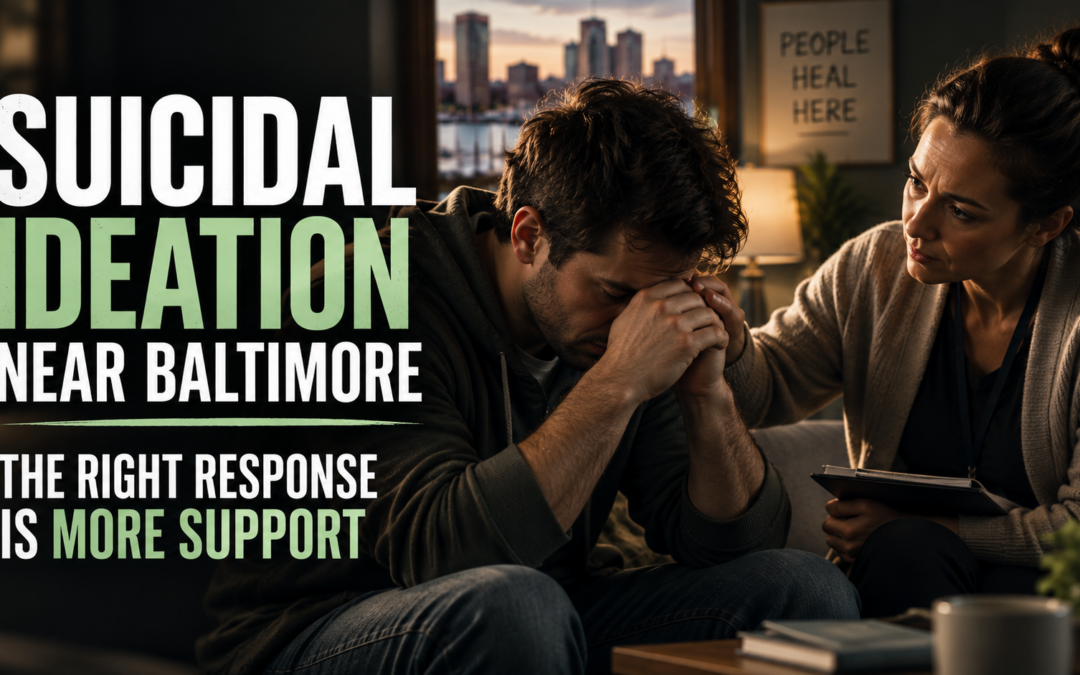
Suicidal ideation near Baltimore deserves a clinical response that leans in with active support, not one that quietly observes and hopes the pain passes on its own. If you or someone you love is having thoughts of not wanting to be here, please know that what you are feeling is real, and it deserves compassionate, hands-on care.
These thoughts can feel frightening and lonely. You might worry about being judged, brushed aside, or told to simply wait things out. That fear makes sense, and it is exactly why the kind of response you receive matters so much.
Reaching out for information is a brave and hopeful step. This article explains what these thoughts are, why they call for active care rather than passive monitoring, the levels of support available, how co-occurring conditions fit in, and how to take a confident next step. You are not alone in this.
If you or someone you love is in immediate danger, please reach out right away. You can call or text the 988 Suicide and Crisis Lifeline in the United States at any time, day or night.
What Is Suicidal Ideation?
Suicidal ideation is having thoughts about ending your life, ranging from fleeting wishes to detailed plans. It is a symptom of deep emotional pain, not a character flaw or a sign of weakness.
These thoughts exist on a spectrum. Some people notice passing thoughts that they do not want to keep living. Others develop specific plans or feel a strong urge to act.
All of these experiences deserve attention and care. Wherever you fall on that spectrum, your pain is valid, and support is available.
Passive and active thoughts
Suicidal ideation is often described as passive or active. Passive ideation involves wishing you were not alive, while active ideation involves thinking about taking action.
Both matter, and neither should be brushed aside. Understanding the difference helps a care team respond with the right level of support.
Why Does Suicidal Ideation Near Baltimore Require an Active Clinical Response?
Suicidal ideation near Baltimore requires an active clinical response because these thoughts signal a person in real pain who needs care to grow, not shrink. A strong response adds support, connection, and safety instead of leaving someone to manage alone.
An active response means a trained team steps in with a clear plan. They assess safety, address the pain underneath, and surround the person with steady, professional care.
This kind of support treats the whole person. It looks at what is driving the thoughts, then builds a path toward relief and stability.
Support that moves toward the person
An active clinical response moves toward a person in pain rather than away. It offers therapy, safety planning, and human connection at the exact moment isolation feels heaviest.
Think of it like reaching out a hand when someone is struggling in deep water. Watching from the shore helps no one. Stepping in and offering steady support can change everything.
Why Is Passive Monitoring So Risky?
Passive monitoring is risky because it leaves a person alone with their pain while others observe from a distance. Quietly watching and waiting can allow a crisis to build unnoticed until it feels overwhelming.
Sometimes families or providers fall into a wait-and-see approach. They may hope the thoughts fade on their own, or feel unsure how to help.
That silence can feel like abandonment to someone who is already hurting. Waiting rarely resolves these thoughts, and it can let the underlying pain deepen.
The trap of watchful waiting
Watchful waiting can quietly suggest that a person must reach a breaking point before help arrives. No one should have to prove their pain is severe enough to deserve support.
Picture noticing smoke in a home and choosing to watch it rather than act. Early, active steps protect people, and the same is true for emotional crises where reaching out sooner often makes recovery smoother.
When observation replaces action
Observation without action leaves the real work undone. Checking in without offering meaningful care can create a false sense that something is being handled.
True support closes that gap. It pairs attention with a clear plan, so a person feels genuinely held rather than simply watched.
Bottom line: Passive monitoring leaves people isolated in their pain, while an active response steps in with real support before a crisis grows.
What Levels of Care Support Someone With Suicidal Ideation?
Several levels of care support someone experiencing suicidal ideation, and the right fit depends on safety, symptoms, and daily needs. Care can grow more intensive during a crisis and ease back as stability returns.
A good care team helps match the level of support to where a person is right now. Common levels of care include:
- Crisis stabilization for immediate, short-term safety and support during an acute moment.
- Residential or inpatient care for structured, round-the-clock support in a safe, focused setting.
- Partial hospitalization for intensive daytime treatment with evenings spent at home.
- Intensive outpatient care for regular, structured sessions that still allow for work, school, or family life.
- Outpatient care for ongoing therapy, medication support, and steady check-ins.
Many people move through several of these stages as they heal. This step-down approach eases a person toward greater independence at a pace that feels manageable.
Why matching care to the moment matters
Matching the level of care to the moment protects both safety and progress. During an acute crisis, more support offers protection. As stability returns, lighter care helps a person rebuild daily life.
That flexibility is a strength, not a setback. Care can step up whenever it is needed and ease back as a person grows steadier.
How Are Co-occurring Conditions Addressed?
Co-occurring conditions are addressed by treating mental health and substance use together, within one coordinated plan. Suicidal ideation often appears alongside depression, anxiety, trauma, or a substance use disorder, and treating everything together works better than treating any single part alone.
These overlapping struggles are common, not rare. There is no shame in needing support for more than one thing at once.
The pieces often feed each other. Someone might use substances to quiet emotional pain, and that pain may return stronger once the substance wears off. Untreated depression can deepen hopelessness, which fuels these thoughts.
Why integrated care makes a difference
Integrated care brings your mental health support and any substance use treatment into one team. Everyone works from the same understanding of your needs, so nothing important gets left behind.
This whole-person approach reaches the roots of the pain, not just the surface. When the underlying struggles finally receive attention, relief and stability become far more possible.
How Do You Decide When to Seek Help?
You should seek help whenever thoughts of suicide are present, and urgently if there is any immediate risk of harm. You never have to reach a breaking point to deserve care and support.
Use these questions to guide your next step:
- Are you or your loved one having thoughts of suicide or self-harm? Any level of these thoughts deserves professional support right away.
- Have these thoughts become more frequent or intense? Growing intensity is a clear reason to reach out promptly.
- Do depression, anxiety, trauma, or substance use appear alongside these thoughts? Integrated care can address every part together.
- Does the current response feel like quiet watching rather than real support? A more active clinical response can offer the care that is missing.
- Is there any immediate danger right now? Please treat this as an emergency and seek help immediately.
Answering yes to any of these does not mean something is wrong with you. It means active, compassionate care is available, and you deserve it.
If you or someone you love is in immediate danger, please reach out right now. You can call or text the 988 Suicide and Crisis Lifeline in the United States at any time, day or night.
What Families Often Ask
What should I do if my loved one is having suicidal thoughts?
Take the thoughts seriously and respond with support, not silence. Listen without judgment, stay present, and help connect them to professional care. If there is any immediate danger, call or text 988 or seek emergency help right away.
Is it wrong to just keep an eye on things and hope they pass?
Watching and waiting can leave a person alone with their pain at a fragile time. These thoughts usually need an active clinical response, so reaching out to a professional is far safer than monitoring from a distance.
Will talking about suicide make it worse?
No. Asking directly and compassionately about suicidal thoughts does not plant the idea. It often brings relief, showing your loved one that they are seen and that it is safe to talk openly.
What if my loved one refuses help?
This is a painful and common situation. Gentle, honest conversations, patience, and guidance from a professional can make a real difference over time. A caring team can also help you encourage treatment and respond safely if the risk becomes urgent.
Can treatment address other struggles at the same time?
Yes. Integrated care treats suicidal ideation alongside depression, anxiety, trauma, or substance use within one coordinated plan. Addressing everything together tends to support more lasting stability than treating any single part alone.
You Do Not Have to Navigate This Alone
Suicidal ideation near Baltimore deserves a clinical response that moves toward a person with real support, never one that quietly watches from a distance. If you or someone you love is carrying these thoughts, please know that this pain is real, and compassionate help is within reach.
You are not alone in this, and recovery is possible with the right support around you. Reaching out, even in a small way, can open the door to care that truly holds you.
When you feel ready, consider reaching out to a treatment provider that offers active, coordinated care for suicidal ideation and any related struggles. A compassionate team can listen to your story, answer your questions, and help you build a plan that keeps you safe and supported. Take that next step whenever you are ready, because support is here for you.
If you are in crisis right now, please call or text the 988 Suicide and Crisis Lifeline in the United States at any time. Help is available immediately, day or night.