
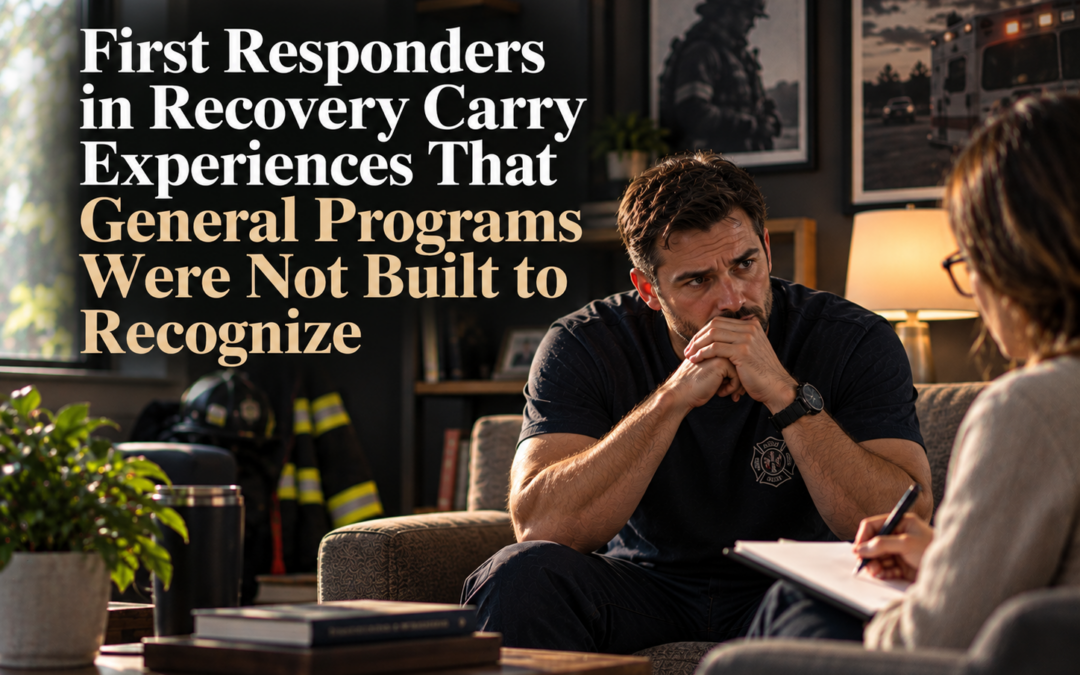
First responders in recovery often begin treatment carrying memories that few other people have ever had to hold. You may have performed CPR on a child, pulled someone from a wreck or stood in a home where a call ended the worst possible way. Then you cleared the scene, finished the report and answered the next call.
That rhythm can work for years. Over time, though, many police officers, firefighters, paramedics, dispatchers and corrections officers find that a few drinks after shift or something to help them sleep has quietly become part of how they get through.
If that sounds familiar, it does not mean you are weak. It means you have absorbed more than any one person was meant to carry, often without a safe place to set it down.
If you love someone who wears a badge or a uniform, you may be noticing changes you cannot quite name. Your concern makes sense. Asking questions is a caring place to begin, and support is available for both of you.
What Makes the Experiences of First Responders in Recovery Different?
The experiences of first responders in recovery are different because they involve repeated exposure to trauma that most people face only a few times in a lifetime, if ever. A single shift can include death, violence, serious injury and danger to the responder’s own safety.
Across a career, those calls stack up. Add rotating shifts, broken sleep and constant readiness, and the body rarely gets a chance to fully rest.
What Is Cumulative Trauma?
Cumulative trauma is the emotional and physical toll that builds from many distressing experiences over time rather than from one single event. No individual call may feel like the one that changed everything, yet the weight keeps growing.
Picture carrying one small stone home after every shift. Any single stone feels manageable. After years, the bag becomes impossible to lift.
Why Are Job Skills So Hard to Switch Off?
Job skills are hard to switch off because the habits that keep responders safe on duty become automatic over time. Scanning for threats, staying calm under pressure and setting emotions aside all save lives on a call.
At home, those same skills can look different. Hypervigilance can make a crowded store feel like a scene, and emotional control can feel like distance to a partner or child.
Why Do General Treatment Programs Often Fall Short?
General treatment programs often fall short for first responders because they were not designed around the volume of trauma, the workplace culture or the career concerns these individuals bring with them. Many general programs help people every day. The issue is fit, not effort.
When a program does not recognize what the job involves, first responders in recovery may feel unseen at the very moment they need to feel understood.
What Happens When a Counselor Does Not Understand the Work?
When a counselor does not understand the work, first responders in recovery may spend sessions explaining the job instead of healing from it. Some hold back details to protect others from graphic stories. Others notice a look of shock and quietly stop sharing.
Why Can Mixed Group Therapy Feel Uncomfortable?
Mixed group therapy can feel uncomfortable because a responder may recognize someone they once arrested, treated or transported. Other group members may also struggle to understand why a call from years ago still feels so present.
These reactions are understandable. They show why specialized awareness makes such a difference.
Which Career Concerns Get Overlooked?
General programs may overlook concerns about duty status, certification, firearm access and return-to-work steps. For first responders in recovery, these worries can feel as heavy as the cravings themselves. A plan that ignores them leaves a major source of stress untouched.
How Do Trauma and Moral Injury Affect First Responders in Recovery?
Trauma and moral injury affect first responders in recovery by shaping how they sleep, react, connect with others and judge themselves, often long after a call has ended. Both deserve direct, skilled attention in treatment.
Trauma can leave the nervous system stuck on high alert. Nightmares, irritability, numbness and intrusive memories are common signs that the body is still reacting to past danger.
What Is Moral Injury?
Moral injury is the deep distress that follows an experience where a person did something, failed to prevent something or witnessed something that violated their sense of right and wrong. It centers on guilt, shame, betrayal and grief rather than fear alone.
For first responders, it may follow a call where no one could be saved or a split-second decision with no good options. It can also follow a system that seemed to fail the very people they serve.
How Is Moral Injury Different From PTSD?
Post-traumatic stress disorder (PTSD) often centers on fear and a sense of threat, while moral injury centers on guilt and a broken sense of meaning. The two can overlap, and many first responders in recovery experience both.
Treatment that only targets fear responses may leave the moral wounds unaddressed. Healing often requires space to talk honestly about responsibility, forgiveness and purpose.
How Are Substance Use and Mental Health Connected for First Responders?
Substance use and mental health are closely connected for first responders because alcohol and other substances often become a way to sleep after night shifts, quiet intrusive memories or come down from adrenaline. That relief feels real in the moment, which is why the pattern can settle in quietly.
Over time, substances tend to deepen the very problems they seemed to ease. Alcohol fragments sleep, withdrawal can heighten anxiety and a substance use disorder can develop alongside PTSD, depression or anxiety.
Why Should Co-occurring Conditions Be Treated Together?
Co-occurring conditions should be treated together because each one feeds the other, and treating only one leaves the other free to pull a person back. This approach is called integrated or dual diagnosis care.
For first responders in recovery, integrated care means one team understands the trauma, the substance use and the job itself. No one has to decide which struggle deserves attention first.
How Do Peer Culture and Stigma Shape Recovery?
Peer culture and stigma shape recovery because many first responder workplaces value toughness, self-reliance and loyalty, which can make asking for help feel like letting the team down. Dark humor and a “shake it off” mindset help crews cope on the job. They can also keep real pain hidden.
For first responders in recovery, the fear of being seen as unreliable can delay care for years. That hesitation is understandable, and it is worth gently challenging.
Why Does Peer Support Matter So Much?
Peer support matters because hearing from someone who has worked the same kinds of calls can break through isolation faster than almost anything else. Sitting with people who know the job firsthand often makes it easier to finally talk.
Many departments now offer peer support teams. Recovery groups for responders can extend that connection after treatment ends.
Is Treatment Confidential?
Substance use treatment records are protected by federal privacy law and generally cannot be shared with an employer without written consent. Many departments also offer employee assistance programs (EAPs) that provide confidential support.
If privacy is your biggest worry, the admissions team at Arrowwood Addiction Treatment Center can talk through confidentiality, leave options and scheduling before you commit to anything.
What Levels of Care Support First Responders in Recovery?
Several levels of care support first responders in recovery, and the right fit depends on substance use, safety, mental health needs and work responsibilities. Care can step up during harder stretches and step down as stability grows.
- Medically supervised detox helps you withdraw safely with round-the-clock medical monitoring.
- Residential treatment offers structured support away from the station, the radio and daily triggers.
- Partial hospitalization program (PHP) provides full days of treatment with evenings spent at home.
- Intensive outpatient program (IOP) includes several sessions each week that can fit around shift schedules.
- Outpatient therapy offers ongoing counseling as you rebuild routines.
- Aftercare planning connects you with peer support and return-to-duty preparation.
Trauma-focused therapies such as cognitive processing therapy (CPT) and eye movement desensitization and reprocessing (EMDR) can be woven through each level.
How Do You Choose the Right Level of Care?
The right level of care is chosen through a clinical assessment that looks at your history, symptoms, safety and goals. It is fair to ask any program how it approaches trauma, moral injury and the realities of first responder work.
The team at Arrowwood Addiction Treatment Center can review your situation and help you find a clear starting point.
How Do You Know It Is Time to Seek Help?
It is time to seek help when substance use or trauma symptoms affect your sleep, relationships, safety or work, even if you still show up for every shift. You do not need to reach a breaking point to deserve care.
- You drink or use after shifts to sleep, unwind or stop replaying calls.
- Certain calls stay with you for weeks through nightmares, irritability or numbness.
- You carry guilt about outcomes you could not control.
- Your partner, children or crew have mentioned changes in you.
- You have tried to cut back on your own, and the pattern keeps returning.
- You have stayed quiet because you worry help could cost you your career.
Seeing yourself here does not mean you have failed. It means you have been carrying too much alone, and first responders in recovery deserve the same care they give others.
If you or someone you love is having thoughts of self-harm, please call or text the 988 Suicide and Crisis Lifeline right away. It is available 24 hours a day.
What Families Often Ask
My spouse is a firefighter and will not talk about work. Is that normal?
Many responders shield their families from graphic details, so some silence is common. When that silence comes with heavier drinking, withdrawal or anger, it may signal that more support is needed.
Will getting treatment end their career?
Seeking treatment does not automatically end a career, and many first responders in recovery return to duty. Requirements vary by department, so talking with an admissions team early can clarify the path.
Can treatment fit around 24-hour or rotating shifts?
Often, yes. Intensive outpatient and outpatient programs can usually be scheduled around work, and residential care is available when more support is needed.
How can I support my loved one without pushing?
Choose a calm moment, speak from care and listen more than you talk. Let them know you are on their side and that asking for help takes real strength.
You Deserve Care That Understands the Work
First responders in recovery carry experiences that general programs were not always built to recognize, and that gap is not a personal failure. The trauma, moral weight and pressures of the job are real, and they deserve care that sees them clearly.
Recovery looks different for everyone. With the right support, many responders rebuild steadier sleep, closer relationships and a sense of peace that does not depend on a substance.
When you feel ready, reach out to Arrowwood Addiction Treatment Center to speak with a caring admissions team. They can answer your questions, explain your options and help you take the next step with confidence. You spent your career showing up for others. You are not alone in this.