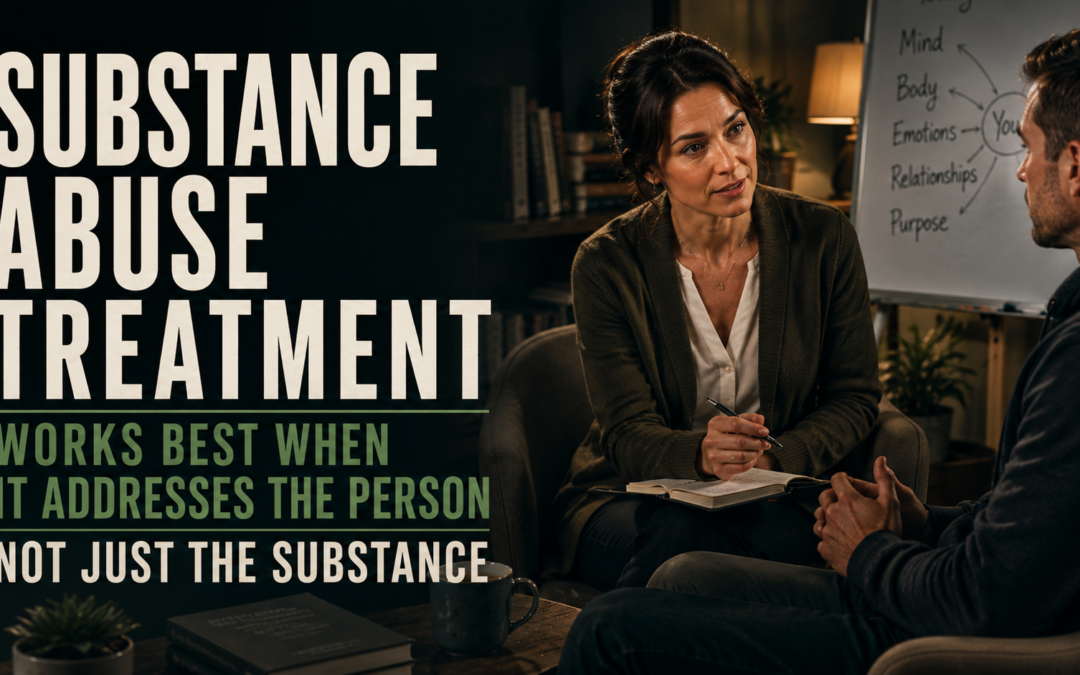
Substance abuse treatment works best when it looks at the whole person, not only the substance they are trying to leave behind. If you or someone you love is searching for help right now, you may feel overwhelmed by the options and unsure what real recovery actually requires.
That uncertainty is completely understandable. When someone is hurting, the natural first instinct is to stop the drinking or the drug use as quickly as possible.
Please know that reaching out for information is a brave and hopeful step. Stopping the substance matters, but it is only part of the story. Lasting recovery grows from understanding the person behind the substance use, including their pain, their history, and their hopes for the future.
This article explains what whole-person care means, why treating only the substance falls short, how mental health fits in, and how to find support that truly meets your needs.
What Does Whole-Person Substance Abuse Treatment Mean?
Whole-person substance abuse treatment means caring for the individual, not just managing their substance use. It looks at your emotional health, your physical health, your relationships, your history, and your daily life, then builds a plan around all of it.
A person is far more than their addiction. Substance use often grows from something deeper, such as stress, trauma, grief, or an untreated mental health condition.
Whole-person care honors that truth. Instead of asking only how to stop the substance, it asks what led here and what will help you build a healthier, more meaningful life.
Treating the roots, not just the surface
Whole-person care treats the reasons behind substance use, not only the behavior itself. Think of substance use like a warning light on a dashboard. Silencing the light without checking the engine leaves the real problem untouched.
Good treatment looks under the hood. It explores what the substance was helping you cope with, so healing can reach the source.
Why Does Treating Only the Substance Fail?
Treating only the substance fails because it removes the coping tool without addressing what a person was coping with. When the underlying pain remains, the pull toward the substance often returns.
Imagine clearing weeds by cutting them at the surface while leaving the roots in the soil. They grow back, again and again. Substance use frequently works the same way.
This is not a personal failing. It reflects how addiction actually works, and it explains why so many people relapse after treatment that focused only on stopping the substance.
When the real needs go unmet
When treatment ignores a person’s deeper needs, those needs do not disappear. Someone might complete a program, feel stable for a while, then return to use when stress, sadness, or old memories resurface.
Recovery becomes far steadier when treatment gives you new ways to handle those feelings. Healthy coping skills, support, and understanding help fill the space the substance once occupied.
Mini recap: Removing the substance is necessary, but without addressing the whole person, the underlying causes remain and recovery is harder to hold.
How Do Mental Health and Co-occurring Conditions Fit In?
Mental health and co-occurring conditions are central to recovery, because many people living with a substance use disorder also face challenges like depression, anxiety, trauma, or bipolar disorder. When both are present, treating them together works better than treating either one alone.
These overlapping conditions are known as co-occurring disorders. They are common, not rare, and there is no shame in needing support for more than one thing.
The two often feed each other. Someone might drink to quiet anxiety, and that anxiety may return stronger once the alcohol wears off. Treating one while ignoring the other leaves an open door for setbacks.
Why integrated care makes the difference
Integrated care brings mental health support and substance use treatment into one coordinated plan. A single team works from the same understanding of your needs, so nothing important gets left behind.
This approach addresses the full picture rather than one piece of it. When the deeper struggles finally receive attention, recovery has a far greater chance of lasting.
The value of a full assessment
A thorough assessment at the start helps a care team see the whole person. It looks at your substance use, your mental health, your physical health, and your life circumstances together.
That complete view shapes a plan built around you, not a generic template. Careful assessment protects against missed needs that could quietly derail progress later.
What Levels of Care Support Whole-Person Recovery?
Several levels of care support whole-person recovery from substance abuse, and the right fit depends on your needs, your safety, and your daily responsibilities. Care can grow more intensive during hard stretches and ease back as you gain stability.
A good team helps match the level of substance abuse support to where you are right now. Common levels of care include:
- Residential or inpatient care for structured, round-the-clock support in a calm, focused environment away from daily triggers.
- Partial hospitalization for intensive daytime treatment, often five days a week, with evenings spent at home.
- Intensive outpatient care for several structured sessions each week while you continue working, studying, or caring for family.
- Outpatient care for ongoing therapy and check-ins that fit around a busy daily life.
Many people move through several of these stages as they progress. This step-down approach eases you toward greater independence at a pace that feels manageable.
Why the right fit matters
Matching the level of care to your situation protects both your progress and your energy. Too little support can leave you struggling, while more than you need can feel overwhelming.
A thoughtful provider helps you find that balance. As you grow steadier, your care can shift to something lighter, and it can step back up whenever you need more.
What Should You Look For in a Substance Abuse Treatment Program?
The best substance abuse treatment programs focus on lasting recovery and treat you as a whole person, not a diagnosis or a checklist. Knowing what to look for helps you make a confident choice.
As you compare options, look for these signs of quality care:
- A thorough assessment that shapes your plan around your specific history, health, and goals.
- Integrated mental health support that treats co-occurring conditions alongside substance use.
- Evidence-based therapies guided by licensed, experienced professionals.
- Individualized treatment plans rather than a single routine given to everyone.
- Family involvement that helps repair relationships and build steady support.
- Aftercare planning that begins early and continues once treatment ends.
These elements reflect care built on understanding, not just completion. A program that offers them treats recovery as a genuine, personal process.
Trust the specificity of the answers
You do not have to accept vague promises. Ask direct questions about how a program personalizes care and how it treats mental health.
The clarity of the answers tells you a great deal. Trust responses that feel specific, honest, and centered on your needs rather than a generic pitch.
How Do You Decide If Whole-Person Care Is Right for You?
Deciding on the right care becomes clearer when you focus on the support your situation truly calls for. You do not have to make this choice alone.
Use these questions to guide your next step:
- Have earlier attempts to stop focused only on the substance? This often signals that deeper needs still require attention.
- Are you using substances to cope with stress, pain, or difficult emotions? Whole-person care can help you build healthier tools.
- Do mental health struggles show up alongside your substance use? Integrated treatment addresses both concerns together.
- Has substance use affected your relationships, health, or daily life? Comprehensive care can help you rebuild these areas.
- Do you feel unsure how to stay well after stopping? A personalized plan offers the structure and guidance to move forward.
Answering yes to any of these does not mean something is wrong with you. It means fuller, more compassionate support is available, and you deserve it.
Common Questions Before Starting Substance Abuse Treatment
Is stopping the substance enough on its own?
Stopping the substance is an important first step, but it is rarely enough for lasting recovery. Whole-person care addresses the deeper causes of substance use and helps you build healthier ways to cope, which gives recovery a stronger foundation.
What if I have tried treatment before and it did not last?
Earlier treatment that focused only on the substance may have left underlying needs unaddressed. Care that treats the whole person, including mental health, offers a different and often more durable path, and it is never too late to try again.
Can I get treatment without stepping away from work or family?
Yes. Outpatient and intensive outpatient programs are designed to fit around daily responsibilities. Many people receive meaningful support while continuing to meet their commitments.
Can my family be part of the process?
Yes. Many programs include family through therapy and education, since loved ones often play a key role in recovery. Their involvement can strengthen your support and help everyone heal together.
You Do Not Have to Walk This Road Alone
Substance abuse treatment works best when it treats the person, not just the substance, because real healing reaches the pain and the needs beneath the surface. If past efforts felt incomplete, please know that a fuller, more compassionate approach is possible.
You are not alone in this, and recovery is possible with the right support around you. Whole-person care meets you where you are and honors everything you carry, not just one part of your story.
When you feel ready, consider reaching out to a treatment provider that offers integrated, whole-person care. A caring team can listen to your story, answer your questions, and help you build a plan that fits your life. Take that next step whenever you are ready, because support is here for you.