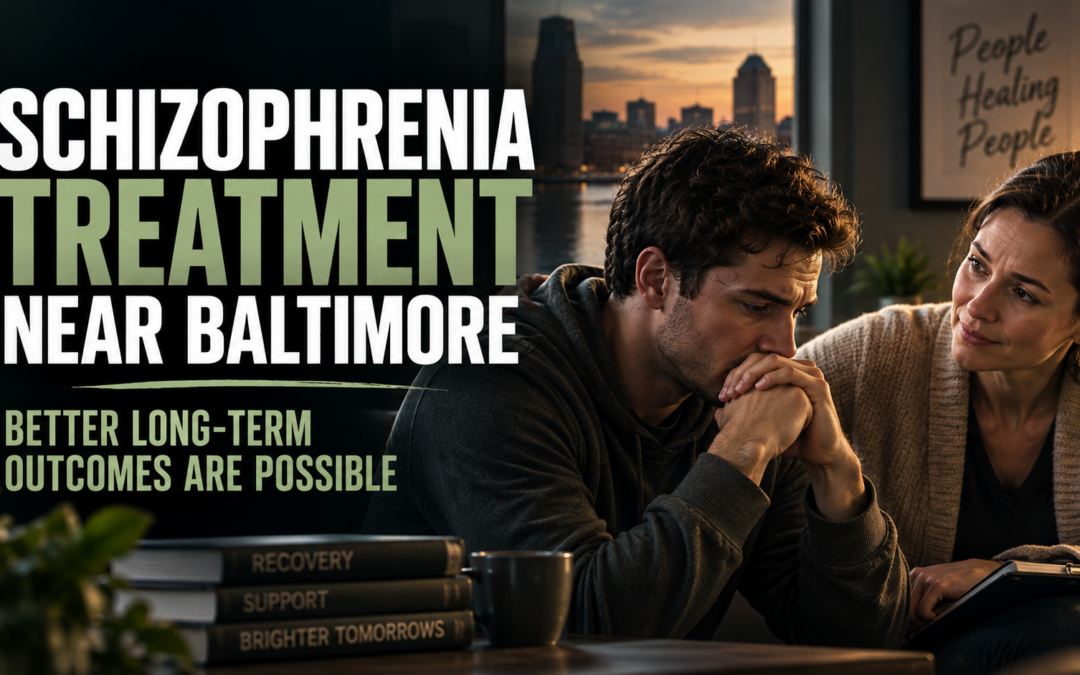
Schizophrenia treatment near Baltimore often begins in a family’s most frightening moment, and that fear can make lasting recovery feel impossible to picture. If you are watching someone you love struggle with confusing thoughts, deep withdrawal, or a break from reality, you may quietly fear the worst about what comes next.
Please know that reaching out for information is a brave and hopeful step. Crisis has a way of narrowing hope, making it hard to see beyond the pain of right now.
The truth is far more encouraging than most families expect. With steady, quality care, many people living with schizophrenia build stable, meaningful lives. This article explains what treatment involves, why long-term outcomes are often better than they seem in a crisis, how substance use fits in, and how to take a confident next step forward. You are not alone in this.
What Does Schizophrenia Treatment Near Baltimore Involve?
Schizophrenia treatment near Baltimore involves a coordinated, long-term plan that combines medication, therapy, and steady support to help a person manage symptoms and rebuild daily life. It is not a single appointment or a quick fix. It is ongoing care shaped around the whole person.
Schizophrenia is a mental health condition that affects how a person thinks, feels, and experiences reality. It can involve unusual thoughts, changes in perception, and difficulty with focus or motivation.
Good treatment meets a person where they are. A caring team learns their story, then builds a plan that reflects their symptoms, their history, and their goals.
Care that treats the whole person
Effective treatment looks beyond symptoms to the full picture of someone’s life. It considers sleep, relationships, daily stress, and the routines that help create stability.
This whole-person approach helps care feel steady rather than scattered. When every piece works together, stability becomes far easier to reach and hold.
Why Are Long-Term Outcomes Better Than Families in Crisis Expect?
Long-term outcomes are often better than families in crisis expect because the frightening early moments rarely reflect what recovery looks like over time. A first episode or a crisis is usually the hardest point, not a preview of the future.
When you are in the middle of a crisis, fear fills in the blanks. Old myths and worst-case stories can make the road ahead look far bleaker than it truly is.
With consistent, quality care, many people experience meaningful improvement. Symptoms can become manageable, and daily life can grow steadier than a family in crisis dares to hope.
The gap between crisis and recovery
The gap between how things feel in a crisis and how they unfold in recovery is often wide. Early symptoms can be intense, which understandably shapes a family’s expectations.
Think of it like the worst night of a storm. It feels endless in the moment, yet mornings do come, and rebuilding is possible.
Why early, steady treatment matters
Early and consistent treatment plays a powerful role in long-term outcomes. Getting help sooner, then staying engaged with care, gives recovery its strongest foundation.
Stability rarely arrives all at once. It builds gradually, through steady support, the right medication, and a team that stays committed over time.
How Does Schizophrenia Treatment Near Baltimore Support Daily Stability?
Schizophrenia treatment near Baltimore supports daily stability by combining medication, therapy, and predictable routines that help calm symptoms and reduce stress. Each piece works together to make everyday life feel more manageable.
Medication often plays a central role in steadying symptoms. When paired with therapy and support, it helps a person engage more fully in their own recovery.
Routine matters just as much. A predictable rhythm around sleep, meals, and daily activity helps create a sense of safety that supports overall stability.
Therapy and skill-building
Therapy helps a person understand their condition, recognize early warning signs, and build practical coping skills. These tools make daily life feel steadier over time.
Approaches like cognitive behavioral therapy can help manage stress and troubling thoughts. Family involvement often strengthens this work by building understanding at home.
The role of consistent support
Consistent support helps catch small changes before they grow into larger episodes. Regular check-ins offer reassurance and keep care responsive to a person’s needs.
That steady presence matters for the whole family. Knowing a caring team is walking beside you can make the entire journey feel less overwhelming.
How Does Co-occurring Substance Use Affect Schizophrenia?
Co-occurring substance use affects schizophrenia by making symptoms harder to manage and recovery more complicated. Many people living with schizophrenia also use alcohol or other substances, often to cope with difficult symptoms or stress.
This is a deeply human response, not a moral failing. Substances may seem to quiet troubling thoughts for a short while, yet they usually make symptoms worse over time.
Substances can also interfere with medication and disrupt sleep. That combination can undo progress and make stability harder to reach.
Why treating both together matters
When schizophrenia and substance use appear together, treating them at the same time works better than treating either one alone. These are known as co-occurring conditions.
Integrated care brings mental health support and substance use treatment into one coordinated plan. A single team works from the same understanding of a person’s needs, so nothing important gets left behind.
When both conditions receive attention at once, stability becomes far more possible. Your loved one gets to heal the whole picture, not just one part of it.
What Levels of Care Are Available Near Baltimore?
Several levels of care are available for schizophrenia, and the right fit depends on symptoms, safety, and daily needs. Care can grow more intensive during difficult stretches and ease back as stability returns.
Common levels of care include:
- Residential or inpatient care for structured, round-the-clock support in a calm, focused environment.
- Partial hospitalization for intensive daytime treatment with evenings spent at home.
- Intensive outpatient care for regular, structured sessions that still allow for work, school, or family life.
- Outpatient care for ongoing therapy, medication management, and steady check-ins.
A good care team helps match the level of support to where a person is right now. As stability returns, care can step down to something lighter, and it can step back up whenever more support is needed.
Why the step-down approach helps
A gradual step-down protects the progress a person works hard to build. Moving from intensive care toward greater independence at a steady pace feels far more manageable than a sudden change.
Think of it like recovering strength after an illness. You rebuild in stages, not all at once, and schizophrenia care often works the same way.
When Should Your Family Seek Help?
Your family should seek help when symptoms disrupt daily life, when safety feels uncertain, or when a crisis makes the next step unclear. You never have to wait for things to reach a breaking point to reach out.
Use these questions to guide your decision:
- Are unusual thoughts, withdrawal, or confusion affecting daily life? These changes are worth discussing with a professional who understands schizophrenia.
- Has a crisis or first episode left your family unsure what to do next? A caring team can guide you through the immediate steps.
- Is alcohol or another substance part of the picture? A provider who treats co-occurring conditions can address both together.
- Is medication being missed or hard to manage? Support can help build a routine that makes doses easier to keep.
- Do you feel overwhelmed caring for a loved one? Reaching out supports the whole family, not just the person in treatment.
Answering yes to any of these does not mean something has gone wrong. It means care is available, and taking that step is an act of strength.
If you or a loved one is in immediate danger or having thoughts of self-harm, please seek help right away. You can call or text the 988 Suicide and Crisis Lifeline in the United States at any time.
Common Questions Families Often Ask
Can someone with schizophrenia really live a stable life?
Yes. With consistent, quality treatment, many people living with schizophrenia manage their symptoms and build meaningful, stable lives. Recovery is a journey, and steady support along the way makes a real difference.
Why does the crisis feel so hopeless if outcomes can be good?
A crisis often represents the hardest moment, not the future. Intense early symptoms can shape a family’s fears, but with the right care, life frequently grows far steadier than it feels in that difficult stretch.
What if my loved one does not want help?
This is a common and painful situation. Gentle, honest conversations, patience, and guidance from a professional can make a real difference over time. A caring team can also help you encourage treatment without pressure.
Does treatment address substance use too?
Yes. Integrated care treats schizophrenia and substance use together within one coordinated plan. Addressing both at the same time tends to support more lasting stability than treating either concern alone.
You Do Not Have to Navigate This Alone
Schizophrenia treatment near Baltimore offers far more hope than most families in crisis expect, because the frightening early moments rarely reflect what recovery can become over time. If fear has narrowed your sense of what is possible, please know that stability and a meaningful life are within reach for many people with the right support.
You are not alone in this, and steadier ground is possible with a caring team beside you. The crisis you are facing is a starting point for care, not the end of your loved one’s story.
When you feel ready, consider reaching out to a provider who understands schizophrenia and any related challenges your family may be facing. A compassionate team can listen to your story, answer your questions, and help you build a plan that fits your loved one’s needs. Take that next step whenever you are ready, because support is here for you.