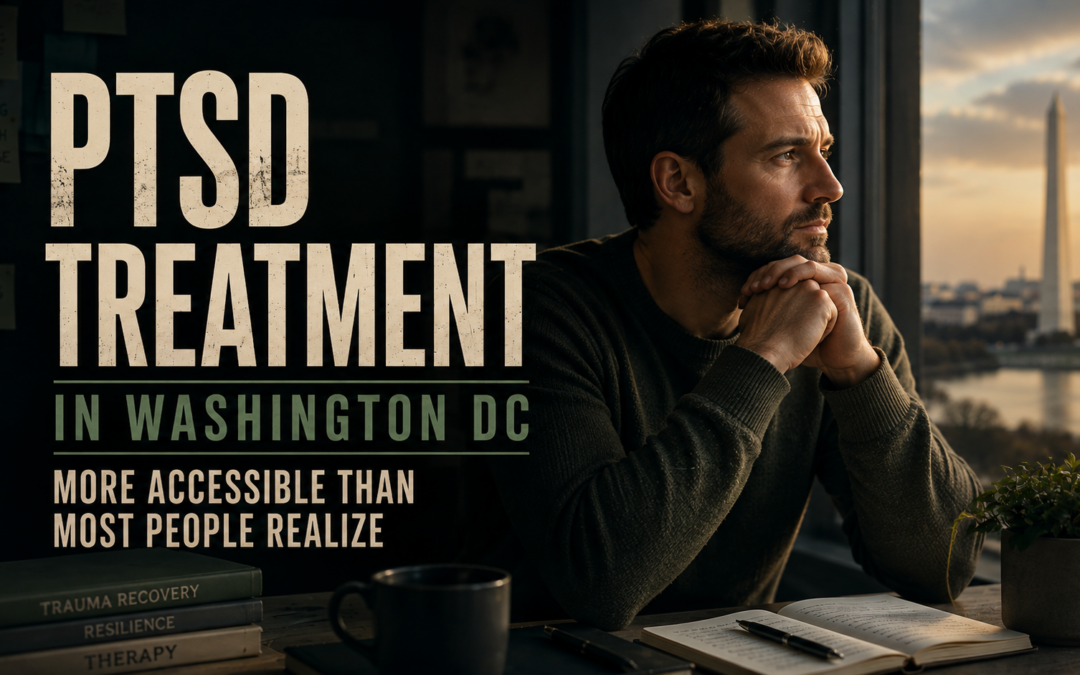
PTSD treatment in Washington DC is far more accessible than many people believe, even though it can feel out of reach when you are already carrying the weight of trauma. If painful memories, sleepless nights, or a constant sense of being on edge have taken over your days, you may assume that help is complicated, expensive, or hard to fit into your life.
Please know that reaching out for information is a brave and hopeful step. You are not alone in what you are feeling, and support is closer than it may seem.
This article explains what this kind of care involves, who it helps, the levels of care available, and how to take a confident next step. Our goal is to leave you feeling informed, supported, and hopeful about the road ahead.
What Is PTSD Treatment in Washington DC?
PTSD treatment in Washington DC is professional, evidence-based care that helps people understand and recover from the effects of trauma. It combines therapy, medical support when needed, and practical tools you can use in everyday life.
Post-traumatic stress disorder, often called PTSD, is a recognized health condition that can develop after a frightening or deeply distressing experience. It affects how you think, feel, sleep, and connect with others.
Treatment meets you where you are. A caring team learns your story, then builds a plan shaped around your needs, your history, and your goals.
PTSD is treatable, not a personal weakness
PTSD responds well to care, and living with it says nothing about your strength or character. It reflects a real health condition, not a flaw.
Understanding this can ease a heavy burden. When you see trauma symptoms as something treatable, reaching out feels far less frightening.
Why Do People Assume PTSD Treatment Is Hard to Access?
People often assume PTSD treatment is hard to access because they picture long waitlists, high costs, or programs that demand too much time. Those fears are understandable, and they keep many people from getting the help they deserve.
In a busy area like Washington DC, life moves quickly. Between work, family, and daily pressures, stepping away for care can feel impossible.
The reality is more encouraging. Many programs are designed to fit real schedules, and a range of options exists for different needs and budgets.
The myth of “too busy for help”
The belief that you are too busy for treatment is one of the most common barriers. Flexible programs now make it possible to receive care without pausing your entire life.
Evening sessions, outpatient options, and coordinated scheduling all help. You do not have to choose between your responsibilities and your healing.
Trauma can quietly convince you help is out of reach
Trauma itself can make support feel distant, because it often brings isolation and hopelessness. You may feel like no one can help, or that your struggle does not count.
Those feelings are symptoms, not facts. With the right support, that sense of distance can soften, and connection can return.
Summary: The barriers to care are often smaller than they appear, and accessible options are available across the area.
What Are the Signs That PTSD Treatment Could Help?
The signs that PTSD treatment could help include lasting distress after a traumatic event, disrupted sleep, and feeling constantly on guard. When these patterns interfere with daily life, they deserve caring attention.
Watch for these common signs in yourself or someone you love:
- Intrusive memories, flashbacks, or unwanted thoughts about a distressing event.
- Nightmares or trouble sleeping that leave you exhausted.
- Feeling jumpy, easily startled, or always watchful of your surroundings.
- Avoiding people, places, or situations that bring difficult reminders.
- Irritability, anger, or a shorter fuse than usual.
- Feeling numb, detached, or disconnected from people you love.
- Ongoing anxiety, guilt, or a heavy sense of dread.
None of these signs point to a flaw in you. They are signals that your mind and body are asking for support.
When to trust your instincts
Trust your instincts if these feelings have lingered for weeks or started shaping your choices. You do not have to wait until things feel unbearable to reach out.
Early support often makes recovery smoother. Reaching out sooner can help you feel steadier before symptoms grow heavier.
How Are PTSD and Substance Use Connected?
PTSD and substance use are closely connected because many people turn to alcohol or other substances to quiet painful memories or calm a restless nervous system. This response is deeply human, especially when sleep is broken and anxiety runs high.
The relief tends to be brief. Over time, substances usually deepen trauma symptoms and add a new layer of struggle on top of the original pain.
This connection is not a reason for shame. It is a reason to seek care that understands how these challenges feed one another.
Why treating both together matters
When PTSD and substance use appear together, treating them at the same time works better than treating either one alone. These are known as co-occurring conditions.
Integrated care brings your mental health support and substance use treatment into one coordinated plan. A single team works from the same understanding of your needs, so nothing important gets left behind.
This whole-person approach addresses the root of the struggle, not just the surface. When the underlying trauma finally receives attention, lasting recovery becomes far more possible.
What Levels of Care Are Available for PTSD Treatment in Washington DC?
Several levels of care are available for PTSD treatment in Washington DC, and the right fit depends on your symptoms, your safety, and your daily responsibilities. Care can grow more intensive or ease back as your needs change.
Common levels of care include:
- Residential or inpatient care for structured, round-the-clock support during more difficult stretches.
- Partial hospitalization for intensive daytime treatment with evenings spent at home.
- Intensive outpatient care for regular, structured sessions that still allow for work and family life.
- Outpatient care for ongoing therapy and check-ins that fit around a demanding schedule.
A good care team helps match the level of support to where you are right now. As you grow steadier, your care can shift to something lighter, and it can step back up whenever you need more.
Therapy at the heart of trauma care
Therapy sits at the center of PTSD care and takes several helpful forms. You might work one on one with a counselor, join group sessions, or learn practical tools for calming your nervous system.
Proven approaches help you process difficult experiences at a pace that feels safe. Over time, you build skills that ease symptoms and restore a sense of steadiness.
Flexible options that fit real life
Flexible care matters in an area where stepping away from work feels difficult. Outpatient and intensive outpatient programs offer meaningful support without asking you to pause your life entirely.
This balance removes a major barrier to getting help. You can receive trusted care while continuing to meet the responsibilities that matter to you.
How Do You Decide When to Seek PTSD Treatment?
You should consider seeking treatment when trauma symptoms affect your sleep, relationships, work, or peace of mind, or when they last for weeks. You never have to reach a breaking point to deserve support.
Use these questions to guide your decision:
- Have symptoms lasted for weeks or grown stronger over time? Persistent trauma responses respond well to professional care.
- Are your symptoms disrupting your sleep, focus, or daily life? Ongoing disruption is a clear reason to reach out.
- Are you using alcohol or other substances to cope? A provider who treats co-occurring conditions can address both together.
- Have you pulled away from people or places you once valued? Avoidance often signals that support could help.
- Do you have thoughts of self-harm? Please treat this as urgent and reach out right away.
Answering yes to any of these does not mean something is wrong with you. It means care is available, and you are worthy of it.
If you are ever having thoughts of harming yourself, help is available immediately. You can call or text the 988 Suicide and Crisis Lifeline in the United States at any time.
Common Questions Before Starting Treatment
Is PTSD treatment in Washington DC really accessible for someone with a busy schedule?
Yes. Outpatient and intensive outpatient programs are designed to fit around work and family responsibilities. Many people receive meaningful support while continuing to meet their daily commitments.
How do I know if what I am feeling is really PTSD?
Only a professional can offer a clear diagnosis, but lasting distress after a traumatic event is a strong reason to reach out. A caring team can assess your symptoms and help you understand what you are experiencing.
What if I have tried to manage this on my own and it did not work?
Managing trauma alone is common, and it is not a failure. Professional care offers proven tools and support that self-management often cannot provide, and reaching out is a strong step forward.
Can treatment help if I am also struggling with substance use?
Yes. Integrated care treats PTSD and substance use together within one coordinated plan. Addressing both at the same time tends to support more lasting recovery than treating either alone.
You Do Not Have to Navigate This Alone
PTSD treatment in Washington DC is more accessible than most people in the area realize, and the barriers that feel so large often turn out to be far smaller than they seem. If trauma has been shaping your days, please know that what you are experiencing is real and deserving of compassionate care.
You are not alone in this, and recovery is possible with the right support around you. Taking that first step, even a small one, can open the door to real healing.
When you feel ready, consider reaching out to a treatment provider who understands trauma and the realities of life in the DC area. A compassionate team can listen to your story, answer your questions, and help you build a plan that fits your life. Take that next step whenever you are ready, because support is here for you.