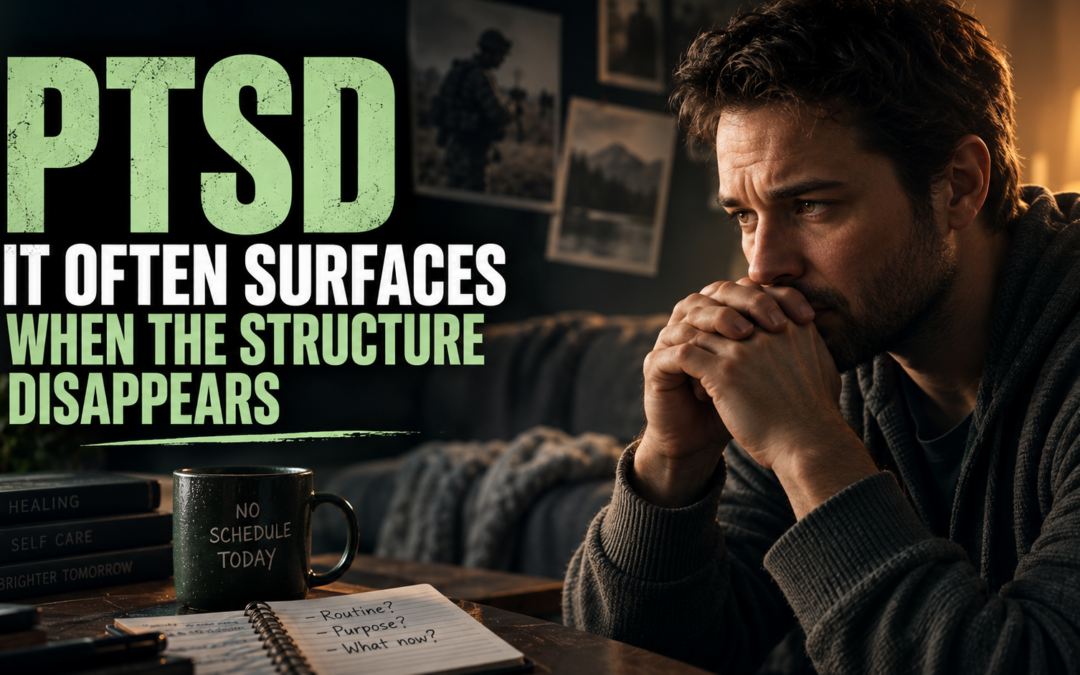
PTSD often surfaces not during a crisis, but in the quiet after a routine falls away, when the structure that held everything together suddenly disappears. If you or someone you love has felt fine through the hard part only to struggle once things calmed down, that timing can feel confusing and even frightening.
You are not imagining it, and you are not doing anything wrong. This pattern is real, and it makes sense once you understand how trauma affects the nervous system.
Please know that reaching out for information is a brave and hopeful step. This article explains what this condition is, why it emerges when structure fades, how routine changes stir symptoms, its link to substance use, and the levels of care that can help. You are not alone in this.
What Is PTSD?
PTSD, or post-traumatic stress disorder, is a mental health condition that can develop after a frightening, painful, or overwhelming experience. It affects how a person thinks, feels, sleeps, and connects with others, often long after the event has passed.
This condition can follow a single distressing event or a long stretch of ongoing stress and hardship. It is a real health condition, not a sign of weakness or a lack of resilience.
Trauma teaches the body to stay alert for danger. Even when the threat is gone, the nervous system can remain braced, watchful, and ready to react.
PTSD is treatable, not a personal failing
Post-traumatic stress disorder responds well to care, and living with it says nothing about your strength or character. It reflects a genuine health condition, much like other conditions that need proper treatment to heal.
Understanding this can lift a heavy burden. When you see trauma symptoms as something treatable, reaching out feels far less frightening.
Why Does PTSD Emerge When Structure Disappears?
PTSD often emerges when structure disappears because a steady routine helps a trauma-affected nervous system feel safe, and losing it removes that quiet support. When the predictable shape of a day falls away, the mind can slip back into a state of high alert.
During busy or high-pressure times, many people stay focused on simply getting through. That focus can hold symptoms at bay, almost like running on adrenaline.
Once the pressure lifts, the nervous system finally has room to react. That is often when the difficult feelings rise to the surface.
Routine as a form of safety
A predictable routine acts like a handrail on a staircase, giving you something reliable to hold as you move through the day. For someone living with trauma, that handrail matters even more.
Trauma teaches the body to expect the unexpected. Routine gently counters that lesson by making the day feel knowable and calm.
When the handrail vanishes, each step can feel uncertain again. That uncertainty is often what stirs symptoms back up.
Why the quiet can feel harder than the storm
The calm after a demanding season can feel harder because there is nothing left to distract from what you carry. During the storm, survival keeps you moving. In the stillness, the memories have space to speak.
This is why so many people are caught off guard. They expected relief and instead met the full weight of what they had been holding.
How Do Seasonal and Routine Changes Trigger PTSD Symptoms?
Seasonal and routine changes trigger symptoms because they remove the daily anchors that help a person feel grounded. A shift in schedule, season, or role can quietly unsettle the nervous system.
Think of the end of a school year, a job change, a move, a holiday stretch, or the close of a caregiving season. Each one rearranges the rhythm a person has come to rely on.
For someone with post-traumatic stress disorder, even a welcome change can feel destabilizing. The brain reacts to the loss of structure, not to whether the change was good or bad.
The symptoms that tend to resurface
The symptoms most likely to return during transitions include anxiety, disrupted sleep, irritability, and a stronger sense of being on guard. These reactions signal a nervous system responding to lost predictability, not a step backward in healing.
Common signs that may resurface include:
- Trouble falling asleep or restless nights filled with tension.
- Feeling jumpy, easily startled, or constantly watchful.
- Intrusive memories, flashbacks, or unwanted thoughts.
- Irritability or a shorter fuse than usual.
- A pull to withdraw from people or places.
Seeing these signs return can feel discouraging. Try to remember they are your body reacting to change, not proof that your progress disappeared.
Why positive changes can still stir symptoms
A positive change can still trigger symptoms because the nervous system responds to the absence of structure itself. A vacation, a new job, or a lighter schedule can all leave a person feeling unexpectedly on edge.
Recognizing this can bring real relief. You do not need an obvious reason to struggle, because the loss of routine is enough on its own.
How Are PTSD and Substance Use Connected?
PTSD and substance use are closely connected because many people turn to alcohol or other substances to quiet painful memories or calm a restless nervous system. When sleep is broken and anxiety runs high, that pull toward fast relief can grow stronger.
This response is deeply human. Substances may seem to soften distress, ease sleepless nights, or numb difficult feelings for a short while.
The relief rarely lasts. Over time, substances tend to deepen trauma symptoms and add a new layer of struggle on top of the original pain.
Why treating both together matters
When post-traumatic stress disorder and substance use appear together, treating them at the same time works better than treating either one alone. These are known as co-occurring conditions.
Integrated care brings your mental health support and substance use treatment into one coordinated plan. A single team works from the same understanding of your needs, so nothing important gets left behind.
This whole-person approach reaches the root of the struggle, not just the surface. When the underlying trauma finally receives attention, lasting healing becomes far more possible.
What Levels of Care Are Available for PTSD?
Several levels of care are available for PTSD, and the right fit depends on your symptoms, your safety, and your daily responsibilities. Care can grow more intensive during harder stretches and ease back as you gain steadiness.
A good care team helps match the level of support to where you are right now. Common levels of care include:
- Residential or inpatient care for structured, round-the-clock support during more difficult stretches.
- Partial hospitalization for intensive daytime treatment with evenings spent at home.
- Intensive outpatient care for regular, structured sessions that still allow for work, school, or family life.
- Outpatient care for ongoing therapy and check-ins that fit around a busy schedule.
Many people move through several of these stages as they heal. This step-down approach eases you toward greater independence at a pace that feels manageable.
Therapy at the heart of trauma care
Therapy sits at the center of trauma care and takes several helpful forms. You might work one on one with a counselor, join group sessions, or learn practical tools for calming your nervous system.
Proven approaches help you process difficult experiences at a pace that feels safe. Over time, you build skills that ease symptoms and restore a sense of steadiness.
Rebuilding structure as part of healing
Rebuilding small, predictable anchors can be a meaningful part of recovery. A steady sleep schedule, regular meals, and gentle daily routines all help a nervous system feel safe again.
These simple habits work best alongside professional support. Think of them as steady companions on the road, not a replacement for care.
How Do You Decide When to Seek Help?
You should consider seeking help when trauma symptoms affect your sleep, relationships, work, or peace of mind, or when they last for weeks. You never have to reach a breaking point to deserve support.
Use these questions to guide your decision:
- Have symptoms lasted for weeks or grown stronger over time? Persistent trauma responses respond well to professional care.
- Did your symptoms surface after a routine or season changed? This common pattern is worth discussing with a provider.
- Are your symptoms disrupting your sleep, focus, or daily life? Ongoing disruption is a clear reason to reach out.
- Are you using alcohol or other substances to cope? A provider who treats co-occurring conditions can address both together.
- Do you have thoughts of self-harm? Please treat this as urgent and reach out right away.
Answering yes to any of these does not mean something is wrong with you. It means care is available, and you are worthy of it.
If you are ever having thoughts of harming yourself, help is available immediately. You can call or text the 988 Suicide and Crisis Lifeline in the United States at any time.
Common Questions Before Starting Treatment
Why did my symptoms appear after things finally calmed down?
Trauma symptoms often surface once the pressure lifts and structure fades, because the nervous system finally has room to react. This is a common pattern, not a sign that your healing has failed.
Can a positive change really trigger symptoms?
Yes. Even welcome changes, like a new job or a lighter schedule, can stir symptoms because the brain responds to the loss of routine itself, not to whether the change was good.
Can I get treatment while keeping up with work and family?
Yes. Outpatient and intensive outpatient programs are designed to fit around daily responsibilities. Many people receive meaningful support while continuing to meet their commitments.
What if I am also struggling with substance use?
Integrated care treats trauma and substance use together within one coordinated plan. Addressing both at the same time tends to support more lasting healing than treating either one alone.
You Do Not Have to Navigate This Alone
PTSD does not wait for a calm season to surface, and it often emerges in the quiet moments when structure slips away and the nervous system finally has room to react. If difficult feelings rose up just as life settled down, please know that what you are experiencing is real and deserving of compassionate care.
You are not alone in this, and healing is possible with the right support around you. Understanding why your symptoms appeared is a courageous and hopeful first step.
When you feel ready, consider reaching out to a treatment provider who understands trauma and any related challenges you may be facing. A compassionate team can listen to your story, answer your questions, and help you rebuild steady ground. Take that next step whenever you are ready, because support is here for you.