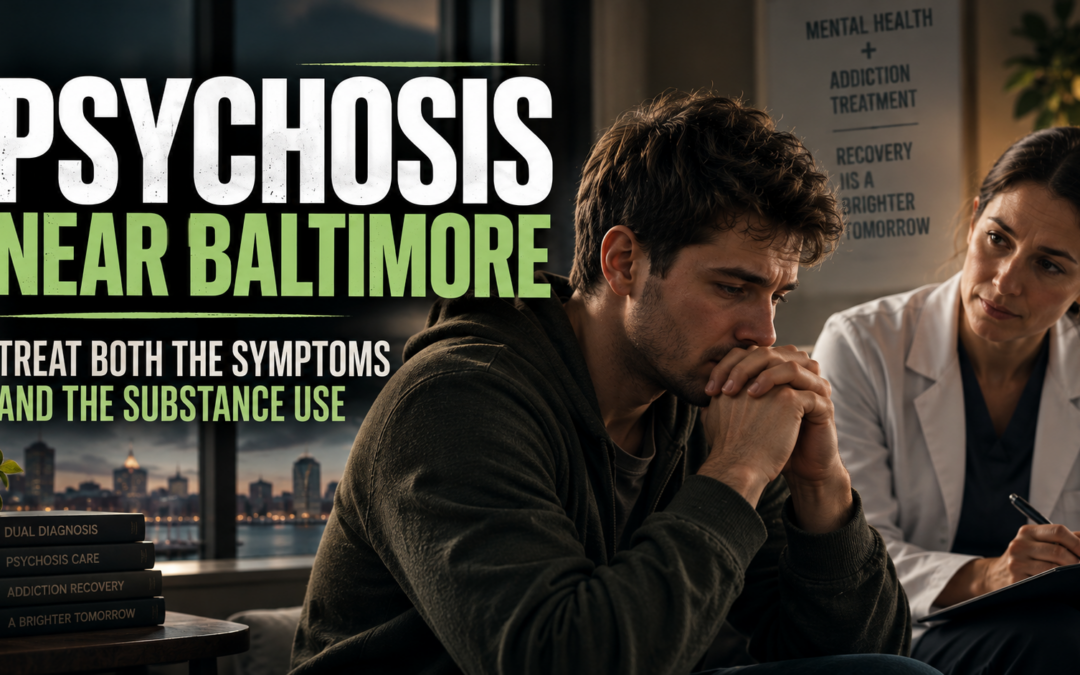
Psychosis near Baltimore is far more effectively treated when the substance use connected to it is addressed at the same time, rather than one struggle at a time. If you are watching someone you love slip into a frightening, confusing place, you already know how helpless that can feel.
Maybe you have seen a loved one lose touch with reality, hear things that are not there, or believe things that do not add up. Perhaps you also suspect substances are part of the picture, and you are not sure which came first.
That fear, confusion, and exhaustion are completely understandable. You are carrying a heavy load, and you deserve honest answers.
Please know that reaching out for information is a brave and hopeful step. This article explains what psychosis is, how substance use can trigger or worsen it, why treating both together works better, and how to take a confident next step forward. You are not alone in this.
What Is Psychosis?
Psychosis is a condition in which a person loses some contact with reality, often through hallucinations or false beliefs. It is a symptom of an underlying issue, not a personal failing or a character flaw.
Someone experiencing psychosis may hear or see things others do not. They may hold firm beliefs that are not based in reality, or struggle to think clearly and organize their thoughts.
This experience can be terrifying for the person living it and for the people who love them. Understanding what is happening is the first step toward getting the right help.
Common signs to watch for
Psychosis often shows up gradually, through changes that are easy to miss at first. Recognizing these signs early can open the door to support sooner.
Common signs include:
- Hearing, seeing, or sensing things that are not there.
- Holding strong beliefs that seem disconnected from reality.
- Confused, jumbled, or hard-to-follow speech.
- Pulling away from friends, family, and daily activities.
- Sudden changes in emotions, sleep, or self-care.
None of these signs point to weakness. They are signals that a person needs compassionate, professional care.
How Does Substance Use Trigger or Worsen Psychosis?
Substance use can trigger psychosis directly or make an existing condition significantly worse. Certain substances change how the brain works, which can lead to hallucinations, delusions, or disordered thinking.
Some substances can bring on psychotic symptoms during use. Others can spark them during withdrawal, when the body and brain are under intense strain.
For a person already living with a mental health condition, substances can pour fuel on the fire. What might have been manageable can suddenly become overwhelming.
When substances cause the symptoms
Substance-induced psychosis happens when the symptoms are directly tied to using or withdrawing from a substance. These episodes can feel just as real and frightening as any other form of psychosis.
Sometimes these symptoms ease as the substance leaves the body. In other cases, they signal a deeper condition that needs ongoing care.
When it is hard to tell which came first
Often, families cannot tell whether the substance use or the psychosis started first. This is common, and it is one reason the two are so tightly linked.
A person might use substances to quiet frightening thoughts, and those substances then intensify the very symptoms they hoped to escape. Sorting this out requires a careful, professional evaluation.
Why Is Psychosis Near Baltimore Better Treated Alongside Substance Use?
Psychosis near Baltimore is better treated alongside substance use because the two conditions feed each other, and treating only one often leaves the other to pull a person back. When both receive care at the same time, healing has a far greater chance to hold.
Imagine trying to bail water out of a boat while ignoring the hole in the bottom. You can work tirelessly, yet the water keeps rushing in. Treating one condition while ignoring the other can feel just like that.
Care that addresses both together closes that gap. It treats the whole person rather than a single piece of a complex picture.
The problem with treating them separately
When psychosis and substance use are treated separately, a person can fall through the space between two systems. One provider may focus only on mental health, while another focuses only on substance use.
Neither sees the full picture, and progress in one area can quietly unravel in the other. This is a discouraging cycle, and it is not the fault of the person trying to heal.
Why integrated care changes the outcome
Integrated care brings both conditions into one coordinated plan with a single team. Everyone works from the same understanding of your loved one’s needs, so nothing important gets left behind.
This approach treats the roots of the struggle, not just the surface. When both conditions receive attention at once, stability becomes far more possible.
What Levels of Care Are Available for Psychosis Near Baltimore?
Several levels of care support people experiencing psychosis near Baltimore, and the right fit depends on symptoms, safety, and daily needs. Care can grow more intensive during hard stretches and ease back as stability returns.
A good care team helps match the level of support to where a person is right now. Common levels of care include:
- Medically supervised detox for a safe, stable start when substances leave the body.
- Residential or inpatient care for structured, round-the-clock support in a calm, focused environment.
- Partial hospitalization for intensive daytime treatment with evenings spent at home.
- Intensive outpatient care for regular, structured sessions that still allow for work, school, or family life.
- Outpatient care for ongoing therapy, medication management, and steady check-ins.
Many people move through several of these stages as they heal. This step-down approach eases a person toward greater independence at a pace that feels manageable.
Why the step-down approach helps
A gradual step-down protects the progress a person works so hard to build. Moving from full-time support to no support all at once can feel unsteady and overwhelming.
Think of it like recovering strength after an illness. You rebuild in stages, not all at once, and this kind of care follows the same gentle logic.
How Does Integrated Care Treat Co-occurring Conditions?
Integrated care treats co-occurring conditions by addressing mental health and substance use together, within one coordinated plan. When both are present, treating them at the same time works better than treating either one alone.
Psychosis and a substance use disorder are known as co-occurring conditions. They are common together, and there is no shame in needing support for more than one struggle at once.
A single team learns the full story. Therapists, prescribers, and support staff all work from the same understanding, so care feels connected rather than scattered.
Care that treats the whole person
Integrated care looks at the entire person, not just a diagnosis or a substance. It considers mental health, substance use, physical health, and the daily life a person is trying to rebuild.
This whole-person approach helps healing feel steady rather than fragmented. When every piece works together, stability becomes far easier to reach and hold.
The value of a thorough evaluation
A careful evaluation at the start helps a team understand what is truly happening. It looks at symptoms, substance use, history, and health all together.
That complete view shapes a plan built around the individual, not a generic template. Careful assessment protects against missed needs that could quietly derail progress later.
How Do You Decide When to Seek Help?
Deciding when to seek help becomes clearer when you focus on safety and the support the situation truly calls for. You do not have to make this decision alone.
Use these questions to guide your next step:
- Is your loved one experiencing hallucinations, delusions, or confused thinking? These signs call for a professional evaluation.
- Do you suspect substances are part of the picture? Integrated care can address both concerns together.
- Has treatment for one condition alone failed to bring lasting change? This often signals a need for coordinated care.
- Are symptoms affecting safety, daily life, or relationships? Ongoing disruption is a clear reason to reach out.
- Do you feel overwhelmed trying to manage this alone? Support is available for the whole family, not just the person struggling.
Answering yes to any of these does not mean you have failed. It means the right kind of care is available, and your loved one deserves it.
If your loved one is in immediate danger or having thoughts of self-harm, please seek help right away. You can call or text the 988 Suicide and Crisis Lifeline in the United States at any time, day or night.
Common Questions Families Often Ask
Can psychosis and substance use really be treated at the same time?
Yes. Integrated programs are designed specifically to treat both conditions together within one coordinated plan. This approach tends to support more stable, lasting recovery than treating each struggle separately.
Will the psychosis go away once the substance use stops?
Sometimes symptoms ease as substances leave the body, and sometimes they point to a deeper condition that needs ongoing care. A thorough evaluation helps a care team understand what your loved one is facing and how best to help.
What if we do not know which came first?
That uncertainty is very common, and you do not need to have the answer before seeking help. A skilled team can assess the full picture and build a plan that addresses both conditions, regardless of which started first.
What if my loved one does not want help?
This is a painful and common situation. Gentle, honest conversations, patience, and guidance from a professional can make a real difference over time, and a caring team can help you encourage treatment without pressure.
You Do Not Have to Navigate This Alone
Psychosis near Baltimore is treated most effectively when the substance use behind it is addressed at the same time, because real healing reaches both struggles together rather than one at a time. If you have felt lost watching a loved one move between two disconnected systems, please know that a more connected, compassionate path exists.
You are not alone in this, and recovery is possible with the right support around you. Integrated care honors the full truth of what your loved one is living with, treating the whole person rather than a single piece.
When you feel ready, consider reaching out to a treatment provider that offers coordinated care for co-occurring conditions. A compassionate team can listen to your story, answer your questions, and help you build a plan that fits your family’s needs. Take that next step whenever you are ready, because support is here for you.