Opioid addiction changes the brain in ways that make “just stopping” far harder than most people expect, and if you have tried and struggled, that struggle is not a personal failing. Maybe you have promised yourself this time would be different, only to feel the pull return with a force that seemed impossible to fight.
Please know this. The shame you may be carrying does not belong to you.
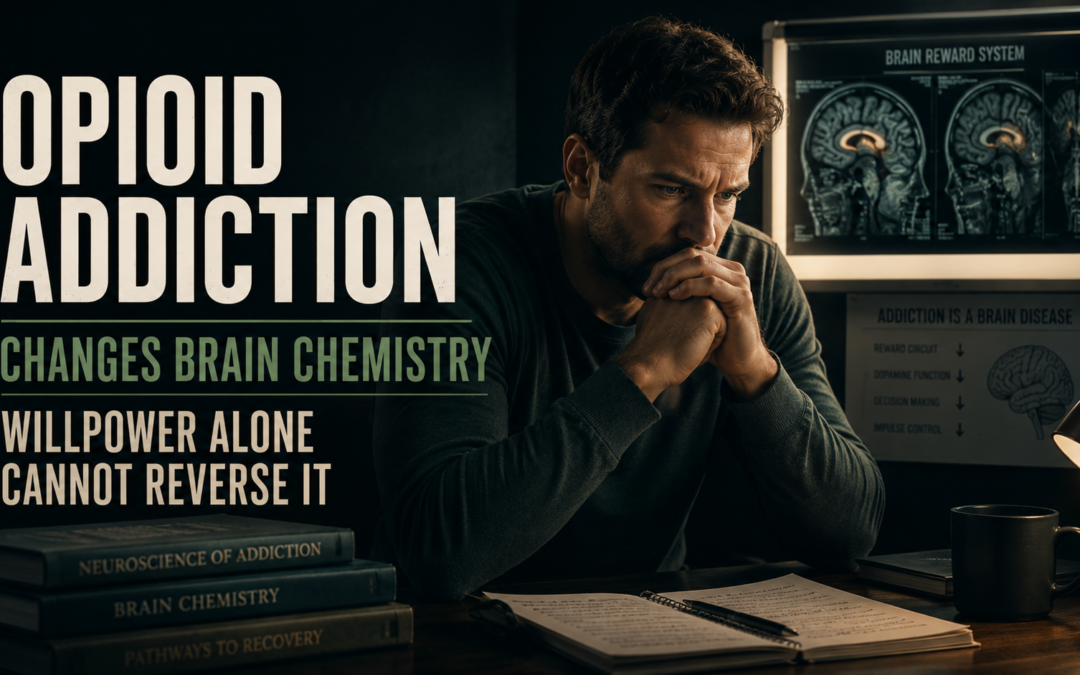
What you are up against is not weak character. It is a real, physical change in how your brain works, and no amount of willpower alone can simply undo brain chemistry. That is not discouraging news. It is the exact reason effective, compassionate treatment exists.
You are not broken, and you are not alone in this. Many people have stood exactly where you are now and found a way forward with the right support. This is a health condition, and health conditions respond to care.
What Does Opioid Addiction Do to the Brain?
Opioid addiction rewires the brain’s reward system, changing how a person experiences pleasure, motivation, and pain. Over time, the brain adapts to the constant presence of opioids and begins to depend on them just to feel normal.
Opioids flood the brain with feel-good chemicals far beyond what daily life produces. The brain responds by dialing down its own natural production.
Eventually, the brain relies on the substance to feel any sense of balance at all. Without it, a person can feel deeply unwell, anxious, and physically sick.
The brain learns to prioritize the substance
The brain begins treating opioids as essential for survival, ranking them alongside food and water. This is why cravings feel so overwhelming and urgent.
Think of it like a thermostat set to the wrong temperature. The brain keeps demanding the substance to reach a balance it can no longer create on its own.
Why Does Willpower Alone Fail Against Opioid Addiction?
Willpower alone fails against opioid addiction because the changes happen in the parts of the brain that control impulse, judgment, and survival drives. These areas operate below conscious decision-making, so determination cannot switch them off.
Asking someone to overcome dependence with willpower is like asking them to think their way out of a fever. The body’s response is biological, not a matter of trying harder.
This is not an excuse. It is an explanation, and it matters because it points toward what actually helps.
Withdrawal makes stopping physically punishing
Withdrawal creates intense physical symptoms that pull a person back toward use. Nausea, pain, anxiety, and sleeplessness can feel unbearable.
For many people, the drive to escape withdrawal overpowers even the strongest intentions. That is the body speaking, not a lack of resolve.
The brain heals slowly, not instantly
Brain chemistry recovers gradually, which is why early recovery feels so fragile. Cravings can linger long after the substance is gone.
Understanding this helps replace self-blame with patience. Recovery is a process of healing, not a single act of willpower.
How Does Medication-Assisted Treatment Help?
Medication-assisted treatment, often called MAT, eases the physical barrier by reducing cravings and calming withdrawal symptoms. This frees the mind to focus on the deeper work of recovery.
MAT combines proven medications with counseling and support. The medication steadies the body while therapy helps you rebuild your life.
This is not trading one substance for another. It is a carefully monitored medical treatment guided by professionals.
Why steadying the body matters
When cravings quiet down, the mind finally has room to think, plan, and connect. Instead of fighting minute to minute, you can engage in therapy and daily life.
Picture removing a blaring alarm from a room. Suddenly you can hear yourself again, and real healing becomes possible.
How Are Opioid Addiction and Mental Health Connected?
Opioid addiction and mental health conditions are closely connected, because many people use opioids to cope with depression, anxiety, or trauma. Over time, the substance tends to deepen those struggles rather than ease them.
When both a mental health condition and a substance use disorder are present, they are known as co-occurring conditions. Treating one while ignoring the other often leaves the untreated side to pull a person back.
Why treating both together works better
Integrated care brings your mental health support and substance use treatment into one coordinated plan. A single team works from the same understanding of your needs.
When the reasons behind opioid use finally receive attention, recovery has a far stronger chance of lasting. You get to heal the whole picture, not just the surface.
What Levels of Care Support Recovery From Opioid Addiction?
Several levels of care support recovery from opioid addiction, and the right fit depends on your health, your safety, and your daily responsibilities. Care can grow more intensive or ease back as your needs change.
Common levels of care include:
- Medically supervised detox for a safe, stable start as opioids leave the body.
- Residential or inpatient care for structured, round-the-clock support in a focused setting.
- Partial hospitalization for intensive daytime treatment with evenings spent at home.
- Intensive outpatient care for regular sessions that still allow for work, school, or family life.
- Outpatient care for ongoing therapy, medication management, and steady check-ins.
Many people move through several of these stages. A good care team helps match the level of support to where you are right now.
Why the step-down approach helps
A gradual step-down protects the progress you work hard to build. Moving from intensive support toward independence at a steady pace feels far more manageable.
What Are the Warning Signs of Opioid Addiction?
The warning signs of opioid addiction include cravings, tolerance, and using despite the harm it causes. Noticing these signs early can open the door to support.
Watch for these patterns in yourself or someone you love:
- Needing more of the substance to feel the same effect over time.
- Feeling anxious, shaky, or unwell when not using.
- Spending a lot of time getting, using, or recovering from opioids.
- Trying to cut back but finding you cannot.
- Letting use interfere with work, relationships, or health.
- Continuing to use even when it causes real problems.
Noticing several of these does not make you a failure. It means your body and mind may be asking for care.
How Do You Decide When to Seek Help?
You should consider seeking help when opioids affect your health, relationships, or peace of mind, or when stopping feels impossible on your own. You never have to reach a crisis point to deserve support.
Use these questions to guide your decision:
- Have cravings or withdrawal pulled you back despite wanting to quit? Medical support can ease that physical struggle.
- Have you tried to stop before without lasting success? This often signals that a more supportive approach could help.
- Is your use affecting work, relationships, or your health? Ongoing harm is a clear reason to reach out.
- Are you also struggling with depression, anxiety, or trauma? A provider who treats co-occurring conditions can address both together.
- Do you feel afraid to face withdrawal alone? That fear is valid, and a caring team can help you feel safe.
Answering yes to any of these does not mean something is wrong with you. It means compassionate care is available, and you deserve it.
Common Questions Before Starting Treatment
Is medication-assisted treatment just replacing one drug with another?
No. MAT uses carefully monitored, FDA-approved medications to ease cravings and withdrawal so you can engage in therapy and rebuild your life. It is a medical treatment guided by professionals, not a simple substitution.
Does needing medication mean I lack willpower?
Not at all. Opioid addiction changes brain chemistry in ways that willpower alone cannot reverse. Using medical support reflects wisdom and courage, not weakness.
How long does recovery from opioid addiction take?
The timeline varies for everyone, since the brain heals gradually. Your care team will guide you through a plan built around lasting recovery rather than a fixed deadline.
What if I have tried treatment before and it did not last?
Earlier attempts that lacked medical support may have left the physical barrier untreated. A more complete approach can offer a stronger foundation, and it is never too late to try again.
You Do Not Have to Walk This Road Alone
Opioid addiction changes brain chemistry in ways that willpower alone cannot reverse, and understanding this can finally lift the weight of shame you may have carried for too long. What you have been fighting is a real health condition, and health conditions respond to the right care.
You are not alone in this, and recovery is possible with the right support around you. When the body’s struggle eases and the deeper healing begins, a steadier future comes within reach.
When you feel ready, reach out to a treatment provider that offers medically supported care alongside counseling. A compassionate team can listen to your story, answer your questions, and help you build a plan that fits your needs. Take that next step whenever you are ready, because support is here for you.