
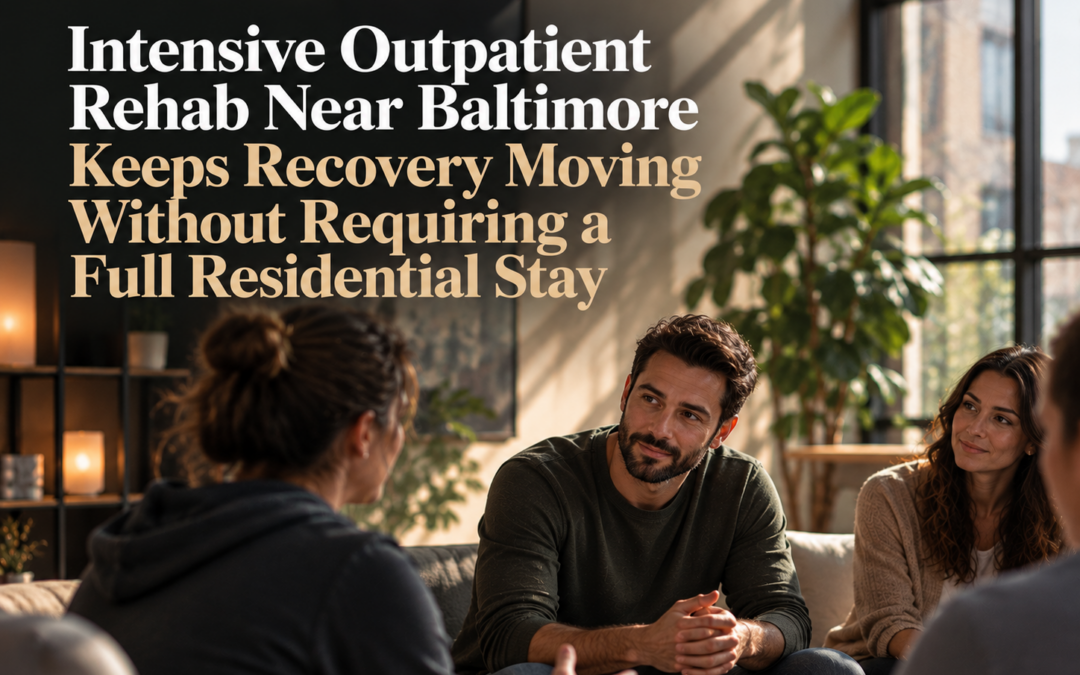
Intensive outpatient rehab near Baltimore gives people a way to keep recovery moving forward without stepping away from home, work or family for weeks at a time. If you or someone you love needs more than a weekly therapy session but cannot imagine leaving everything behind for a residential stay, you may feel stuck between two options that do not quite fit.
Maybe you just finished detox or residential care and feel nervous about losing daily structure. Maybe you have been trying to cut back on your own, and the pattern keeps returning on stressful nights. Either way, the worry that treatment will cost you your job or your role at home is real.
That concern does not mean you are avoiding help. It means you are thinking carefully about how recovery fits into the life you are working to protect.
There is a level of care built for exactly that space, and asking about it is a hopeful step. You are not alone in weighing these choices, and support can meet you where you are.
What Is Intensive Outpatient Rehab Near Baltimore?
Intensive outpatient rehab near Baltimore is a structured level of addiction and mental health treatment that provides several hours of therapy a few days each week while you continue living at home. It is often called an intensive outpatient program, or IOP.
Most programs offer at least nine hours of treatment per week, usually spread across three to five days. Sessions are often scheduled in the morning or evening so people can keep working, attending school or caring for family.
You return home after each session. That means you practice what you learned in your real environment the very same day.
How Is IOP Different From a Weekly Therapy Appointment?
IOP is different from weekly therapy because it offers more hours, more structure and a full clinical team rather than a single counselor. A weekly appointment can be a helpful part of long-term care.
For someone in early recovery, though, one hour every seven days can leave long stretches without support. Intensive outpatient rehab near Baltimore fills those gaps with regular contact, accountability and skill building.
Who Is Intensive Outpatient Rehab Near Baltimore Best Suited For?
Intensive outpatient rehab near Baltimore is best suited for people who need consistent, structured support but are medically stable and have a safe place to live. It fits a wide range of situations, not only mild ones.
You may benefit from this level of care if you recognize yourself here:
- You are stepping down from residential treatment or a partial hospitalization program (PHP) and want steady support during the transition home.
- You have completed medically supervised detox and are ready for the next stage of care.
- Your substance use has grown harder to control, but you do not need round-the-clock supervision.
- You are a working professional, student or parent who cannot step away from daily responsibilities.
- You are managing anxiety, depression or trauma alongside substance use.
Seeing yourself in this list is not a sign of failure. It often means you are ready for care that matches both your needs and your life.
When Might a Higher Level of Care Be Safer?
A higher level of care may be safer when withdrawal could be medically risky, when home feels unsafe or when previous outpatient attempts have not held. Stopping alcohol, benzodiazepines or opioids after heavy, regular use can require medical supervision first.
A clinical assessment helps determine the safest starting point. You never have to guess on your own.
What Does a Typical Week in Intensive Outpatient Rehab Near Baltimore Look Like?
A typical week in intensive outpatient rehab near Baltimore includes three to five treatment days built around group therapy, individual sessions and practical skill building. The schedule is predictable, which helps restore a sense of rhythm that substance use often disrupts.
A sample week might look like this:
- Monday, Wednesday and Thursday: Three-hour evening sessions that combine group therapy with skill-building workshops.
- Once a week: An individual session with your primary therapist to review goals and work through personal challenges.
- As needed: Psychiatric check-ins or medication management with a prescriber.
- Periodically: Family sessions that help loved ones understand recovery and rebuild trust.
Between sessions, you go to work, sleep in your own bed and handle everyday life. Those hours become a real-world practice space for new coping skills.
Which Therapies Are Used in IOP?
IOP uses evidence-based therapies that help you understand the roots of substance use and respond to triggers in healthier ways. Common approaches include:
- Cognitive behavioral therapy (CBT), which helps you notice and change thought patterns that lead to use.
- Dialectical behavior therapy (DBT) skills, which teach practical ways to manage intense emotions and stress.
- Motivational interviewing, which strengthens your own reasons for change.
- Relapse prevention planning, which prepares you for high-risk situations before they arrive.
Medication-assisted treatment (MAT) can also continue during IOP for people recovering from opioid or alcohol use disorders.
Why Does Practicing Recovery at Home Matter?
Practicing recovery at home matters because new skills grow stronger when you use them in the same places where old patterns formed. If a stressful commute or a tense dinner sparks a craving, you can bring that moment to your next session and work through it with your team.
Think of it like learning to drive with an instructor in the passenger seat. You handle real roads, but support is right beside you.
How Does Intensive Outpatient Rehab Compare to Residential and Standard Outpatient Care?
Intensive outpatient rehab near Baltimore sits in the middle of the treatment continuum, offering more structure than standard outpatient care and more flexibility than residential treatment. Knowing the differences helps you make a confident choice.
Here is how the common levels of care compare:
- Medically supervised detox helps you withdraw safely with round-the-clock medical monitoring.
- Residential treatment offers live-in care and full-time structure away from daily triggers.
- Partial hospitalization program (PHP) provides full days of treatment, often five days a week, with evenings at home.
- Intensive outpatient program (IOP) includes several sessions each week that fit around work, school or family.
- Standard outpatient therapy offers lighter, less frequent sessions as independence grows.
Is IOP Less Effective Than Residential Treatment?
IOP is not a lesser form of care. It is a different level designed for a different set of needs.
For many people who are medically stable and have a supportive home, intensive outpatient rehab near Baltimore provides the structure recovery needs while keeping important relationships and routines intact.
Can You Move Between Levels of Care?
Yes, many people move between levels as their needs change. Some step down from residential care into IOP, while others step up from weekly therapy when they need more support.
The admissions team at Arrowwood Addiction Treatment Center can review your situation and help you find the right starting point for intensive outpatient rehab near Baltimore.
How Does Intensive Outpatient Rehab Near Baltimore Treat Co-occurring Mental Health Conditions?
Intensive outpatient rehab near Baltimore treats co-occurring mental health conditions alongside substance use within one coordinated plan, because addressing both together works better than treating either one alone. Many people living with a substance use disorder also experience anxiety, depression, post-traumatic stress disorder (PTSD) or bipolar disorder.
These conditions often feed each other. Someone might drink to quiet anxiety, only to wake up feeling more anxious the next day.
What Does Integrated Care Look Like in IOP?
Integrated care in IOP means therapists, prescribers and support staff work from the same understanding of your needs. Your plan may include mental health therapy, medication support and substance use counseling, all coordinated by one team.
This approach, sometimes called dual diagnosis treatment, keeps important needs from falling through the cracks. You never have to decide which struggle deserves attention first.
How Do You Know If Intensive Outpatient Rehab Near Baltimore Is the Right Next Step?
Intensive outpatient rehab near Baltimore may be the right next step when you need more support than weekly therapy offers but can safely live at home. These questions can help you reflect:
- You are finishing detox or residential care and want structure as you return home.
- Weekly therapy alone has not been enough to keep old patterns from returning.
- You have a stable, substance-free place to live and people who support your recovery.
- Work, school or caregiving makes a full residential stay difficult right now.
- Anxiety, depression or trauma seem connected to your substance use.
Answering yes to any of these does not mean something is wrong with you. It means a level of care built around your life is available, and a professional assessment can confirm the best fit.
If you or someone you love is having thoughts of self-harm, please call or text the 988 Suicide and Crisis Lifeline at any time, day or night.
Common Questions Before Starting Treatment
How long does intensive outpatient rehab near Baltimore last?
Length varies based on your needs and progress. Many people attend for several weeks to a few months, and your care team adjusts the timeline as you grow steadier.
Can I keep working while attending IOP?
Often, yes. Many programs offer morning or evening sessions so you can keep your job, and federal privacy laws protect your treatment records from being shared without your written consent.
Will insurance cover IOP?
Many insurance plans cover intensive outpatient treatment, though benefits vary by plan. An admissions team can verify your coverage and explain any costs before you begin.
Can my family be involved?
Yes. Family sessions and education help loved ones understand recovery, set healthy boundaries and support you at home.
Recovery Can Keep Moving Without Putting Life on Hold
Intensive outpatient rehab near Baltimore keeps recovery moving by pairing real structure with the freedom to stay connected to home, work and the people you love. You do not have to choose between getting help and holding onto your life.
Recovery looks different for everyone, and progress often comes in steady steps rather than one big leap. With the right support, many individuals build routines and coping skills that last.
When you feel ready, reach out to Arrowwood Addiction Treatment Center to speak with a caring admissions team. They can answer your questions, explain your options and help you take the next step toward care.
You are not alone in this, and support is here whenever you are ready.