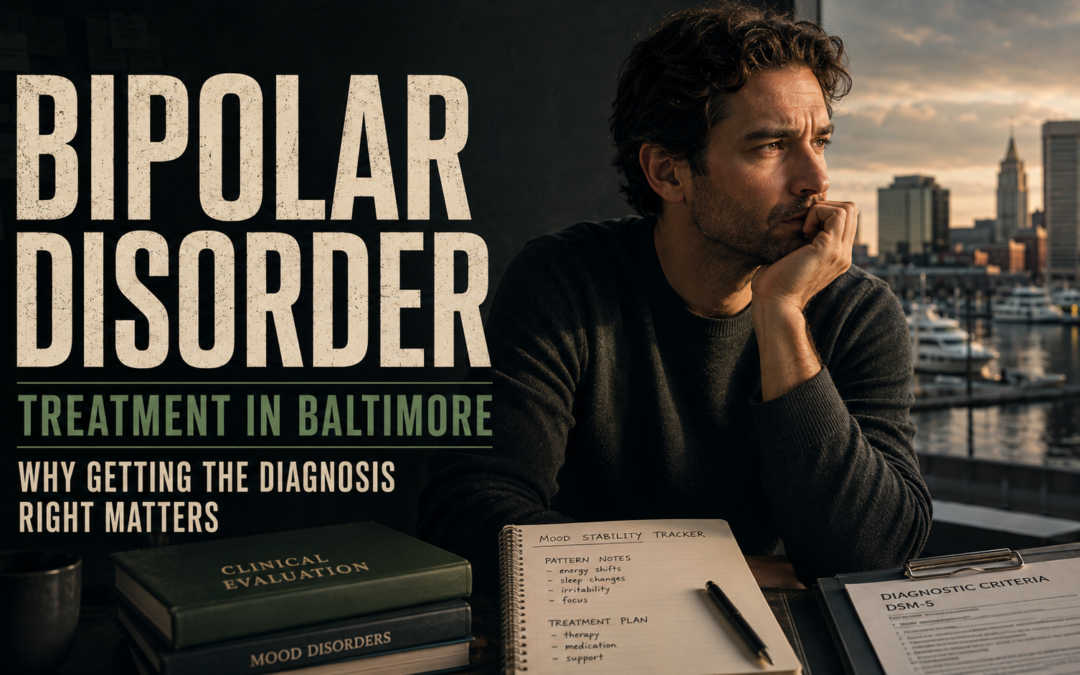
Bipolar disorder treatment in Baltimore begins with something that sounds simple but often is not: an accurate diagnosis. If you or someone you love has felt swept between deep lows and restless highs, you already know how confusing those shifts can be. What you may not know is how often bipolar disorder gets mistaken for something else, and how much that mistake can cost.
Getting the diagnosis right the first time changes everything that follows. It shapes the treatment plan, the medications, and the pace of recovery.
Please know that reaching out for information is a brave step. This article explains what treatment involves, why early accuracy matters so much, how misdiagnosis slows healing, and how to take a confident next step forward.
What Does Bipolar Disorder Treatment in Baltimore Involve?
Bipolar disorder treatment in Baltimore involves a coordinated plan that combines an accurate diagnosis, therapy, medication when needed, and steady support over time. It is not a single appointment or a quick fix. It is ongoing care shaped around your life.
Bipolar disorder is a mental health condition marked by shifts in mood, energy, and activity levels. These shifts can range from emotional highs, called mania or hypomania, to deep depressive lows.
Treatment meets you where you are. A caring team learns your story, then builds a plan that reflects your history, your symptoms, and your goals.
Care that treats the whole person
Good treatment looks beyond a single symptom to the full picture of your life. It considers your sleep, your relationships, your stress, and your daily routines.
This whole-person approach helps care feel steady rather than scattered. When every piece works together, stability becomes far easier to reach and hold.
Why Does Getting the Diagnosis Right the First Time Matter So Much?
Getting the diagnosis right the first time matters because bipolar disorder responds to very different treatment than conditions it is often confused with. The wrong diagnosis can lead to the wrong medication, which sometimes makes symptoms worse rather than better.
Bipolar disorder is frequently mistaken for depression, especially when a person seeks help during a low period. On the surface, the two can look nearly identical.
The difference is what happens underneath. Treating bipolar disorder as if it were depression alone can trigger or intensify manic episodes, which delays real relief.
The high cost of a delayed diagnosis
A delayed diagnosis often means years of frustration, trial and error, and treatments that never quite fit. Many people cycle through providers, feeling unheard and unwell.
Each of those years carries a real toll. Relationships strain, careers wobble, and hope can start to fade when nothing seems to help.
Why accuracy speeds up recovery
An accurate diagnosis acts like the right map for a difficult journey. Once the destination is clear, the path forward becomes far more direct.
With the correct diagnosis in place, your care team can choose approaches proven to help bipolar disorder specifically. That clarity often shortens the road to stability.
Summary: The right diagnosis early on protects you from years of ineffective care and points recovery in the right direction.
How Does Misdiagnosis Delay Recovery?
Misdiagnosis delays recovery because it sends treatment in the wrong direction, sometimes for years. When the underlying condition is misread, even well-intentioned care can miss the mark.
Bipolar disorder is one of the more commonly misdiagnosed mental health conditions. People often seek help during depressive episodes and may not recognize or mention their high-energy periods.
Without the full picture, a provider may see only part of what is happening. That partial view can lead to a treatment plan built around the wrong condition.
When the wrong medication makes things harder
Certain medications used for depression alone can sometimes worsen bipolar symptoms. For some people, they may trigger manic episodes or rapid mood swings.
This is why a thorough evaluation matters so much. Understanding your complete history helps a care team choose approaches that steady your moods rather than unsettle them.
The emotional weight of feeling unheard
Being misdiagnosed can leave you feeling dismissed, confused, or hopeless. You may start to wonder if anything will ever help.
Please know those feelings make sense, and they are not the end of your story. The right diagnosis can reopen a door that felt closed, bringing relief that finally fits.
How Are Bipolar Disorder and Substance Use Connected?
Bipolar disorder and substance use are closely connected because many people use alcohol or other substances to cope with intense mood shifts. During a low period, a substance might promise relief. During a high, it might feel like part of the momentum.
This response is deeply human. When moods feel overwhelming, anything that seems to soften or steady them can be tempting.
The relief rarely lasts. Over time, substances tend to deepen mood instability and make bipolar disorder harder to manage.
Why substances complicate the picture
Substance use can blur the signs of bipolar disorder, making an accurate diagnosis even more difficult. Symptoms of intoxication or withdrawal can mimic mood episodes.
This overlap is one more reason a careful, unhurried evaluation matters. A skilled team can look past the surface to understand what is truly driving your experience.
Why treating both together works better
When bipolar disorder and substance use appear together, treating them at the same time works better than treating either one alone. These are known as co-occurring conditions.
Integrated care brings your mental health support and substance use treatment into one coordinated plan. A single team works from the same understanding of your needs, so nothing important gets left behind.
When both conditions receive attention at once, stability becomes far more possible. You get to heal the whole picture, not just one part of it.
What Levels of Care Are Available for Bipolar Disorder Treatment in Baltimore?
Several levels of care are available for bipolar disorder treatment in Baltimore, and the right fit depends on your symptoms, your safety, and your daily responsibilities. Care can grow more intensive or ease back as your needs change.
Common levels of care include:
- Residential or inpatient care for structured, round-the-clock support during more difficult stretches.
- Partial hospitalization for intensive daytime treatment with evenings spent at home.
- Intensive outpatient care for regular, structured sessions that still allow for work and family life.
- Outpatient care for ongoing therapy, medication management, and steady check-ins.
A good care team helps match the level of support to where you are right now. As you grow steadier, your care can shift to something lighter, and it can step back up whenever you need more.
Therapy and medication working together
Therapy and medication often work best side by side in bipolar disorder care. Medication can help steady mood shifts, while therapy builds skills for daily life.
Approaches like cognitive behavioral therapy help you recognize early warning signs and manage triggers. Together, these tools create a steadier foundation over time.
The role of steady, ongoing support
Bipolar disorder is a long-term condition, so ongoing support plays a central role. Regular check-ins help catch changes early, before a small shift becomes a larger episode.
That steady presence offers real reassurance. Knowing someone is walking beside you can make the whole journey feel less overwhelming.
How Do You Decide When to Seek Help?
You should consider seeking help when mood shifts affect your relationships, work, sleep, or sense of stability, or when previous treatment has not brought relief. You never have to reach a breaking point to deserve support.
Use these questions to guide your decision:
- Do your moods swing between deep lows and high-energy periods? These shifts are worth discussing with a professional who understands bipolar disorder.
- Has treatment for depression alone failed to help or made things worse? This may signal that a fuller evaluation is needed.
- Are your mood changes disrupting your daily life or relationships? Ongoing disruption is a clear reason to reach out.
- Are you using alcohol or other substances to manage your moods? A provider who treats co-occurring conditions can address both together.
- Do you have any thoughts of self-harm? Please treat this as urgent and reach out right away.
Answering yes to any of these does not mean something is wrong with you. It means care is available, and you are worthy of it.
If you are ever having thoughts of harming yourself, help is available immediately. You can call or text the 988 Suicide and Crisis Lifeline in the United States at any time.
Common Questions Before Starting Treatment
How do I know if I have bipolar disorder and not just depression?
Only a thorough professional evaluation can offer a clear answer, but the presence of high-energy or elevated periods alongside depressive lows is an important clue. A caring team will ask about your full history, including moods you may not have connected to a condition, to reach an accurate diagnosis.
What if I have already been misdiagnosed?
Being misdiagnosed is more common than many people realize, and it is not the end of your story. A new, thorough evaluation can help identify what is truly happening and open the door to care that finally fits your needs.
Can bipolar disorder be treated while I keep working?
Yes. Outpatient and intensive outpatient programs are designed to fit around work and family responsibilities. Many people receive meaningful support while continuing to meet their daily commitments.
What if I am also struggling with substance use?
Integrated care treats bipolar disorder and substance use together within one coordinated plan. Addressing both at the same time tends to support more lasting stability than treating either one alone.
You Do Not Have to Navigate This Alone
Bipolar disorder treatment in Baltimore works best when it starts with an accurate diagnosis, because getting it right the first time protects you from years of care that never quite fits. If you have felt lost in a cycle of mood shifts or treatments that did not help, please know that what you are experiencing is real and deserving of compassionate care.
You are not alone in this, and stability is possible with the right support around you. A clear diagnosis and a thoughtful plan can turn confusion into a steady path forward.
When you feel ready, consider reaching out to a treatment provider who understands bipolar disorder and the importance of getting the diagnosis right. A compassionate team can listen to your story, answer your questions, and help you build a plan that fits your life. Take that next step whenever you are ready, because support is here for you.