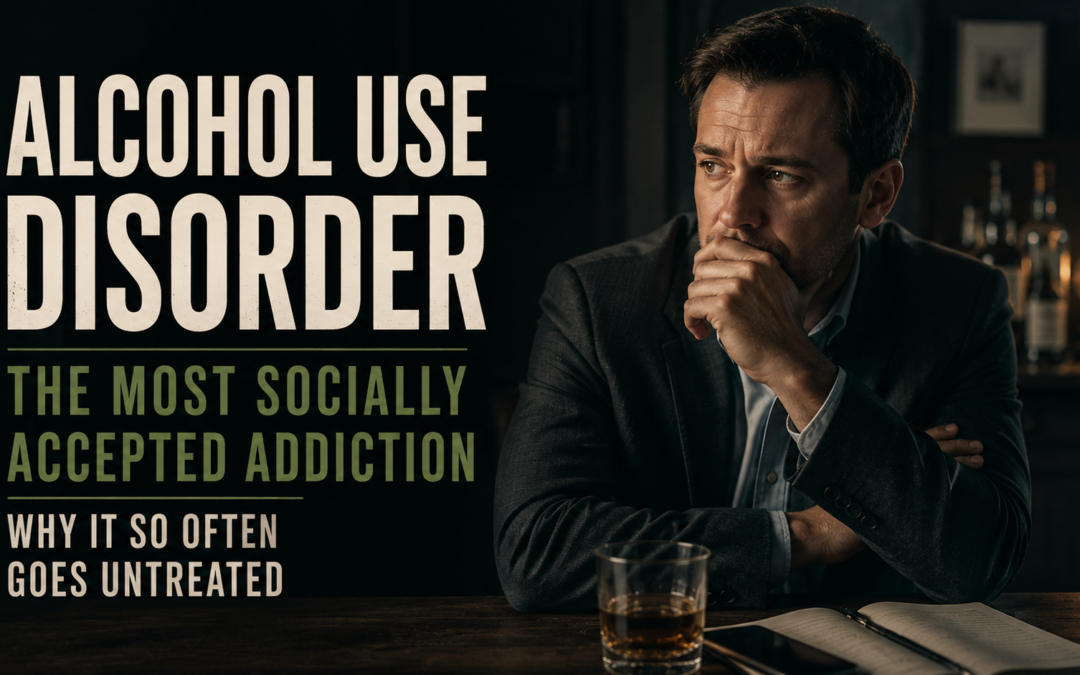
Alcohol use disorder is the most socially accepted form of addiction, and that widespread acceptance is a big part of why so many people never get the care they need. Drinking is woven into celebrations, workdays, and quiet evenings at home, which can make a real struggle almost impossible to see.
If you have quietly wondered whether your own drinking, or a loved one’s, has grown into something more, that question deserves an honest answer. You are not overreacting by asking it.
Please know that reaching out for information is a brave and hopeful step. This article explains what this condition is, why acceptance keeps it hidden, the warning signs, and how to find support that truly helps.
What Is Alcohol Use Disorder?
Alcohol use disorder is a medical condition in which a person struggles to control their drinking despite the harm it causes. It ranges from mild to severe, and it affects people from every background and walk of life.
This is not a matter of willpower or weak character. It is a recognized health condition that changes how the brain and body respond to alcohol over time.
Someone living with this condition may genuinely want to cut back yet find they cannot. The pull toward drinking can feel stronger than their own intentions, which is deeply frustrating and often confusing.
A spectrum, not a single picture
Alcohol use disorder looks different from one person to the next, which is part of why it is so easy to miss. Some people drink heavily every day, while others binge only on weekends.
The severity depends on how many signs a person shows, not on a single behavior. Even a mild case is worth taking seriously, because it can grow over time without support.
Why Does Social Acceptance Keep Alcohol Use Disorder Untreated?
Social acceptance keeps alcohol use disorder untreated because drinking is treated as normal, expected, and even celebrated nearly everywhere. When alcohol is part of almost every gathering, a growing problem can hide in plain sight.
Think about how often drinking appears in ordinary life. It marks holidays, eases stress after work, fills social events, and shows up at nearly every milestone.
That constant presence blurs the line between casual drinking and something more serious. A person can drift from one to the other without anyone, including themselves, noticing the shift.
When “everybody drinks” becomes a shield
The phrase “everybody drinks” can quietly become a shield that hides a real struggle. If drinking feels normal for everyone, warning signs get brushed aside as nothing unusual.
This comparison trap keeps many people from asking honest questions. They measure their drinking against others rather than against how it affects their own life.
Why acceptance delays the decision to seek help
Acceptance delays help because a person may never see their drinking as a problem worth addressing. Friends and family often hesitate too, unsure whether to speak up about something so common.
That silence carries a cost. The longer a growing concern goes unnamed, the harder it can feel to face, which is exactly why gentle honesty matters so much.
What Are the Warning Signs of Alcohol Use Disorder?
The warning signs of alcohol use disorder include drinking more than intended, being unable to cut back, and continuing to drink despite the problems it creates. Noticing these signs early can open the door to support before things grow more difficult.
Watch for these patterns in yourself or someone you love:
- Drinking more or for longer than you meant to, again and again.
- Wanting to cut down but finding you cannot, even after trying.
- Spending a lot of time drinking or recovering from its effects.
- Strong cravings or urges to drink that are hard to ignore.
- Letting drinking interfere with work, school, or family responsibilities.
- Continuing to drink even when it harms your relationships or health.
- Needing more alcohol to feel the same effect over time.
- Feeling shaky, anxious, or unwell when you are not drinking.
Noticing several of these does not make you a failure. It means your body and mind may be asking for care, and that care is available.
Why these signs get brushed aside
These signs often get overlooked because they can look like ordinary habits in a culture that normalizes heavy drinking. A weekend spent recovering might be laughed off, and a rising tolerance might even feel like a point of pride.
Seeing these behaviors clearly, apart from what everyone else does, is a powerful first step toward change.
How Are Alcohol Use Disorder and Mental Health Connected?
Alcohol use disorder and mental health conditions are closely connected, because many people drink to cope with feelings like anxiety, depression, or the weight of past trauma. Over time, alcohol tends to deepen those very struggles rather than ease them.
This creates a painful loop. Someone might drink to quiet worry at night, only to feel more anxious the next day, which fuels the urge to drink again.
When a mental health condition and a substance use disorder appear together, they are known as co-occurring conditions. Treating one while ignoring the other often leaves the door open for the untreated side to pull a person back.
Why treating both together works better
Treating both conditions at the same time works better than treating either one alone, because they are so tightly woven together. This approach is called integrated care for co-occurring conditions.
Integrated care brings your mental health support and alcohol treatment into one coordinated plan. A single team works from the same understanding of your needs, so nothing important gets left behind.
When the deeper reasons behind drinking finally receive attention, recovery has a far stronger chance of lasting. You get to heal the whole picture, not just the surface.
What Levels of Care Are Available for Alcohol Use Disorder?
Several levels of care are available for alcohol use disorder, and the right fit depends on your health, your safety, and the support your daily life allows. Care can grow more intensive or ease back as your needs change.
Common levels of care include:
- Medically supervised detox for a safe, stable start when alcohol leaves the body, since alcohol withdrawal can be serious and needs professional monitoring.
- Residential or inpatient care for structured, round-the-clock support in a focused environment.
- Partial hospitalization for intensive daytime treatment with evenings spent at home.
- Intensive outpatient care for regular, structured sessions that still allow for work, school, or family life.
- Outpatient care for ongoing therapy and check-ins as you rebuild daily routines.
Many people move through several of these stages over time. A good care team helps match the level of support to where you are right now, then adjusts as you progress.
Why detox matters for alcohol
Detox matters because stopping suddenly can cause withdrawal symptoms that range from uncomfortable to genuinely dangerous. Professional supervision keeps you safe and eases the process.
A caring team monitors your symptoms and offers comfort during those early days. You never have to face withdrawal alone, which makes the first step far less frightening.
Why therapy sits at the center
Therapy sits at the heart of treatment and takes several helpful forms. You might work one on one with a counselor, join group sessions, or learn practical tools for handling cravings and stress.
Over time, these approaches help you understand the reasons behind drinking and build healthier ways to cope. That deeper work is what helps recovery hold.
How Do You Decide When to Seek Help for Alcohol Use Disorder?
You should consider seeking help when drinking affects your health, relationships, work, or peace of mind, or when cutting back feels harder than it should. You never have to reach a crisis point to deserve support.
Use these questions to guide your decision:
- Have you tried to cut back and found you could not? This is one of the clearest signals that support could help.
- Is drinking affecting your relationships, job, or health? Ongoing harm in these areas is a strong reason to reach out.
- Do you drink to cope with stress, sadness, or anxiety? A provider who treats co-occurring conditions can address both concerns together.
- Do you feel worried or guilty about your drinking? Trust that feeling, even if others treat your drinking as normal.
- Have you noticed withdrawal symptoms when you stop? This calls for medical guidance, since alcohol withdrawal can be dangerous.
Answering yes to any of these does not mean something is wrong with you. It means care is available, and you are worthy of it.
Common Questions Before Starting Treatment
Is alcohol use disorder really a medical condition?
Yes. It is a recognized health condition that affects the brain and body, not a sign of weak willpower. Understanding it this way helps remove shame and makes reaching out feel more possible.
How do I know if my drinking is a problem if everyone around me drinks too?
Focus on how drinking affects your own life rather than comparing yourself to others. If it interferes with your health, relationships, responsibilities, or peace of mind, it is worth talking with a professional, regardless of what those around you do.
Do I have to stop drinking completely before getting help?
No. You can reach out for support exactly where you are right now. A caring team meets you as you are and guides you through safe next steps, including medically supervised detox when needed.
What if I have tried to quit before and it did not last?
Earlier attempts that focused only on stopping may have left the deeper causes unaddressed. Treatment that includes therapy and support for any co-occurring conditions offers a stronger foundation, and it is never too late to try again.
Can my family be part of the process?
Yes. Many programs welcome family involvement through therapy and education, since loved ones often play a key role in recovery. Including them can strengthen your support and help everyone heal together.
You Do Not Have to Navigate This Alone
Alcohol use disorder may be the most socially accepted form of addiction, but that acceptance does not make the struggle any less real or any less deserving of care. If drinking has quietly become heavier than you meant it to, please know that what you are experiencing makes sense.
You are not alone in this, and recovery is possible with the right support around you. Seeing your drinking clearly, apart from what everyone else does, is a courageous and hopeful first step.
When you feel ready, consider reaching out to a treatment provider who understands both alcohol use and any related challenges you may be facing. A compassionate team can listen to your story, answer your questions, and help you build a plan that fits your life. Take that next step whenever you are ready, because support is here for you.