
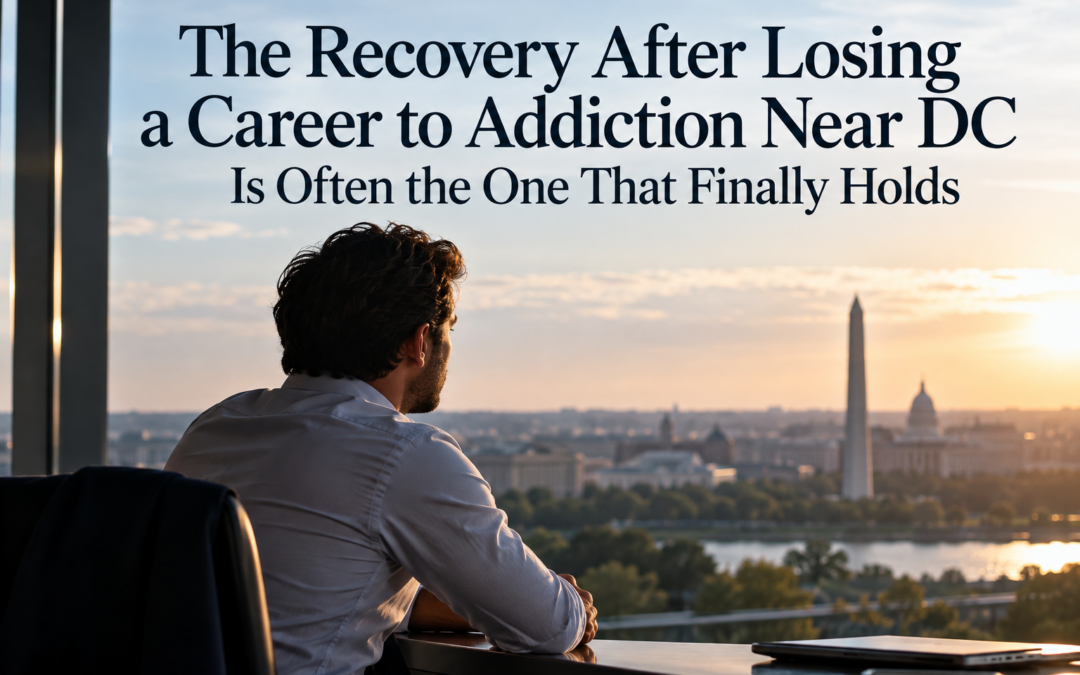
Recovery after losing a career to addiction near DC can feel impossible to imagine when the loss is still fresh. Maybe you were let go after missed deadlines, a failed drug test or a moment you wish you could take back. Maybe you watched someone you love lose a job they spent years building.
That loss carries real grief. In a region where so many people tie their identity to a title, a security clearance or an office, losing a career can feel like losing yourself.
Many people find that the recovery after losing a career to addiction near DC is the one that finally holds. The loss strips away the cover that kept the problem hidden, and what remains is a clear reason to heal. You are not alone, and this chapter does not have to be the end of your story.
What Makes Recovery After Losing a Career to Addiction Near DC Different?
Recovery after losing a career to addiction near DC is different because the loss often removes the denial and the demands that once kept a person from getting real help. When work no longer needs to be protected, treatment can finally come first.
While a career is intact, it can become proof that everything is fine. A paycheck, a title and a full calendar make it easy to believe the drinking or drug use is under control.
When that structure falls away, the picture becomes harder to ignore. That honesty, painful as it is, often becomes the foundation for lasting change.
Why Does a Career Often Hide a Substance Use Disorder?
A career often hides a substance use disorder because high performance can look like proof that nothing is wrong. Many people keep showing up, meeting goals and earning praise while their health quietly declines.
In the DC area, long hours, after-work networking and constant pressure can make heavy drinking or stimulant use seem normal. Use gets explained as stress relief or a way to keep up, and the warning signs blend into the culture.
Why Does the Loss Open a Door?
The loss opens a door because it removes many of the reasons to delay treatment. There is no longer a reputation to guard or a packed schedule standing between you and care.
Think of a house with a crack in the foundation hidden behind fresh paint. Once the paint comes off, you can finally repair what is underneath.
Why Does Recovery After Losing a Career to Addiction Near DC Often Hold?
Recovery after losing a career to addiction near DC often holds because the person enters treatment with clarity, motivation and fewer distractions. These conditions give therapy and new habits room to take root.
This does not mean anyone must lose a job to get well. It means a painful turning point can also become a meaningful one.
How Does Honest Reflection Support Lasting Change?
Honest reflection supports lasting change because it lets a person see the full cost of substance use without minimizing it. That clear view strengthens the commitment to do things differently.
Many people describe this moment as the first time they stopped negotiating with themselves. That shift is often where recovery after losing a career to addiction near DC truly begins.
How Can You Rebuild Your Sense of Identity?
You can rebuild your identity by discovering that your worth was never defined by a job title. Treatment helps you reconnect with your values, relationships and strengths outside of work.
For many professionals in Washington, this is a profound change. Who you are becomes bigger than what you do, and that broader identity offers steadier ground for recovery after losing a career to addiction near DC.
What Emotions Come With Losing a Career to Addiction?
Losing a career to addiction often brings grief, shame, anger and fear, and every one of these feelings is valid. Naming them openly is a healthy part of recovery after losing a career to addiction near DC.
You may grieve the future you planned. You may feel embarrassed around former colleagues or worried about money and your family’s stability.
These emotions can become triggers if they go unaddressed. Without support, the pain of the loss can pull a person back toward the substance that contributed to it.
How Does Treatment Help You Process Grief and Shame?
Treatment helps you process grief and shame by giving you a safe place to talk through the loss with professionals who understand. Approaches like cognitive behavioral therapy (CBT) help you notice harsh self-talk and replace it with more balanced thoughts.
Shame says you are the problem. Therapy helps you see that you are a person facing a treatable condition, which makes recovery after losing a career to addiction near DC feel possible rather than out of reach.
How Are Mental Health and Career Loss Connected?
Mental health and career loss are closely connected because job loss can deepen depression and anxiety, and those conditions often fuel substance use. When a mental health condition and a substance use disorder appear together, they are called co-occurring disorders.
Many professionals first used alcohol or drugs to manage burnout, panic or low mood. Losing a job can intensify those feelings at the very moment support feels furthest away.
Why Does Integrated Care Matter?
Integrated care matters because treating substance use and mental health together works better than treating either one alone. One coordinated team builds a single plan, so nothing important gets missed.
At Arrowwood Addiction Treatment Center, dual diagnosis care addresses the whole person. That approach strengthens recovery after losing a career to addiction near DC by reaching the pain beneath the substance use.
What Levels of Care Support Recovery After Losing a Career to Addiction Near DC?
Several levels of care support recovery after losing a career to addiction near DC, and the right fit depends on your health, safety and daily responsibilities. A thorough assessment helps match you with personalized addiction treatment programs built around your needs.
- Medically supervised detox offers a safe, comfortable start as substances leave the body.
- Residential treatment provides round-the-clock care in a calm setting away from daily stress.
- Partial hospitalization delivers structured daytime treatment with evenings at home.
- Intensive outpatient care offers several sessions each week as you begin rebuilding routines.
- Outpatient care provides ongoing therapy and check-ins as you return to work or job searching.
For many people, the time between jobs creates a rare window to focus fully on healing. That window can make a higher level of care more realistic than it ever felt while working.
How Does Treatment Prepare You to Return to Work?
Treatment prepares you to return to work by building coping skills, routines and relapse prevention plans before new pressures arrive. You learn to recognize triggers and respond in healthier ways.
Some people return to their field. Others choose a new path that fits their recovery better, and either way, recovery after losing a career to addiction near DC can lead to a future you feel proud of.
How Do You Know If It Is Time to Seek Help?
It is time to seek help if substance use contributed to losing your job or continues to affect your health, relationships or sense of hope. You do not have to wait for another loss to deserve care.
- Did alcohol or drug use play a role in losing your job? That connection is a clear signal that professional support could help.
- Are you using more since the job loss? Increased use during stressful periods is common and responds well to treatment.
- Do grief, anxiety or depression feel heavier each week? Integrated care can address these feelings alongside substance use.
- Have you tried to stop on your own without lasting success? Structured treatment offers tools and support that willpower alone often cannot provide.
- Do you have a window of time before your next role? This pause can become a meaningful chance to start recovery after losing a career to addiction near DC.
Answering yes to any of these does not mean you have failed. It means you are ready for support that fits where you are.
Common Questions Before Starting Treatment
Can I rebuild my career after addiction?
Yes. Many people return to meaningful work after treatment, sometimes in the same field and sometimes in a new direction. Recovery gives you the stability and skills to approach your next role with clarity.
Will future employers find out I went to treatment?
Federal privacy laws offer strong protections for substance use treatment records. A treatment team can walk you through your specific privacy concerns before you begin.
How do I pay for treatment after losing my job?
Many people use insurance, including continuation coverage through COBRA (the Consolidated Omnibus Budget Reconciliation Act) or a marketplace plan. An admissions team can verify your benefits and explain your options clearly.
What if my loved one lost their job and still denies a problem?
Denial is common, especially soon after a major loss. Gentle, honest conversations and guidance from a professional can help you encourage treatment without pressure.
A Painful Ending Can Become a Steady Beginning
Recovery after losing a career to addiction near DC is often the one that finally holds, because the loss can bring honesty, clarity and room to heal. Your career may have changed, but your future is still yours to shape.
You are not alone, and recovery is possible with the right support around you. Hope can grow from even the hardest chapter.
When you feel ready, reach out to Arrowwood Addiction Treatment Center. Our compassionate admissions team can answer your questions, verify your insurance and help you take the next step toward care that fits your life.