
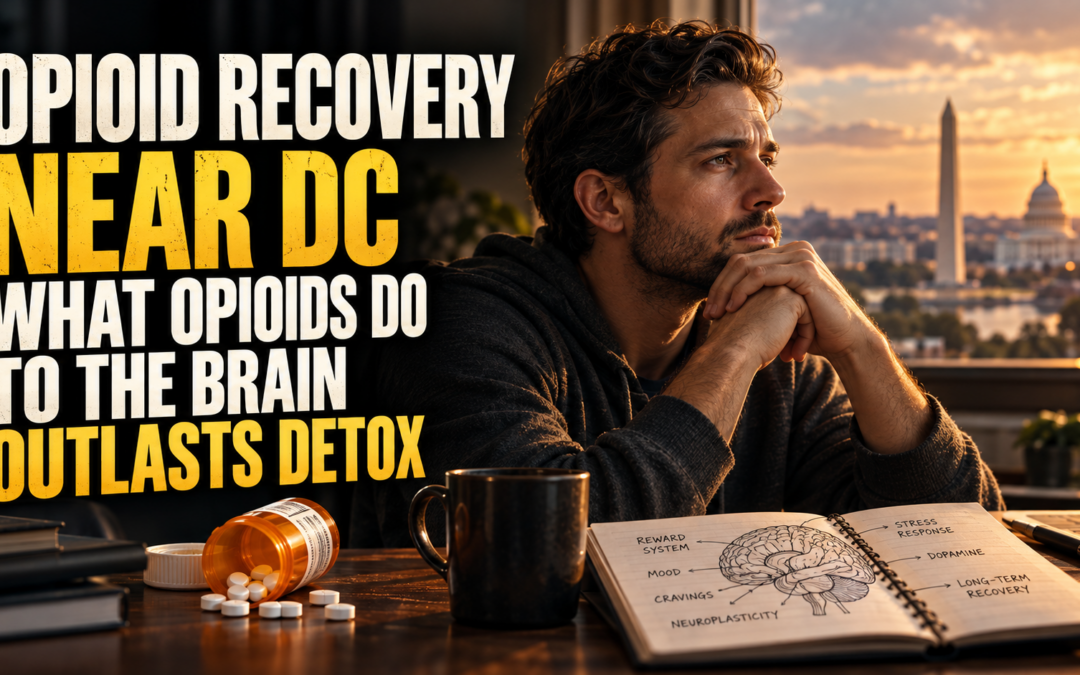
Opioid recovery near DC often takes longer than people expect, and that is not a sign that you or your loved one is doing something wrong. Many families picture detox as the finish line. A few hard days of withdrawal, then life returns to normal.
When cravings, low moods or restless nights linger weeks later, it can feel like failure. It is not failure. It is biology. Opioids change how the brain handles pleasure, stress and motivation, and those changes take time to settle after the drugs leave the body.
If you are reading this after a relapse, a frightening night or months of quiet worry, your feelings make sense. Understanding what is happening inside the brain can replace confusion with patience. That shift is often where steady, lasting healing begins.
What Do Opioids Do to the Brain That Detox Cannot Undo?
Opioids change the brain’s reward and stress systems in ways that continue long after the drug leaves the body. Detox clears opioids from your system, but it does not reset the adaptations the brain made during months or years of use.
Opioids attach to receptors that help control pain, pleasure and reward. With repeated use, the brain adjusts by producing fewer of its own natural feel-good chemicals and becoming less responsive to them.
How Does the Reward System Change?
The reward system becomes less sensitive, so everyday joys like a good meal or time with family can feel muted. Think of it like a radio turned down so low you can barely hear the music. The brain needs time to slowly turn that volume back up.
Why Does the Stress System Stay on High Alert?
The stress system stays on high alert because the brain learned to rely on opioids to calm it. Without them, ordinary pressures can feel heavier than they should. This is one reason anxiety and irritability often outlast physical withdrawal.
Why Does Opioid Recovery Near DC Take Longer Than Detox?
Opioid recovery near DC takes longer than detox because detox addresses physical withdrawal over a matter of days, while the brain’s reward and stress systems need months to rebalance. Both stages matter, but they work on very different timelines.
Detox is the starting point. It helps the body stabilize safely. The deeper healing happens afterward, as the brain gradually relearns how to feel calm and motivated on its own.
What Is Post-Acute Withdrawal?
Post-acute withdrawal syndrome (PAWS) is a set of lingering symptoms that some people experience after the initial withdrawal ends. These can include anxiety, low energy, poor sleep, trouble concentrating and waves of cravings that come and go.
PAWS is not a setback. It is a sign that the brain is still healing. Knowing it may happen helps you plan support for those moments instead of being caught off guard.
Why Is the Time After Detox So Vulnerable?
The weeks after detox are vulnerable because tolerance drops quickly while cravings can remain strong. If a person returns to a dose they once used, their body may no longer handle it, which raises the risk of overdose. This risk is greater now that fentanyl appears so often in the local drug supply.
Keeping naloxone, a medication that can reverse an opioid overdose, nearby is a caring and practical step for families. Continued support after detox is just as important.
What Does a Realistic Timeline Look Like?
A realistic timeline for opioid recovery near DC is measured in months and years, not days. Progress is rarely a straight line. Good weeks and hard weeks often mix together, and both are part of the process.
What Levels of Care Support Opioid Recovery Near DC?
Several levels of care support opioid recovery near DC, and most people move through more than one as their brain and life steady. A clinical assessment helps match you with the right starting point.
- Medically supervised detox helps you withdraw safely with medical monitoring and comfort care.
- Residential treatment offers round-the-clock support in a structured setting away from daily triggers.
- Partial hospitalization program (PHP) provides full days of treatment with evenings spent at home.
- Intensive outpatient program (IOP) includes several sessions each week that fit around work or family.
- Outpatient therapy offers ongoing counseling as you build independence.
- Medication-assisted treatment (MAT) pairs approved medications with counseling at any of these stages.
This step-down approach matches the brain’s slower healing pace. Support eases gradually instead of ending all at once. The admissions team at Arrowwood Addiction Treatment Center can help you understand which level fits your needs.
How Does Medication-Assisted Treatment Help the Brain Heal?
Medication-assisted treatment helps the brain heal by easing cravings and withdrawal so you can focus on recovery. Buprenorphine, methadone and naltrexone are approved by the Food and Drug Administration (FDA) for opioid use disorder.
These medications are not a substitute addiction. They steady the brain while therapy helps you build new coping skills, which gives opioid recovery near DC a stronger foundation during the months when the brain is still rebalancing.
How Do Mental Health Conditions Affect Opioid Recovery?
Mental health conditions can make opioid recovery harder when they go untreated, because anxiety, depression, trauma and chronic pain often drive opioid use in the first place. When these struggles remain unaddressed, they can pull a person back toward old patterns.
Many individuals first used opioids to manage physical pain or emotional distress. As the brain heals, those underlying struggles may surface more clearly.
Why Should Both Be Treated Together?
Both should be treated together because each condition affects the other. This approach is called integrated or dual diagnosis care. One team addresses mental health and substance use within a single coordinated plan.
Choosing opioid recovery near DC that includes integrated care means no part of your story gets left behind. You never have to decide which struggle deserves attention first.
How Do You Know It Is Time to Seek Help for Opioid Recovery Near DC?
It is time to seek help for opioid recovery near DC when opioid use feels hard to control or when life after detox feels harder than you can manage alone. You do not need to reach a crisis point to deserve support.
- You have tried to stop using opioids, and cravings pulled you back.
- You completed detox, but anxiety, sleeplessness or low mood have not eased.
- You worry about overdose risk for yourself or someone you love.
- Depression, trauma or chronic pain seem tied to opioid use.
- You feel unsure what steady support after detox should look like.
Seeing yourself here does not mean something is wrong with you. It means focused care could help. If someone is unresponsive or struggling to breathe, call 911 right away. If you are having thoughts of self-harm, call or text the 988 Suicide and Crisis Lifeline at any time.
Common Questions Before Starting Treatment
Is relapse after detox a sign that treatment failed?
No. Relapse is common because the brain is still healing after detox. It signals that more support may be needed, not that recovery is out of reach.
How long does post-acute withdrawal last?
It varies from person to person. Some people notice symptoms for weeks while others experience them on and off for months. Ongoing care helps you manage these symptoms as they ease.
Can I keep working during opioid recovery near DC?
Often, yes. Intensive outpatient and outpatient programs fit around work and family schedules, and MAT can be part of either option.
Will I need medication forever?
Not necessarily. The length of MAT is a personal decision you make with your care team, based on your progress and goals.
Healing Takes Time and You Deserve That Time
Opioid recovery near DC takes longer because the brain needs time to heal after detox, and that pace is normal. The cravings, low moods and restless nights that linger are signs of a brain relearning balance, not signs of failure.
Recovery looks different for everyone. With patient, continued support, many individuals rebuild a life that feels calm, connected and their own again.
When you feel ready, reach out to Arrowwood Addiction Treatment Center to speak with a caring admissions team. They can answer your questions, explain your options and help you take the next step with confidence. You are not alone in this.